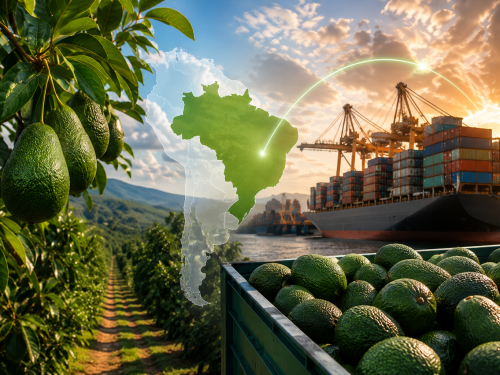
Mission acquires Calavo and redefines the avocado business in the US.
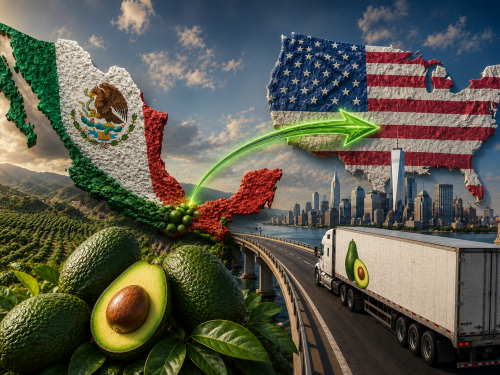
Mission's acquisition of Calavo unites two industry giants and marks a significant milestone for the US and global avocado market.
View more
Mission's acquisition of Calavo unites two industry giants and marks a significant milestone for the US and global avocado market.
View more
At the close of week 2, Chile added 159 containers, with weekly and year-on-year increases, and Europe accounted for half of the destinations, with no shipments to the US.
View more
Week 3 ended with 23 containers from Chile, a weekly increase of 35%, a year-on-year decrease of 18%, and a price drop of nearly 5%.
View more
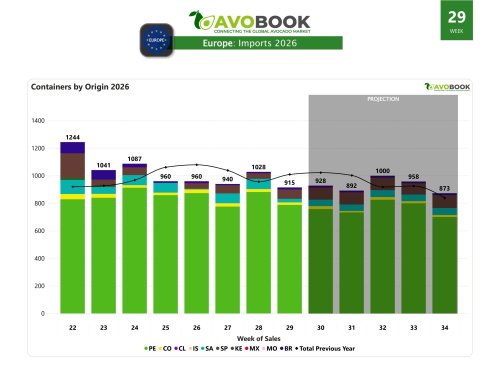
Week 3 ended with 652 shipments, a weekly increase of 14% and an 11% year-on-year increase, with Spain and Israel accounting for more than half of the volume that arrived in Europe.
View more
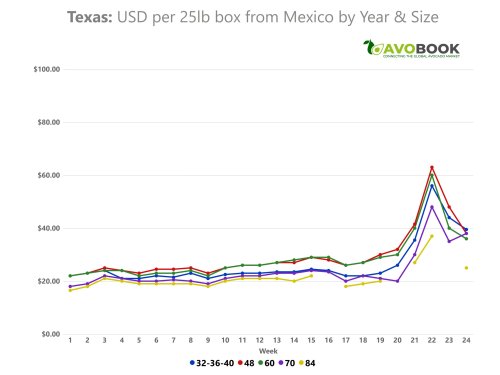
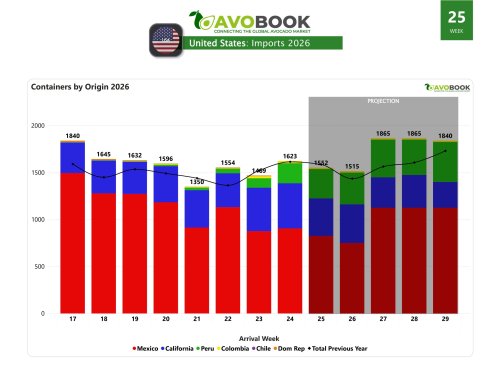
Week 2 closed with 1,850 shipments, led by Mexico, a weekly increase of 60% and price improvements in all sizes, with the greatest variations in 70 and 84.
View more
Although the U.S. excluded avocados from the additional 10% tariff, Colombia has not yet seen any concrete benefits due to market saturation.
View more
Although the U.S. excluded avocados from the additional 10% tariff, Colombia has not yet seen any concrete benefits due to market saturation.
View more
Baika and the Avocado Committee are promoting a pilot project in the Leyda Valley to measure biodiversity and atmospheric carbon, generating key data for the sustainability of the sector.
View more
Chilean exports closed week 50 with a stable volume, although with clear signs of adjustment in the distribution of destinations. During the period, 202 shipments left Chile, representing a slight increase of 1% compared to the previous week and a 6% increase compared to the same week last year. With this result, the weekly volume remains above 200 containers, despite a less linear trend observed since week 47, marked by consecutive increases and decreases.
View more
Arrivals are down 19% week-on-week and 66% year-on-year. Chile is the main destination for shipments, and prices are rising for sizes 18 to 24.
View more
In week 1, the European market recorded the arrival of 514 shipments, representing a 13% decrease compared to the previous week. The volume was at a similar level to the beginning of 2025, registering 3% higher than that period.
View more
Arrivals are down 4% compared to the last week of 2025, but are 25% higher than at the start of last year. Prices show adjustments based on size.
View more
At Avobook, we analyze the possible scenarios generated by the upward curve of Mexican avocado volumes available for export, considering the current reality in the United States (with which NAFTA must be renegotiated) and the difficulties of returning to other markets, should that be necessary.
View more
The CEO of the Avocado Committee, Francisco Contardo-Sfeir, analyzes the current attractiveness of shipments to Argentina: it registers a 25% increase from one season to the next
View more
Record volumes in 2025 broke the historical price pattern. Mexico, Peru, and Colombia pushed the market down to its lowest level in seven years.
View more
No major price variations are expected, as prices have reached their lowest levels in years, with very flat values across sizes.
View more
From production to international expansion, Miriam Martínez's experience reflects how processed avocados are redefining consumption, quality, and the market.
View more
The Colombian Hass avocado is undergoing a period of technical consolidation. After more than a decade of expansion, the sector is transitioning from a phase of accelerated growth to a model where professionalization is the foundation of competitiveness. In this context, Cartama has demonstrated that competing in international markets demands much more than volume: it requires consistency, traceability, and technically controlled post-harvest performance.
View more
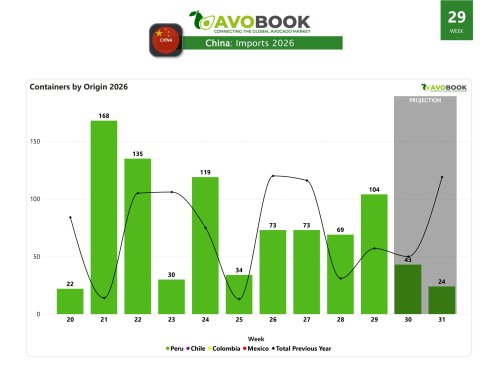
In week 1, the Chinese market maintained a similar dynamic to that observed in previous weeks. During this period, 21 shipments arrived from Chile, representing a 32% decrease compared to the previous week. Volume was also 46% below the level at the beginning of 2025.
View more
In week 1, the European market recorded the arrival of 514 shipments, representing a 13% decrease compared to the previous week. The volume was at a similar level to the beginning of 2025, registering 3% higher than that period.
View more
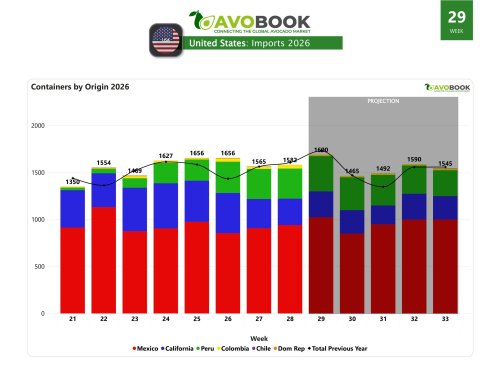
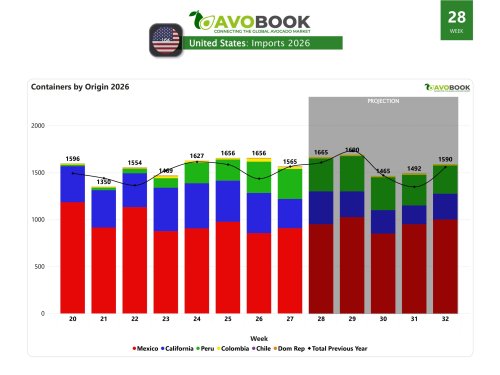
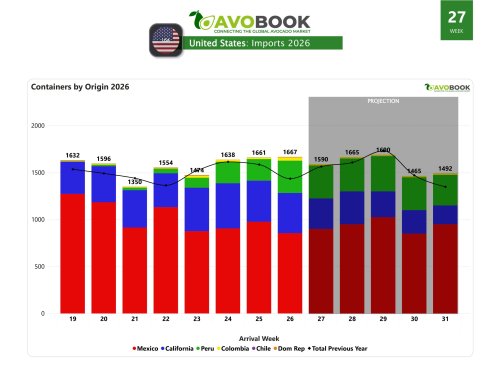
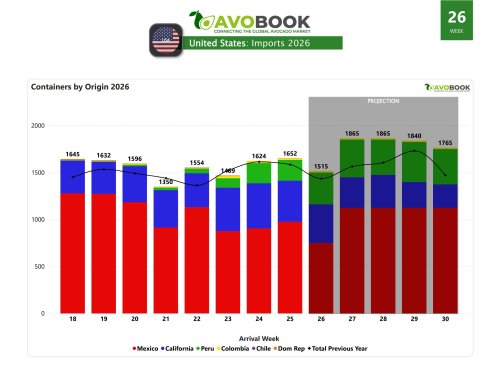
In the last week of the year, the U.S. market closed week 52 with approximately 1,200 shipments. This volume represented a 22% decrease compared to the previous week, although it was 34% higher than that recorded during the same week in 2024. The market structure remained largely unchanged, with Mexico accounting for approximately 98% of shipments, while California and Chile each contributed around 1%. Volumes from Colombia and other origins had a marginal share.
View more
Mission and West Pak lead the list, with their operations in Michoacán, followed by the Chilean company Propal, with a strategy that shows that the Latin American market is gradually emerging as a space of opportunities.
View more
Fueled by the avocado's healthy image and the volatility of other vegetable oils, avocado oil has gained ground in international retail. However, its development faces production constraints, price pressures, and a scale that positions it more as a niche oil than a direct competitor to olive or coconut oil.
View more
The elimination of the 10% tariff on avocado imports in the United States improves market access for Peruvian avocados in one of its most strategic markets. While the impact of the tariff was partially absorbed by price fluctuations at the source, the measure reduces costs, improves competitiveness, and creates a more favorable environment for the Peruvian season, which begins in March.
View more
The Avocado Society of Kenya (ASK) has defined an ambitious work agenda for 2026, with a clear focus on strengthening production, market integration, and the international positioning of Kenyan avocados. Throughout the year, the association will implement a series of actions aimed at consolidating the sustainability and profitability of the sector, with a special emphasis on supporting small-scale producers and aligning with the demands of global markets.
View more
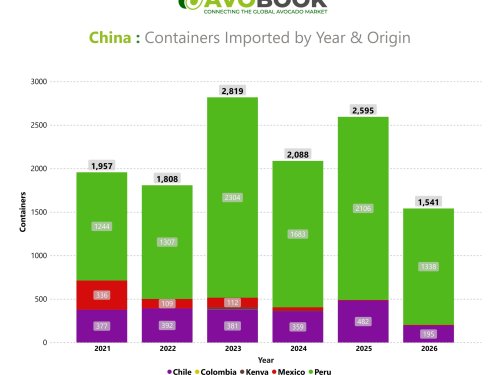
In the last week of the year, the Chinese market saw a 6% drop in volume compared to the previous week. Year-on-year, the decline was even more pronounced, with volume 39% lower than that observed during the same week in 2024. A total of 31 shipments were recorded during this period, a far cry from the approximately 50 shipments registered during the same week last year.
View more
In the last week of the year, the European market saw a 6% weekly increase, with an estimated total of 594 shipments. Despite this increase compared to the previous week, the volume was 13% lower than that recorded in the same week of 2024.
View more
At the close of week 51, the United States market recorded a 7% increase in volume compared to the previous week and was 26% above the same period last year.
View more
The end of the year is more than just a milestone on the calendar: it's an opportunity to pause, look back on the journey, and appreciate the relationships that enable us to move forward with information, analysis, and trust.
View more
With a new all-time record for imports, the Canadian avocado market confirms in 2025 its high level of dependence on Mexico, especially Michoacán, while Jalisco recovers market share and Peru gradually strengthens its role as the third supplier, in a supply structure that maintains strong similarities with the peak reached in 2023.
View more
Through business intelligence, quality standardization, and joint operating models, Agromercado consolidates a strategic role in integrating small avocado producers into national and international markets, promoting stable, formal, and sustainable commercial relationships.
View more
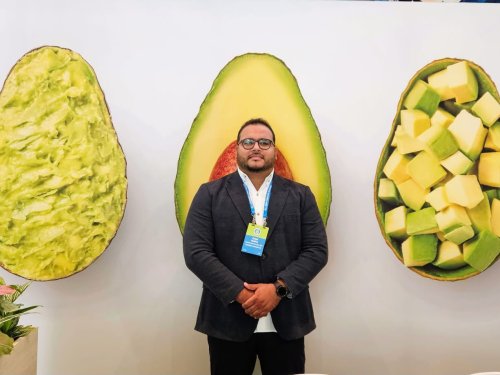
Antonio Villaseñor, CEO of Aztecavo and member of the APEAM Board of Directors, analyzes the progress of the Mexican harvest, export projections, internal pressure on prices, and the Super Bowl milestone in a season marked by high volumes, strong internal competition, and a depressed price environment.
View more
Chilean exports closed week 50 with a stable volume, although with clear signs of adjustment in the distribution of destinations. During the period, 202 shipments left Chile, representing a slight increase of 1% compared to the previous week and a 6% increase compared to the same week last year. With this result, the weekly volume remains above 200 containers, despite a less linear trend observed since week 47, marked by consecutive increases and decreases.
View more
The Chinese market is experiencing a year-end marked by a significant contraction in volumes and increased price pressure. In the week under review, 33 shipments were recorded, representing a 42% drop compared to the previous week and a 13% decrease compared to the same period last year. This decline confirms a less dynamic market environment with a clearly more limited supply.
View more
The European market is closing out the year with lower volumes but increasing pressure on prices. During week 51, 558 shipments arrived on the continent, representing a 3% decrease compared to the previous week and a much more significant 29% drop compared to the same period last year. This year-on-year decline marks a break from the trend that prevailed for much of the year, when 2025 volumes consistently remained above those of 2024.
View more
The US avocado market closed week 49 with a scenario of slight increases in supply, a virtually unchanged mix of origins, and continued price volatility. Mexico maintains absolute dominance with a 96% market share, followed at a considerable distance by California and Chile, each with around 2%. The Dominican Republic retains a marginal presence, while the remaining origins have practically disappeared from the market.
View more
The rise of smaller packaging formats in processed avocado products has intensified the use of plastic, forcing the industry to rethink its packaging systems. Driven primarily by the demands of the European market, companies are incorporating recyclable and biodegradable materials and working together with their suppliers to reduce their environmental impact.
View more
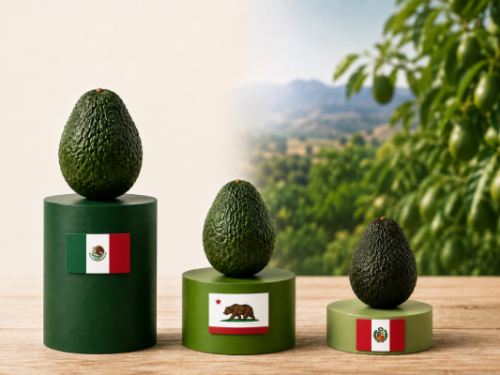
The 2025 figures confirm a shift in the supply dynamics of the US market, where total volume reaches a new all-time high and the focus of growth is moving towards South America. While Mexico maintains its leading position without significant changes and California retains a stable role, the strong growth of Peru and the record-breaking performance of Colombia are redefining the composition of supply in the United States.
View more
The presence of Chilean avocados in Asia remains relatively relevant during the season, but continues to be limited and tactical. Data from Avobook confirms that the Asian market surpasses the United States as a destination, although its role is concentrated in the first weeks of the season and quickly diminishes. Europe and Latin America emerge as the main recipients of the volumes that Chile withdraws from the Asian market, in a context where domestic consumption and structural costs influence export decisions.
View more
The international trade in processed avocado products—such as pulp, guacamole, oil, and ready-to-eat foods—has experienced sustained growth in recent years, accompanied by a significant increase in sanitary and regulatory requirements from destination markets. Unlike fresh avocados, these products reach the end consumer ready for consumption, without further washing or domestic handling, which considerably increases the responsibility of the processing industry regarding food safety.
View more
Volume projections for the new season show disparate trends among the main sources that will supply the European market starting in December. While Spain anticipates a record harvest, Israel faces operational limitations, and Colombia is headed for a significant rebound. Avobook and industry players confirm a transitional scenario where supply peaks will be decisive for price formation.
View more
Avocado exports from Chile saw a significant decline at the close of week 49, reaching 200 shipments, a 29% drop compared to the previous week. Despite this decrease, the volume remains 9% higher than the level recorded during the same period last year, reflecting that, although activity slows towards the end of the year, it continues to exceed the pace of the previous season.
View more
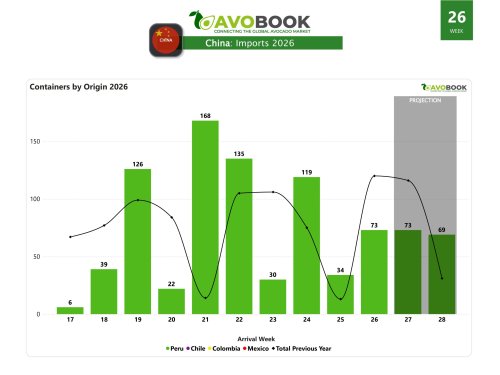
The Chinese market showed a significant shift in its dynamics during week 50, driven by a notable increase in supply. Arrivals reached 57 containers, more than double the previous week's figure, creating a scenario of greater availability that is beginning to influence price behavior.
View more
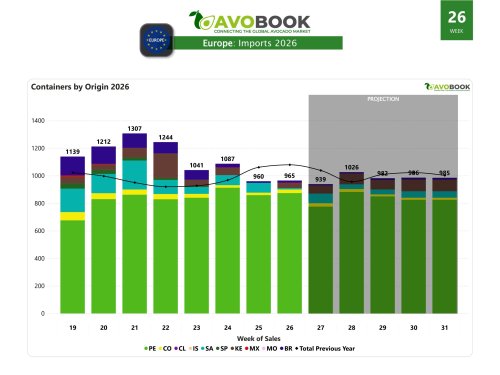
The European market closed week 50 with a moderate increase in availability and a recomposition of the main origins. Arrivals reached 581 containers, 5% more than the previous week, although still 12% below the year-on-year comparison. The distribution of supply reflects a predominant presence of Chile, which accounts for nearly a third of the total. It is followed by Israel with 24%, Colombia with 21%, Spain with 12%, and Morocco with 9%. Peru maintains a minimal share, close to 1%.
View more
The US avocado market closed week 49 with a scenario of slight increases in supply, a virtually unchanged mix of origins, and continued price volatility. Mexico maintains absolute dominance with a 96% market share, followed at a considerable distance by California and Chile, each with around 2%. The Dominican Republic retains a marginal presence, while the remaining origins have practically disappeared from the market.
View more
The avocado industry in California is preparing for a new season in which wind events, canopy management, tree nutrition, and operational efficiency will be key factors in determining fruit yield and quality. According to Gary Clevenger, co-founder of Freska Produce International, growers are adjusting their practices in response to increasingly frequent winds, and the possibility of extending the season depends directly on agronomic decisions made in recent years.
View more
Baika took a decisive step in consolidating its sustainability strategy with the official creation of its Sustainability Committee, an entity that seeks to strengthen governance, strategic alignment, and decision-making within a context where the company is moving toward a declared Nature Positive vision. The establishment of this committee marks a new stage in the group's evolution, aimed at scaling and sustaining the progress achieved in recent years.
View more
Argentina saw a significant increase in its avocado imports during October, accounting for 95% of the Chilean fruit shipped to South America. This trend is attributed to price variations, market windows, and supply shifts identified by Avobook's data team, amidst simultaneous adjustments in Chile, Peru, and Europe.
View more
Thanks to its Andean valleys, privileged climate, and a well-placed harvest window in the global calendar, Ecuador is emerging as a serious competitor in the global Hass avocado market. The challenge now is to consolidate quality, traceability, and volume, bringing together producers, industry associations, and the government, with the aim of transforming this "green gold" into an engine of rural development.
View more
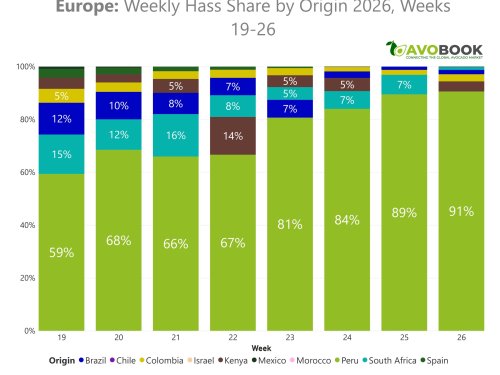
Europe ended 2025 with record growth in avocado imports. According to Avobook's data team, container volumes increased by 17% compared to 2024, driven primarily by strong growth from Peru, Chile, and Colombia, and a notable increase from Spain. Several regions, however, saw their market share decline, resulting in a year of contrasts and supply chain realignments.
View more