Agromarket and the commercial articulation of avocados: a bridge between family farming and high-value markets
Through business intelligence, quality standardization, and joint operating models, Agromercado consolidates a strategic role in integrating small avocado producers into national and international markets, promoting stable, formal, and sustainable commercial relationships.
In a market environment that increasingly demands consistency, traceability, and quality standards, family farming faces the challenge of sustainably integrating into more demanding supply chains. In the avocado sector, Agromercado has been consolidating an intervention model that seeks to bridge this gap, positioning itself as a strategic facilitator between small and medium-sized producers and high-performing markets.
According to Luis Llanos, head of Agromercado, the institution's approach is based on a clear premise: market access depends not only on production, but on producing under conditions that ensure volume, consistent quality, regulatory compliance, and continuity of supply. Following this logic, the institution acts as a commercial agent, supporting producers from the initial production assessment to establishing commercial relationships aligned with export and processing requirements.
From business intelligence to standardization of supply
One of the pillars of the model is market intelligence applied to the local area. Through market analysis, the identification of priority products, and the development of regional market profiles, Agromercado guides production toward real opportunities, both domestically and internationally. This work is complemented by strengthening organizational, production, commercial, and financial capacities, with the goal of transforming producers into competitive and reliable suppliers.
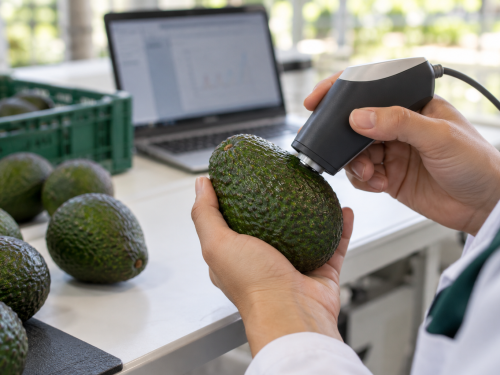
Quality standardization plays a central role in this strategy. Technical assistance in management systems and certifications—such as GlobalG.AP, HACCP, organic, BRC, or Fair Trade—enables producers to meet the standards demanded by the agribusiness sector and international markets. According to Llanos, this process not only increases the product's value but also reduces commercial and health risks, strengthening trust between producers and buyers.
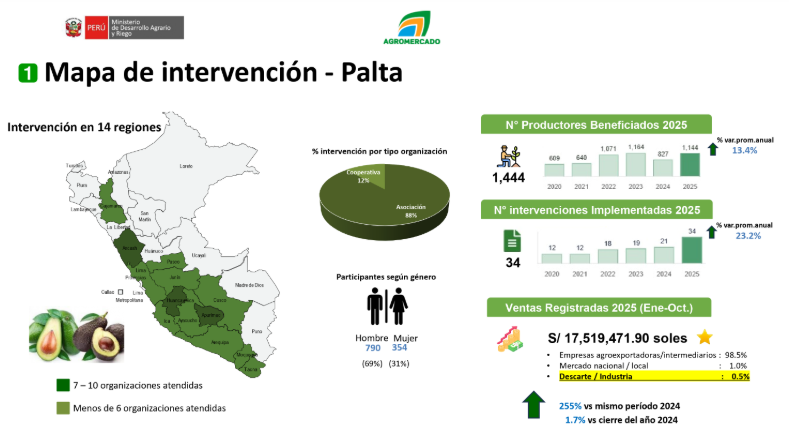
During 2025, Agromercado's involvement in the avocado supply chain benefited more than 1,400 producers in 14 regions of the country, with sales exceeding 17.5 million soles between January and October. Most of this production was channeled through agro-export companies and intermediaries, reflecting a clear focus on higher-value markets.
Furthermore, a key component of Agromercado's work is the promotion of commercial integration mechanisms based on joint operations. This model, supported by business collaboration agreements, allows organized producers to access direct exports, economies of scale, and returns associated with final settlement, in addition to tax benefits such as VAT recovery and drawback.
This model contrasts with the traditional approach, characterized by local sales, individual economies, and less negotiating power. Joint operations, on the other hand, improve the exportable supply and strengthen producers' position within the supply chain.
The model is also aligned with the current regulatory framework for the agricultural sector, where formalization plays a key role. Obtaining a tax identification number (RUC), issuing electronic invoices, and registering with official registries not only provide benefits for purchasing companies but also allow producers to access formal credit, production support programs, and more stable commercial contracts.
For Llanos, this process is fundamental to ensuring the sustainable development of the chain: producers more integrated into the system, stronger organizations, and long-term commercial relationships that benefit all actors involved.
Beyond short-term results, Agromercado's work reflects a long-term vision for the development of the avocado sector in Peru. By integrating market intelligence, quality management, production coordination, and financial tools, the institution helps family farms consolidate their position as reliable suppliers for increasingly competitive markets, laying the foundation for more inclusive, organized, and sustainable growth.