Colombia and the Hass avocado: the maturity of an industry that competes from a technical standpoint
The Colombian Hass avocado is undergoing a period of technical consolidation. After more than a decade of expansion, the sector is transitioning from a phase of accelerated growth to a model where professionalization is the foundation of competitiveness. In this context, Cartama has demonstrated that competing in international markets demands much more than volume: it requires consistency, traceability, and technically controlled post-harvest performance.
International markets such as Europe, the United Kingdom, and the United States no longer demand just fruit availability; they require reliable, standardized, and verifiable processes. This evolution has led technically focused companies like Cartama to become benchmarks for a more demanding and sustainable production model.
The country continues to advance as an expanding origin, and market confidence is largely based on operations that have built technical discipline over time. This progress is not by chance, but rather the result of years of learning, standardization, and data-driven decision-making.
Different interpretations of the current situation have emerged in the sector, but the behavior of the industry shows another reality: Colombia is going through a natural process of technical maturation, led by operations that understood that competitiveness is built from agronomic rigor and post-harvest management.
Operations developed without solid agronomic foundations, without proper load management, without clear nutrition criteria, without post-harvest planning and without control over the physiological state of the tree, are falling behind those that, like Cartama, have built structured procedures, constant measurement and operational discipline.
This adjustment doesn't reflect a setback, but rather a strengthening. International markets don't reward improvisation; they reward reliability. And Colombian companies are moving toward a profile where technique, consistently applied by leading companies, determines their long-term viability.
The technique is embodied in the fruit: the role of the double pass
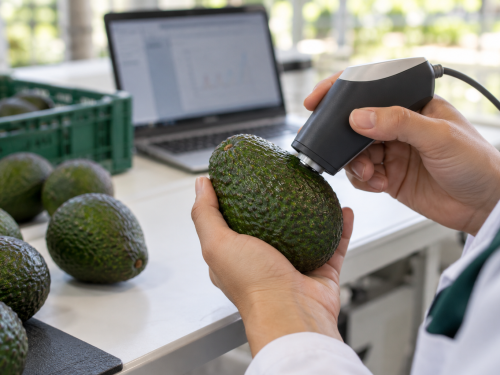
Exportable quality begins with tree management and is confirmed by harvesting decisions. Colombian Hass avocados exhibit staggered flowering, resulting in fruit with varying levels of ripeness on the same tree. In response to this physiological condition, Cartama has implemented advanced verification systems that allow for consistently raising quality standards.
Cartama implemented the double-pass methodology this season, which consists of a first selective harvest of the fruits that have already reached the ideal dry matter percentage, between 23% and 27%, and a second pass, weeks later, to collect those that complete their development under ideal conditions, ensuring a creamy texture, a full flavor and superior post-harvest behavior.
Proven results
The analysis, measurement, and quality control systems developed by Cartama confirm the technical and commercial benefits of this methodology:
- Increase in the percentage of exportable fruit from 81% to 95%.
- Average price per kilogram increased between 10% and 20%, with a higher proportion of US sizes 40, 48 and 60.
- Reduction of losses due to dehydration and improvement in the uniformity of ripening at destination.
- Greater post-harvest stability, with fruit able to maintain its quality during long journeys to Europe and the United Kingdom.
These results consolidate double passing as an effective tool to improve profitability and competitiveness, without the need to increase the cultivated area, when applied within a structured technical system such as the one developed by Cartama.
Other actions implemented focus on strict handling in the field and during the packaging process
In addition to double-passing, Cartama has strengthened its precise agronomic management practices, including fertilization tailored to the crop's needs, technical pruning, and responsible pest and disease management. These practices result in a more uniform, resistant fruit with the necessary nutritional balance for optimal performance at its destination.
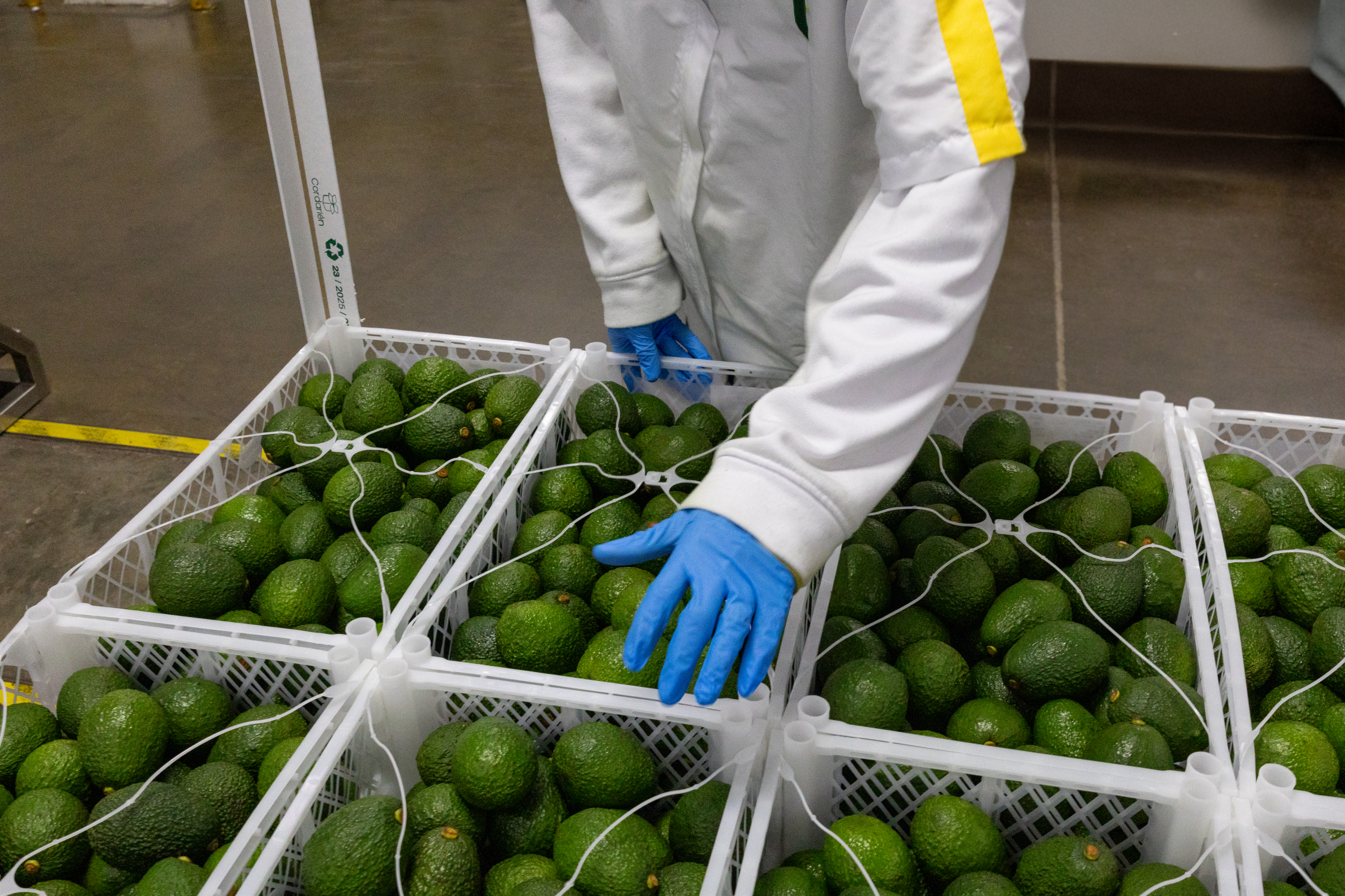
In addition, fruit classification criteria in the field and at the packing plant have been strengthened, raising selection standards and improving packaging processes. This has allowed for a shift towards more uniform containers, reducing variations between fruits and minimizing effects such as the checkerboard effect, which negatively impact the perception of quality at the destination.
In logistics, Cartama has optimized operational flows and strengthened the traceability of the fruit throughout the chain, allowing greater control from origin to final market and a more precise response to the requirements of international customers.
An agriculture built for the long term
Sustainability, understood as efficient resource management, soil care and operational coherence, has become the technical and economic support of the crop, and a fundamental pillar of the Cartama production model.
Colombia is evolving towards a more technical, measurable, and self-demanding model. This progress is positive: international markets increasingly recognize the quality of origin when it comes from orderly, consistent, and transparent processes, such as those led by companies with a solid technical focus.
An origin that is consolidated from the evidence
A product's reputation isn't built on mere claims, but on verifiable facts. The improvements implemented in the field and in post-harvest processes reinforce the consistency of the fruit that Cartama is currently delivering to international markets, in line with actual market expectations.
Colombia is not experiencing a period of uncertainty, but rather one of technical consolidation. The industry that survives is the one that measures, adjusts, and improves.
And that is the story that the country is writing today as an origin, driven by companies like Cartama: an industry that understood that quality is not promised; it is proven.