Sharp weekly drop in China: volumes down 53% and sizes 18–24 lose 13% of their value
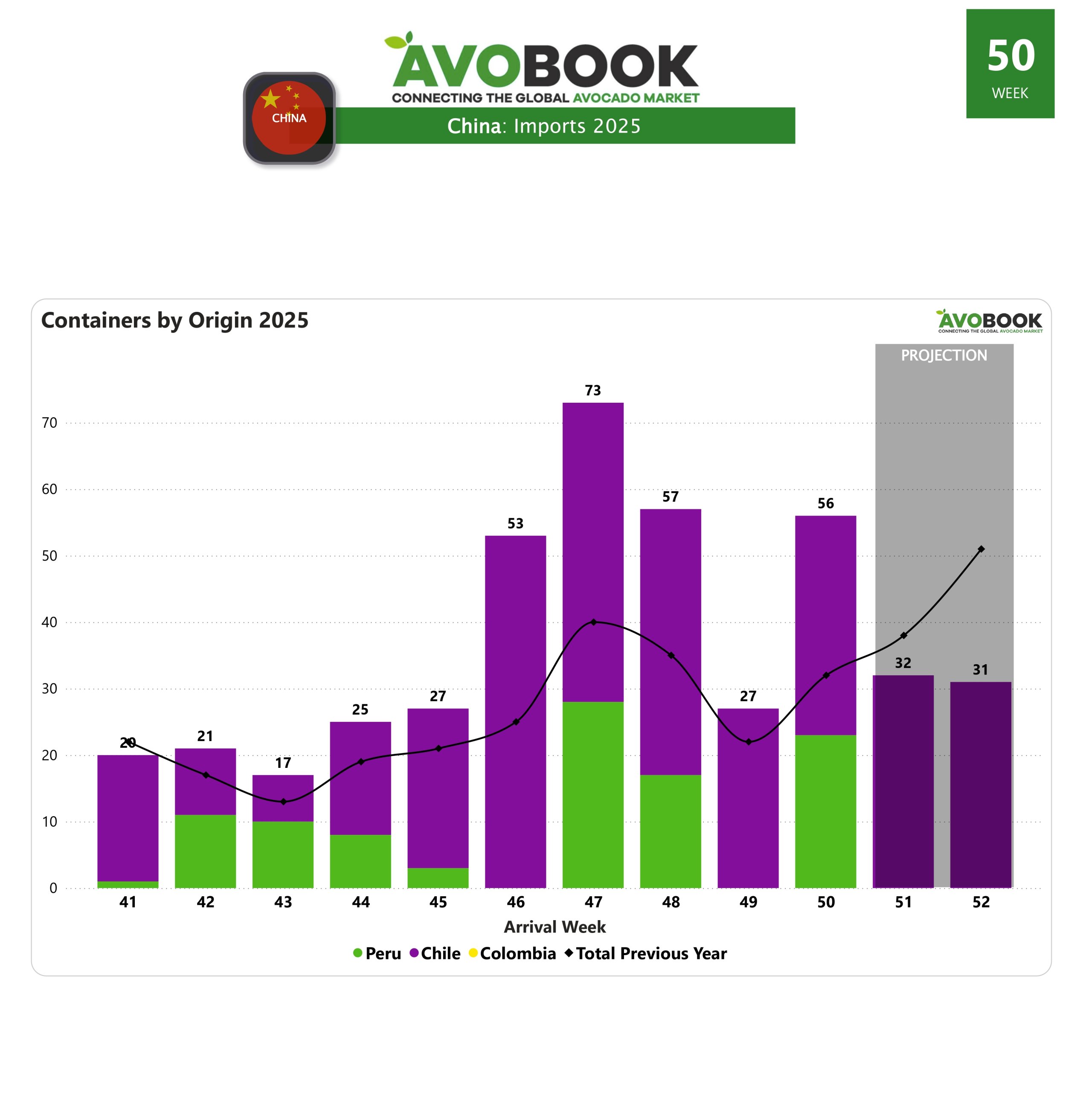
The Chinese market showed a significant shift in its dynamics during week 50, driven by a notable increase in supply. Arrivals reached 57 containers, more than double the previous week's figure, creating a scenario of greater availability that is beginning to influence price behavior.
The supply mix reveals a clear lead from Chile, which contributes 58% of the volume, followed by Peru with 40%. Mexico, for its part, is tentatively beginning its participation with a one-off shipment, although its presence could be repeated in the coming weeks, probably in moderate quantities.
In terms of prices, the market continues to face downward pressure. Sizes between 18 and 24 saw an average drop of 9%, falling even below levels observed in previous years. This decline is not an isolated event: the last three or four weeks have solidified a downward trend that reflects increasing supply and an adjustment in demand.
See the complete breakdown of figures and weekly trends in the global avocado market, with up-to-date data from all origins and markets. Access the Avobook Premium Report . Subscribe at avobook.com!