Argentina doubled its Hass avocado imports
In 2025, Argentina imported over 2,600 containers, more than double the amount in 2024, with Chile and Peru as the main suppliers.
View more
In 2025, Argentina imported over 2,600 containers, more than double the amount in 2024, with Chile and Peru as the main suppliers.
View more
Hass avocado supplies in Europe will remain limited in February. The focus is on Peru, whose shipment rate will determine the price and market equilibrium in March.
View more
Quito will host the 5th International Avocado Congress 2026, a technical and commercial meeting that will bring together experts from the sector to promote innovation and sustainability.
View more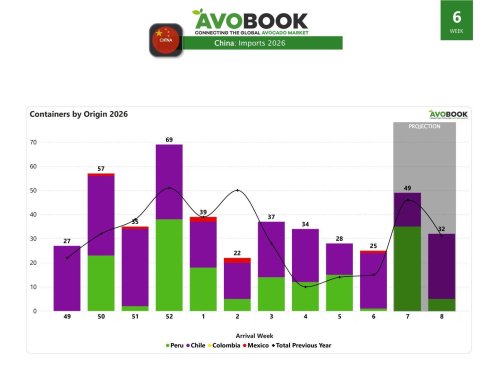
China saw 25 arrivals, with a strong Chilean presence. Volume fell compared to the previous week, but increased year-on-year, and prices showed limited adjustments.
View more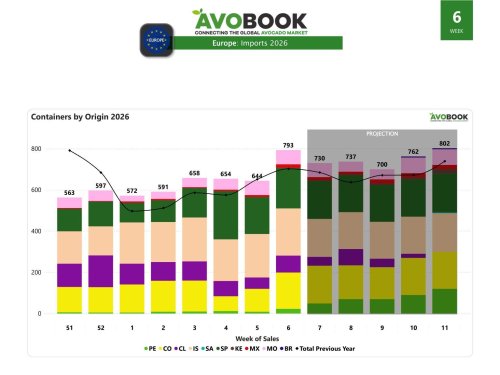
Europe recorded 793 shipments, showing weekly and year-on-year increases. Supply is growing from all origins, and prices are showing limited variations.
View more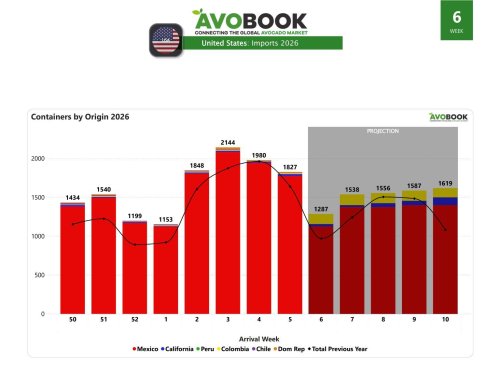
Week 5 records 1,827 shipments to the US, with a slight weekly decrease, dominance of Mexico and moderate price adjustments in large sizes.
View more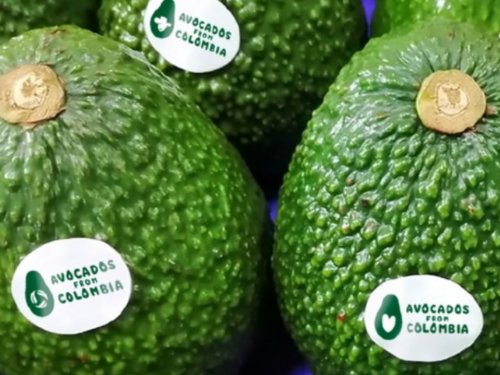
Colombia consolidates its global position in avocados. Labor costs, processing, and demands from the US and Europe are redefining the sector's strategy.
View more
Peru closed 2025 with a 38% increase in Hass avocado exports. Europe accounted for 62.6% of the volume, and the US showed a significant recovery.
View more
The “Sustainability Route” portfolio, led by APEAM and advised by scientist Ernesto Enkerlin-Hoeflich, seeks to transform the growth of Mexican avocados through measurable commitments in water, biodiversity and climate, with the goal of achieving net zero deforestation and a neutral environmental footprint by 2030-2035.
View more
Mexico leads in scale, while Colombia, Peru and Kenya are accelerating investments in processing plants, driven by global demand and technology.
View more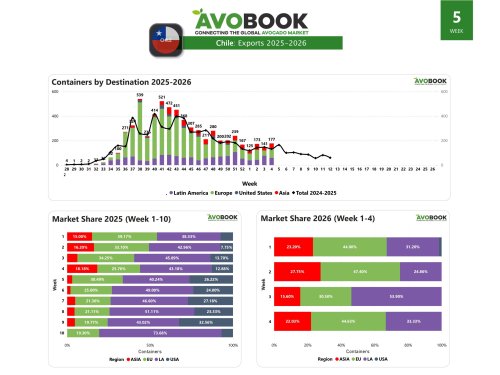
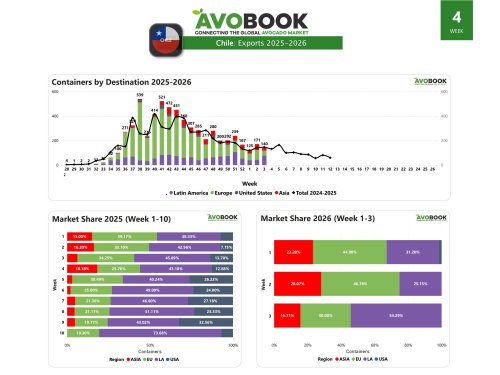
Exports rose 26% weekly and 34% year-on-year. Europe accounts for 45% of the destination, followed by Latin America with 33% and Asia with 22%.
View more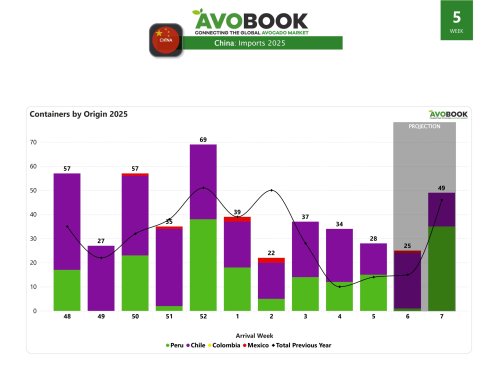
Volume fell 18% weekly and 7% year-on-year. Prices rose nearly 10% and exceeded US$4/kg for sizes 18–24.
View more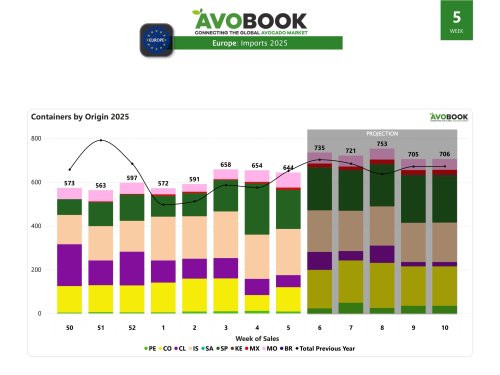
Arrivals are down 1% week-on-week and 2% year-on-year. Israel leads with 33%, and prices are up more than 10% for sizes 30 and 32.
View more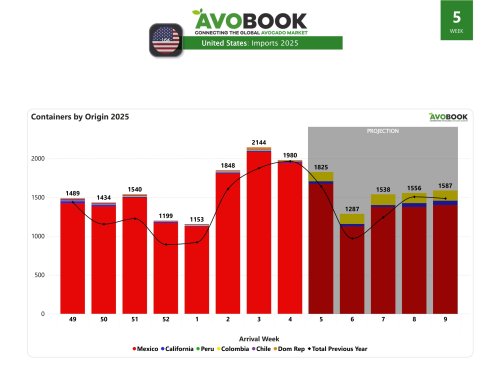
Shipments are down 8% weekly and 1% higher than the 2025 target, with Mexico accounting for 98%. Prices are falling across almost all sizes.
View more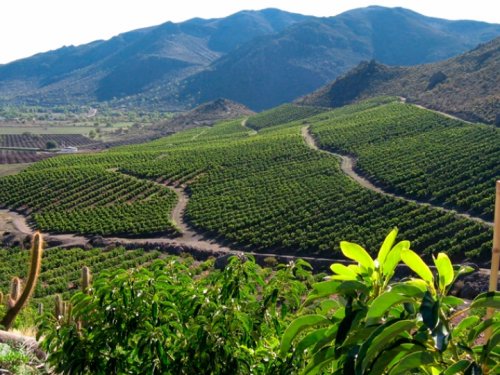
While several origins have reduced their presence or abandoned Asia due to high logistical costs and commercial complexity, Chile maintains close to 9% of its Hass avocado exports in that continent.
View more
From March 24 to 26, 2026, Fruit Attraction São Paulo will bring together the international fruit and vegetable chain at the São Paulo Expo.
View more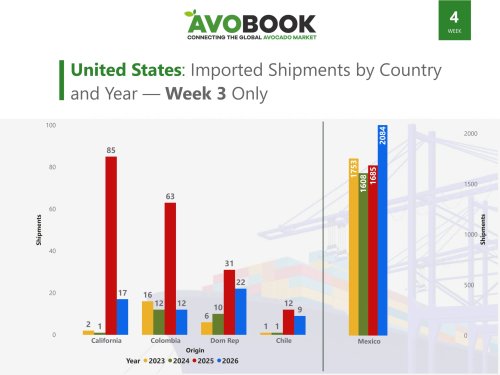
Week 3 of 2026 shows a year-on-year increase of 16% in imports to the US, with Mexico reinforcing its dominance and other origins losing share.
View more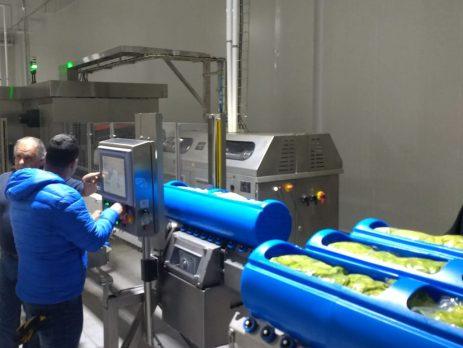
Investments in HPP, IQF and sanitary design position the new processing plants as a key driver of global avocado growth.
View more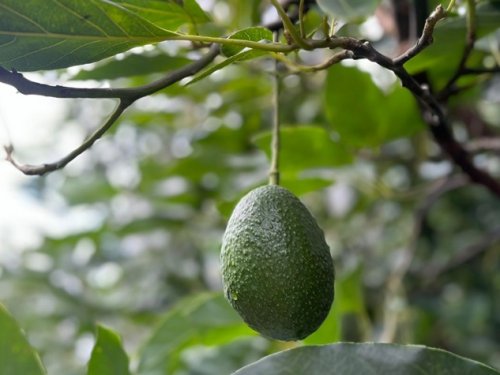
The United States leads in terms of authorized area, while Chile stands out by doubling its hectares authorized to receive Colombian avocados.
View more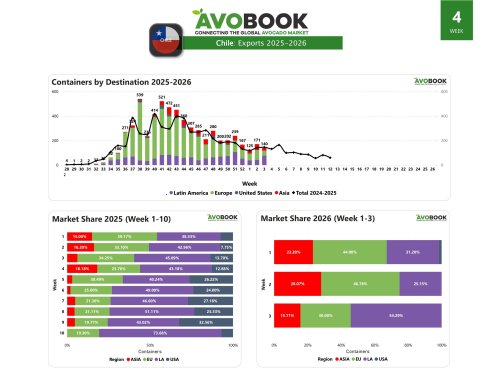
At the close of week 2, Chile added 159 containers, with weekly and year-on-year increases, and Europe accounted for half of the destinations, with no shipments to the US.
View more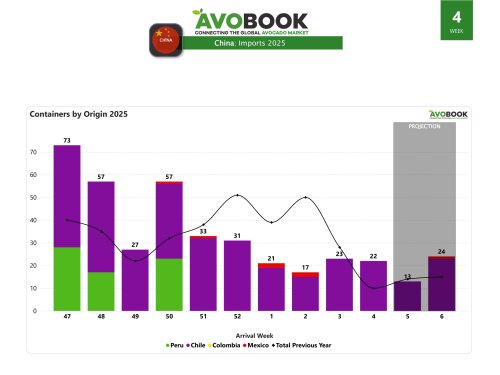
Week 3 ended with 23 containers from Chile, a weekly increase of 35%, a year-on-year decrease of 18%, and a price drop of nearly 5%.
View more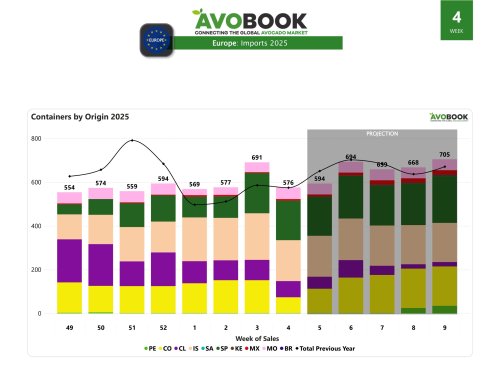
Week 3 ended with 652 shipments, a weekly increase of 14% and an 11% year-on-year increase, with Spain and Israel accounting for more than half of the volume that arrived in Europe.
View more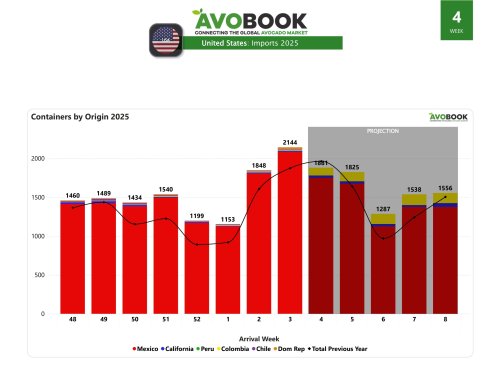

The 2026 Brazilian Hass campaign is progressing with a projection of close to 60,000 tons, shipments to Chile and South America and a detailed export schedule.
View more
The United States leads in terms of authorized area, while Chile stands out by doubling its hectares authorized to receive Colombian avocados.
View more
The event will bring together key players in the sector in May 2026 in Kenya, with conferences, a trade exhibition and sponsorship from Avobook.
View more
This warning comes from a producer and strategic advisor to the Avocado Importers Association in the United States, who shares his projections in numbers and analyzes how this could impact prices.
View more
Production delays, improved fruit quality, and firm prices in Europe mark the start of the avocado season in Ecuador, with February and March as key months.
View more
Mission's acquisition of Calavo unites two industry giants and marks a significant milestone for the US and global avocado market.
View more
At the close of week 2, Chile added 159 containers, with weekly and year-on-year increases, and Europe accounted for half of the destinations, with no shipments to the US.
View more
Week 3 ended with 23 containers from Chile, a weekly increase of 35%, a year-on-year decrease of 18%, and a price drop of nearly 5%.
View more
Week 3 ended with 652 shipments, a weekly increase of 14% and an 11% year-on-year increase, with Spain and Israel accounting for more than half of the volume that arrived in Europe.
View more
Week 2 closed with 1,850 shipments, led by Mexico, a weekly increase of 60% and price improvements in all sizes, with the greatest variations in 70 and 84.
View more
Although the U.S. excluded avocados from the additional 10% tariff, Colombia has not yet seen any concrete benefits due to market saturation.
View more
Although the U.S. excluded avocados from the additional 10% tariff, Colombia has not yet seen any concrete benefits due to market saturation.
View more
Baika and the Avocado Committee are promoting a pilot project in the Leyda Valley to measure biodiversity and atmospheric carbon, generating key data for the sustainability of the sector.
View more
Chilean exports closed week 50 with a stable volume, although with clear signs of adjustment in the distribution of destinations. During the period, 202 shipments left Chile, representing a slight increase of 1% compared to the previous week and a 6% increase compared to the same week last year. With this result, the weekly volume remains above 200 containers, despite a less linear trend observed since week 47, marked by consecutive increases and decreases.
View more
Arrivals are down 19% week-on-week and 66% year-on-year. Chile is the main destination for shipments, and prices are rising for sizes 18 to 24.
View more
In week 1, the European market recorded the arrival of 514 shipments, representing a 13% decrease compared to the previous week. The volume was at a similar level to the beginning of 2025, registering 3% higher than that period.
View more
Arrivals are down 4% compared to the last week of 2025, but are 25% higher than at the start of last year. Prices show adjustments based on size.
View more
At Avobook, we analyze the possible scenarios generated by the upward curve of Mexican avocado volumes available for export, considering the current reality in the United States (with which NAFTA must be renegotiated) and the difficulties of returning to other markets, should that be necessary.
View more
The CEO of the Avocado Committee, Francisco Contardo-Sfeir, analyzes the current attractiveness of shipments to Argentina: it registers a 25% increase from one season to the next
View more
Record volumes in 2025 broke the historical price pattern. Mexico, Peru, and Colombia pushed the market down to its lowest level in seven years.
View more
No major price variations are expected, as prices have reached their lowest levels in years, with very flat values across sizes.
View more
From production to international expansion, Miriam Martínez's experience reflects how processed avocados are redefining consumption, quality, and the market.
View more
The Colombian Hass avocado is undergoing a period of technical consolidation. After more than a decade of expansion, the sector is transitioning from a phase of accelerated growth to a model where professionalization is the foundation of competitiveness. In this context, Cartama has demonstrated that competing in international markets demands much more than volume: it requires consistency, traceability, and technically controlled post-harvest performance.
View more
In week 1, the Chinese market maintained a similar dynamic to that observed in previous weeks. During this period, 21 shipments arrived from Chile, representing a 32% decrease compared to the previous week. Volume was also 46% below the level at the beginning of 2025.
View more
In week 1, the European market recorded the arrival of 514 shipments, representing a 13% decrease compared to the previous week. The volume was at a similar level to the beginning of 2025, registering 3% higher than that period.
View more
In the last week of the year, the U.S. market closed week 52 with approximately 1,200 shipments. This volume represented a 22% decrease compared to the previous week, although it was 34% higher than that recorded during the same week in 2024. The market structure remained largely unchanged, with Mexico accounting for approximately 98% of shipments, while California and Chile each contributed around 1%. Volumes from Colombia and other origins had a marginal share.
View more
Mission and West Pak lead the list, with their operations in Michoacán, followed by the Chilean company Propal, with a strategy that shows that the Latin American market is gradually emerging as a space of opportunities.
View more