Industry, costs and markets mark the new cycle of Colombian origin.
Colombian avocado: efficiency and value to compete in 2026
Colombia consolidates its global position in avocados. Labor costs, processing, and demands from the US and Europe are redefining the sector's strategy.
Colombian avocados have moved beyond their period of rapid growth and entered a phase of consolidation, where reliability, quality, and operational efficiency are key. This is how Carlos Beltrán, operations manager at Managro, describes the current state of the industry within the global market.
In 2024, Colombia exported nearly 138,000 tons of avocados, valued at approximately $309 million, a figure that confirms the country is now a serious competitor in international markets. “The Colombian avocado industry is currently consolidating; it’s no longer just about increasing volume, but also about becoming more reliable in terms of programs, sizes, and quality,” says Beltrán, emphasizing that quality has become the country’s main competitive advantage.
Production almost year-round, thanks to the country's diverse climate and complementary growing seasons compared to other regions, is one of its main strengths. This is complemented by competitive logistics for both Europe and the US East Coast, along with sustained progress in certifications and traceability. "This advancement in quality and control is what gives Colombia a new position in the global market," he maintains.
Labor costs and an industry forced to professionalize
This consolidation process is occurring alongside a significant adjustment in costs. The increase in the minimum wage in Colombia has directly impacted a labor-intensive industry, from harvesting to packing. “The minimum wage for 2026, even with subsidies, significantly raises operating costs,” explains Beltrán, who warns that this scenario necessitates a structural change.
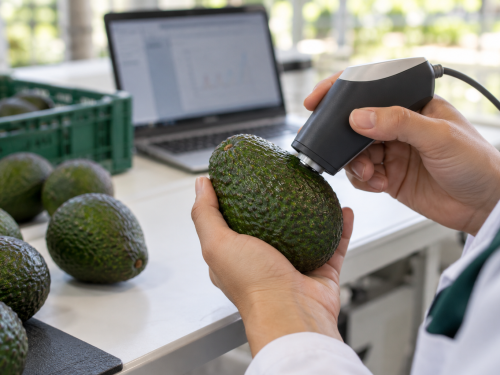
More than a threat, the executive sees it as a turning point for the industry. “The challenge isn't complaining about the cost, but responding with productivity: standardizing processes, improving crew capacity, reducing rework and losses, and relying much more on technology and quality control.” In that sense, he affirms that higher wages are driving a “much more professional” industry, with a greater focus on efficiency and compliance.
Processing, markets and the pending leap in the supply chain
The growth of processing plants is one of the most visible changes in recent years. Colombia now has approximately ten facilities dedicated to fruit pulp, guacamole, IQF (Individually Quick Frozen) products, and oils, distributed across Antioquia, Pereira, Bogotá, Palmira, and the Coffee Region. For Beltrán, this expansion represents a positive evolution: “Processing allows us to capture more value and utilize fruit that doesn't meet specifications for the fresh market, without destroying its value.”
In addition to the added value, processing is helping to streamline a supply chain that has historically had weaknesses, especially in the domestic market. “It’s an industry that demands safety, traceability, and consistency, and that raises the standard of the entire chain, including the fruit that stays in Colombia and has historically been treated very poorly,” he points out.
Beltrán illustrates this gap with a personal anecdote: the poor handling of the fruit within the domestic market has generated a negative perception of the product, affecting repeat purchases. “It’s a very fragile, very delicate fruit, transported in baskets and sacks, passing through several intermediaries. What reaches the consumer has been handled very poorly.” In his opinion, the development of processing can bring greater stability to demand, better use of the fruit, and more industrial development to the producing regions.
Looking ahead to 2026, the trade landscape presents clear opportunities, but with distinct requirements. In the United States, Colombia enjoys significant logistical and tariff advantages, provided it strictly adheres to the rules of origin and documentation. In Europe, however, competition is fiercer, and consistency will be the deciding factor. “The winner is the one with solid quality and adherence to the programs,” he summarizes.
This context is strained by a weak dollar and rising costs, reinforcing the need for efficiency and adding value where it makes sense. “In a scenario of higher wages and a low exchange rate, efficiency ceases to be optional,” warns Beltrán.
This strategic vision is deeply influenced by his business career. The executive identifies three key milestones: moving from selling opportunities to building programs with weekly discipline; understanding that growth depends on managing logistical, financial, and exchange rate risks; and forming teams and alliances where the field, plant, logistics, and customer operate as a single system. “That experience is the foundation of the vision I apply today at Managro: consistency, compliance, and long-term relationships,” he states.
Along this path, Managro projects significant growth leveraged by its joint venture with Del Monte Fresh Produce, which has allowed it to strengthen its strategy in the United States and Europe, not only in Hass avocados, but also in Tahiti limes and other fruits in its portfolio.
“The future of Colombian avocados is not just about growing in volume,” Beltrán concludes, “but about being reliable and efficient in quality and programs, in a context where costs are higher and the margin for error is increasingly smaller.”