Avocados from Mexico: "This is one of the seasons with the lowest prices we've ever seen."
Antonio Villaseñor, CEO of Aztecavo and member of the APEAM Board of Directors, analyzes the progress of the Mexican harvest, export projections, internal pressure on prices, and the Super Bowl milestone in a season marked by high volumes, strong internal competition, and a depressed price environment.
In this context, international certifications have become a structural pillar of the business. More than just a differentiating factor, they are now a basic requirement for participating in global trade, especially in markets such as the United States, Europe, Asia, and the Middle East, where food safety and microbiological control are non-negotiable.
From the experience of Avocomex, a company specializing in the international marketing of processed avocado products, food safety management is the central pillar upon which commercial trust is built. Miriam Martínez, a company representative, explains that the starting point for any export operation is ensuring that industrial processes comply with strict food safety standards.
“With this product, you simply open the packaging and consume it. There’s no additional process like washing or disinfecting at home, as is the case with fresh fruit,” Martínez points out. “That’s why you need the assurance that this product won’t harm you.”
This structural difference compared to fresh avocados means that the entire burden of sanitary control falls on the processing plant. In this sense, food safety certifications focus primarily on microbiological control and preventing risks to consumer health. “We always maintain food safety certification in our processes, specifically focused on microbiological aspects and the health of the products,” he explains.
Within this universe of certifications, the most widespread internationally is BRC (British Retail Consortium). According to Martínez, it is a standard widely recognized by clients and health authorities, serving as a seal of guarantee for destination markets. “When we have this certification in the plants we work with, we assure the client that the product is safe, that the plant meets all standards, that it is monitored and inspected, and has the necessary documentation and systems in place.”
The adoption of BRC, he adds, is no longer just a strategic decision, but has become a general market requirement. “Today it’s a basic condition. All clients tell you that the plant you work with has to have this certification. It’s the most important one, the one directly focused on food safety.”
Other certifications serve a similar purpose, such as SQF, which also enjoys global recognition. However, Martínez points out that BRC has achieved greater international standardization, facilitating process validation with various buyers and regulatory bodies.
In addition to these certifications, there are other complementary standards associated with the specific requirements of certain markets or consumer segments. Avocomex works, for example, with Kosher and Halal certifications, geared towards particular niches, as well as certifications related to transportation, safety, and corporate responsibility. “Depending on the origin, we encourage companies to obtain certifications such as CTPAT or SMETA, which aid in control and provide additional product safety,” explains Martínez, although he clarifies that they are all built on a common foundation: the safety of the production process.
Regarding regulatory requirements in the United States, Europe, Japan, and the Middle East, the executive points out that, generally speaking, the requirements are quite similar when you have solid certifications. “Having a food safety certification like this guarantees that your companies are properly regulated in all three markets. That opens many doors.”
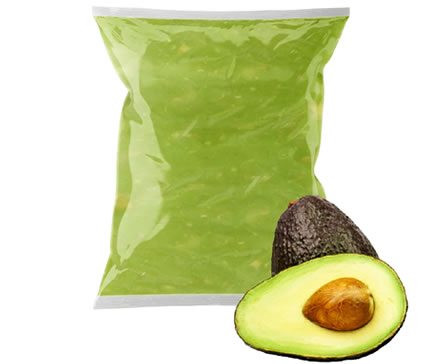
The United States, however, places particular emphasis on controlling pathogens such as Listeria, one of the main risks associated with processed avocado products. At this point, technology plays a key role. “For the United States, they greatly facilitate the entry of products that use HPP technology, which is high-pressure cold processing,” explains Martínez. This type of processing significantly reduces the microbiological load without affecting the product's characteristics, resulting in less complex inspections at the destination. “These technologies guarantee food safety, which is precisely what they are looking for.”
For this reason, Avocomex prioritizes the use of HPP in products destined for the US market, while for Europe and Asia it works with both products processed under this technology and frozen products, adapting to the logistical and regulatory conditions of each region.
From an export perspective, processed avocado products offer clear competitive advantages over fresh fruit. One of the most significant is shelf life. “When you ship the frozen product, it can last two or even three years,” explains Martínez. This extended shelf life expands commercial opportunities, allowing for more flexible distribution and better planning at the destination, especially for long-distance routes.
However, these advantages come with significant risks. “In a processed product, any error at the plant is highly chaotic, and the effects are much more severe,” he warns. Unlike fresh avocados, where there is some leeway once the product is in transit, processed avocados require precise specifications from the outset.
“It’s not like saying, ‘I’ll send it and see where to put it when it arrives,’” he explains. Multiple variables come into play with these types of products: the recipe, the sensory profile, the spiciness level, the storage format, and the preferences of the destination market. “Are you sending pulp or guacamole? Does that market consume spicy food? Did they want it refrigerated, and you’re sending it frozen? There are many factors involved.”
Thus, the advancement of international certifications and regulations has substantially raised the standard of the global trade in processed avocado products. For exporters, the challenge is no longer limited to production and shipping, but also to designing industrial processes, recipes, and logistics strategies aligned with specific markets and increasingly demanding regulatory frameworks. In this balance between opportunities and threats, food safety is consolidated as the main strategic asset of the business.