A new look at Avobook
Sara Lynn Álvarez: from the field to quality at the destination
With experience in post-harvest and cold chain, Sara Lynn Álvarez will share at Avobook how to connect the field with quality at destination.
October 29, 2026
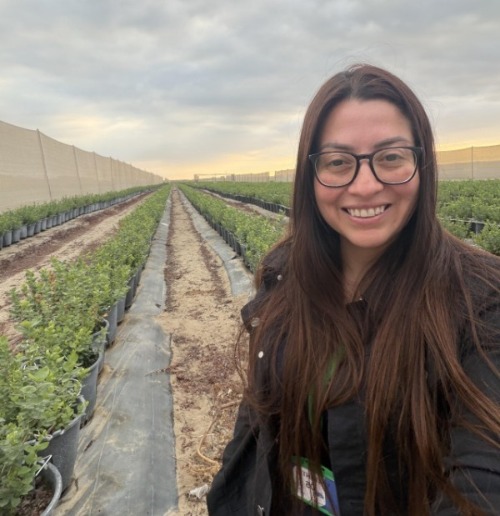
A livestock engineer from the National Agrarian University La Molina, Sara Lynn Álvarez has more than 13 years of experience in agricultural exports, logistics, and business development. Drawing on her expertise in postharvest management and the cold chain, she will share her perspective with Avobook on how decisions at every stage of the supply chain influence avocado quality and commercial results in our Avocomments section.
From Animal Science to Agricultural Exports
Sara Lynn Álvarez's goal was to work in the Peruvian highlands. Upon completing her studies in Animal Science at the National Agrarian University La Molina, that was the career path she envisioned. However, she encountered several difficulties accessing positions in certain areas, where she was rejected because she was a woman. Her first job in international logistics came while she continued searching for opportunities in her field and working on her thesis.
What began as a temporary occupation eventually became her professional career. First, she discovered the world of international trade, followed by the logistics of perishable products. Over the years, she then specialized in fresh fruit, postharvest management, and the cold chain. As she recalls with humor, she would eventually finish her thesis a decade later.
Ultimately, these two worlds complemented each other. Her background in Animal Science provided a scientific foundation for understanding the biological and physiological processes of fruit, while her experience in logistics allowed her to understand what happens from the moment a product leaves the field until it reaches consumers, who may be on the other side of the world.
Today, as an independent professional connected to Peru's agricultural export sector, she has more than 13 years of experience working alongside growers, agricultural exporters, and logistics operators.
Her career spans refrigerated logistics, controlled atmosphere, quality and inspection, postharvest handling, market development, team leadership, and commercial strategies.
The combination of her technical knowledge, commercial perspective, and close connection with the field will be part of what she shares as Avobook's new columnist.
A Supply Chain That Needs to Work as a Connected System
When examining the evolution of Peru's agricultural export sector, Álvarez highlights the progress made in professionalization. She notes that investments have been made in infrastructure, technology, and specialized personnel, and that the best available tools are now used to preserve fruit and monitor shipments. In her view, the next challenge is ensuring that these capabilities operate in an integrated manner.
“We can have excellent fruit, a first-class packing facility, and the best available technology to transport it, but if decisions are not coordinated, we can still end up with quality problems at destination,” she says.
Her years of experience working with various industry stakeholders have shown her that performing an individual task correctly does not, by itself, guarantee the success of the entire operation. Growers may focus on the fruit, exporters on their commercial commitments, and logistics operators on the contracted service. However, difficulties arise when each party evaluates its own part of the supply chain without understanding how it affects the others.
For this reason, she proposes reconstructing the entire sequence of events before assigning responsibility when a claim arises. She explains that sometimes there is an identifiable cause, while in other cases several factors contribute to the problem. Sharing information among the field, packing facilities, transportation, and destination markets is essential to identifying the issue and preventing it from recurring.
Quality Is Also Assessed After Ripening
One of Álvarez's central ideas is that arrival inspection should not be the final stage of the evaluation process. An avocado may have an excellent external appearance and still develop flesh discoloration, vascular browning, uneven ripening, or decay after passing through a ripening room.
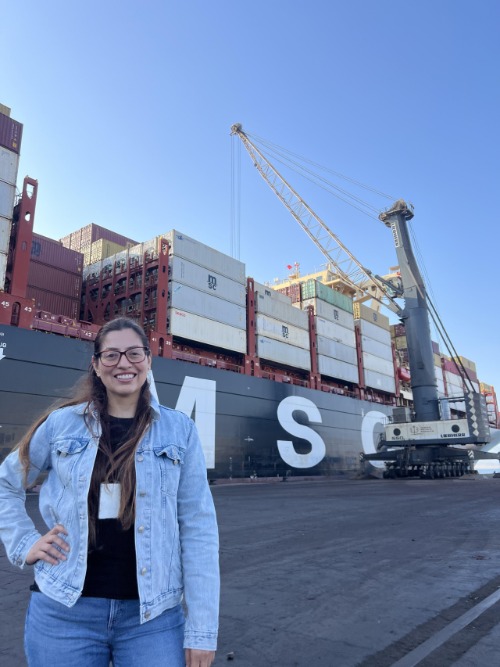
The fact that a defect becomes visible at this stage does not necessarily mean it originated there, she warns. Understanding the source of the problem may require reviewing everything from harvest maturity and the fruit's physiological condition to mechanical damage, cooling delays, transportation conditions, and handling at destination.
“The important thing is not just to identify a defect, but to understand why it appeared and what we can do to prevent it,” she explains.
From this same perspective, the specialist notes that loss of value is not limited to fruit that is completely damaged. It can also take the form of a shorter shelf life, uneven ripening, or conditions that force importers to sell more quickly at a lower price. In this way, postharvest decisions have consequences that directly affect commercial results.
Technology Backed by Information and Sound Judgment
Sara Lynn Álvarez's expertise also allows her to address the role of tools such as controlled-atmosphere technology and remote monitoring. Regarding the former, she highlights its usefulness in reducing respiratory activity and delaying certain ripening-related processes, provided that appropriate parameters are established for the product and transportation conditions.
However, she insists that it must be part of a postharvest strategy. It cannot correct an inadequate harvest or compensate for poor temperature management.
Regarding monitoring, she values the opportunity to access information during transit and identify deviations before the shipment arrives. At the same time, she makes an important distinction: knowing the air temperature inside a container is not the same as knowing the pulp temperature or the fruit's physiological condition.
Álvarez maintains that the challenge lies in connecting records from the field, packing facility, transportation, and receiving point, as well as knowing how to interpret them. She also sees opportunities in artificial intelligence and predictive models, although she emphasizes the need to validate these tools and understand their limitations.
“For me, technology truly adds value when it helps us prevent problems and make better decisions,” she states.
Growing Through Quality and Sustainable Commercial Relationships
The engineer's technical perspective is complemented by her concern for profitability. In analyzing the development of Peru's avocado industry, she recognizes the contribution of investments, new production areas, market access, and commercial efforts. However, she warns that producing more does not necessarily translate into greater profits.
According to her analysis, supply growth must be accompanied by markets capable of absorbing additional volumes under favorable conditions, consistent quality, and reliable programs.
This requirement also shapes her perspective on diversifying destination markets. For Álvarez, obtaining phytosanitary market access is only the first step, which must be followed by identifying buyers, developing commercial channels, and evaluating costs and transit times.
“We can obtain phytosanitary market access, but then we need to find buyers, develop commercial channels, understand what type of fruit that market requires, and assess whether we can actually serve it competitively,” she explains.
She also emphasizes the importance of not treating destination markets as homogeneous groups. Requirements vary among markets and buyers, and the journey may continue well beyond container unloading, through ripening centers, repacking facilities, and distribution networks.
“The quality we aim to deliver at destination begins to be determined long before the fruit enters the container,” she concludes.
Follow Sara Lynn Álvarez's upcoming columns on Avobook to explore the challenges of postharvest management, the cold chain, and their relationship with the competitiveness of the avocado industry.