Biological control in avocado
Can root bacteria stop Phytophthora?
A bacterium isolated in a Peruvian orchard stopped two pathogens in the laboratory and showed results against root rot in the greenhouse.

November 19, 2026
Scientists Richard A. Solórzano-Acosta and Kenyi R. Quispe, researchers from the National Institute of Agricultural Innovation (INIA) and the Scientific University of the South, explored the role of bacteria that live around the roots of the tree in the control of diseases.
The research was published in Frontiers in Plant Science. Their work focused on the rhizosphere, the zone of soil surrounding the roots, and the potential of its own bacteria to inhibit the growth of two crop pathogens.
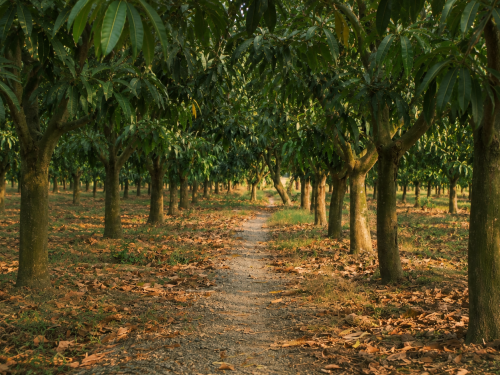
The team studied a commercial orchard on the northern coast of Peru, where they collected 29 bacterial isolates from Zutano avocados, a rootstock used in Hass orchards. Among the bacteria evaluated, a Bacillus subtilis isolate stood out for its ability to inhibit the growth of two pathogens in the laboratory.
Two pathogens, different levels of evidence
The research evaluated Phytophthora cinnamomi, which causes root rot, and Lasiodiplodia theobromae, a fungus associated with dieback of branches.
In laboratory tests, the B. subtilis isolate inhibited the growth of both pathogens by 44% and 33.3%, respectively. Initial activity of Pseudomonas putida against P. cinnamomi was also identified, although this effect diminished during the evaluation.
In laboratory tests, the B. subtilis isolate inhibited the growth of both by 44% and 33.3%, respectively.
With P. cinnamomi, the researchers moved on to a trial in greenhouse avocado plants. In the case of plants exposed to the pathogen and treated with B. subtilis, visual assessment estimated more than 90% viable fine roots.
Of the plants exposed to the pathogen but not treated with the bacteria, over 70% of the roots showed rot. The group treated with the bacteria also developed roots that were 44.6% longer. For L. theobromae, the study results correspond to laboratory tests.
The next step is to test it in a garden
The research team proposes a new evaluation in larger-scale greenhouses and under field conditions. Another part of the scientific proposal is to complement the visual estimation of viable roots with quantitative measurements.
The authors propose repeating the evaluation in larger-scale greenhouses and under field conditions.
These tests could help determine if the effect observed against P. cinnamomi is maintained in commercial orchards and if this isolate could be incorporated into integrated disease management.
Did you find this news helpful?
Follow us on Instagram → @avobook.avocado
There we publish the most important information about the global avocado market: news, figures and industry trends.
You can also follow us on LinkedIn or join our WhatsApp channel to receive key news as soon as it's published.