Regional supply of avocados
Argentina increases its avocado imports in 2026
Between January and September, Chile initially led and regained first place in September, following the advance of Peru and Brazil in the middle of the year.
November 3, 2026
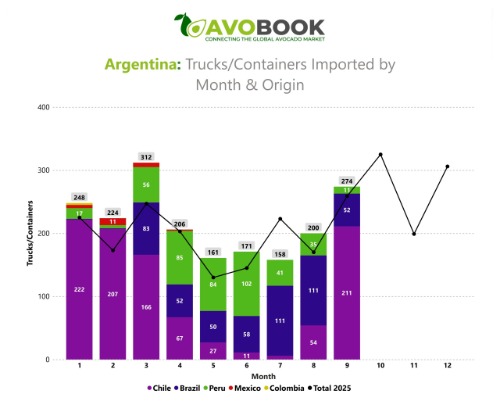
Between January and September 2026, the Argentine avocado market registered 10% more imports compared to the same period in 2025. According to data from Avobook, the highest monthly influx was observed in March with 312 trucks and containers, while the lowest figure corresponds to July, with 158.
This cumulative increase was not uniform; the analysis indicates that arrivals exceeded 2025 levels in eight of the nine months studied, with July being the exception.
Chile led the first quarter
During January, Chile supplied 222 of the 248 units imported into Argentina, approximately 90% of the total. Its share increased to 92% in February, with 207 of the 224 total shipments.
This leadership continued in March, with Chile maintaining its position as the main supplier with 166 units. However, its market share fell to 53%. In this context, Peru and Brazil began to gain ground in the month with the highest number of shipments to Argentina, with 56 and 83 shipments respectively.
Peru took over and Brazil led in winter
Peru took the lead among suppliers in April, contributing 85 units compared to Chile's 67. This dominance continued in May, with 84 avocado shipments, and reached its peak for the period in June, with 102 of the 171 containers/trucks that entered that month, while Chilean shipments fell to 11 units.
In July and August, Brazil became the main supplier of avocados to the Argentine market, with 111 shipments each month. This figure represented approximately 70% of July's arrivals and 56% of August's. During this period, Chile began to regain ground, contributing 54 units compared to Peru's 35.
September reopened the Chilean window
In September, Chile regained its leadership and accounted for 77% of Argentine avocado imports.
Argentina received 274 containers/truckloads of avocados during September. Of this figure, Chile contributed 211 units, equivalent to 77% of the total volume, while Brazil sent 52 and Peru 11. During this period, Chilean exports increased from 54 to 211 units, accounting for a significant portion of the overall increase in arrivals.
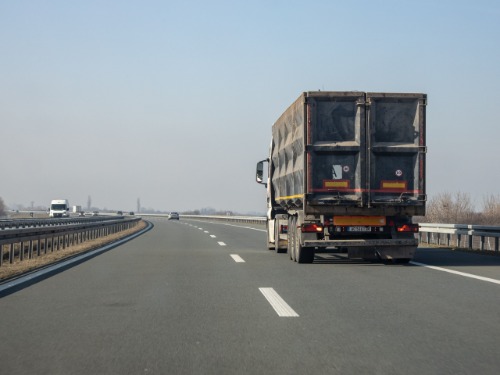
Chile's proximity to Argentina allows Chilean exporters to ship avocados by road. In September, Chile regained its position as the leading supplier. Its shipments increased from 54 to 211 truckloads/containers compared to August, while those from Brazil and Peru decreased.
Miguel Bauzá, manager of the import and export company Don Jaime, offers a perspective from the Argentine market. In an interview with Avobook, he explains that the end of imports from Brazil and Peru coincides with a pause in local production. In this scenario, Chile remains practically the sole supplier.
However, Bauzá cautions that increased Chilean participation doesn't guarantee that Argentine buyers will be able to absorb the supply at any price. For those considering exporting to Argentina, he notes that demand is concentrated on sizes #96 to #70, with some occasional purchases of size #60.
According to Don Jaime's manager, the export opportunity for Chile depends both on the timing of its product's entry into the market and on an offering of sizes and prices that suit the market.