Environmental measurement in orchards
Avocado orchards and CO2: How is their environmental contribution measured?
Sensors in Chilean orchards assess CO2 concentration and its link to the native forest in the face of European environmental demands.
November 19, 2026
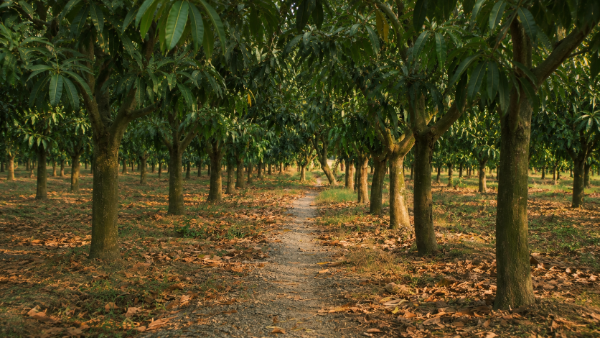
Avocado orchards can be studied for more than just their fruit production. The concentration of CO2 in the air, the presence of native vegetation, and the interaction with pollinators are important factors in understanding the orchard's relationship with its environment.
Elir Rojas Calderón, geographer and senior consultant at CAZALAC, explains the monitoring work carried out in Chilean orchards and the interest in establishing methodologies to evaluate their environmental contribution, noting that the work combines sensor records with field observations to better understand the relationship between orchards and nearby native vegetation in territories affected by drought and desertification.
The specialist also highlights the coexistence of crops with the sclerophyllous forest, the predominant ecosystem in the studied areas, and the observations that were made.
For her part, Cristina Tenorio, Head of Marketing at the World Avocado Organization (WAO), addressed the role of transparency on sustainability in communication with the European consumer at the second edition of the Global Avocado Summit.
Measure CO₂ in the air and quantify carbon capture
The research measured atmospheric CO2 concentration inside and outside the orchard's tree area. Rojas explains that the readings showed lower concentrations inside the orchard, in some cases by a significant margin.
According to the measurements presented by the specialist, the concentration of atmospheric CO₂ inside the orchard is on average 30 points (ppm) lower than outside, with differences reaching up to 50 points.
In parallel, the 2025 Sustainable Impact Report of Paltas de Chile documents specific cases of soil capture, such as the mapping of Valle Leyda, which records an estimated total of 28,000 tons of CO₂ captured (23,600 tons stored in the soil and 2.4% organic matter), a figure that exceeds the 1,800 tons of net annual emissions (scopes 1 and 2) from its operation.
In this way, the aim is to describe a difference in the concentration of the gas in the air.
“The goal of what we are doing is to define the methodology for both atmospheric CO₂ and carbon capture, ” he says.
According to Rojas, moving towards this measurement in tons per hectare opens a path to economic valuation through green bonds or carbon bonds, a mechanism that avocado producers in Colombia are already marketing in the international market.
Sensors that record information every minute
For atmospheric monitoring, the team uses ARANET sensors manufactured in Latvia. The CAZALAC consultant explains that they operate 24 hours a day and record one data point per minute. More than five million data points were analyzed during the project.
During the project, more than five million data points were analyzed.
The research placed sensors in various environments, including sections of the orchard, native vegetation, and areas near offices or with high foot traffic. This allows them to compare the recordings from locations with different characteristics and activities.
Regarding the technological scale, the study in Chile operated with an average of three sensors connected to a station, unlike similar experiences in Kenya, where 460 devices were installed in the same orchard.
When asked about the cost of implementing this monitoring, Elir Rojas maintains that it will depend on its scope, since the budget can vary according to the amount of equipment needed and the area to be studied.
“I can’t give a cost figure because it depends on the scale you want to cover,” he explains.
It also points out that there are still production systems to be evaluated, such as orchards with clonal plants. Therefore, the results described in the report should not be taken as definitive. automatically extend to all forms of production.
The native forest is part of the assessment
The study also considers the environment of the orchards. Elir Rojas places the observations in the production zone between Monte Patria and Las Cabras, which coincides with territories affected by drought and desertification in recent years.
In this scenario, the coexistence of avocado orchards and sclerophyllous forest formations stands out. One of the links identified is the exchange of pollinators between the environments.
In this scenario, the coexistence between avocado orchards and sclerophyllous forest formations stands out.
According to their analysis, the interaction reinforces the importance of maintaining proximity to native vegetation and studying the property in conjunction with its surroundings. They also mention the intention to document the relationship between the coexistence of both environments and the presence of native fauna and bees.
In seven evaluated properties, the research team identified 48 native species and 26 endemic species (such as the water hyacinth or Darwin's shield mouse detected by camera traps) and projects more than 2,000 hectares destined for conservation, exceeding the international standard of 30% biodiversity protection.
Transparency towards the European consumer
Providing transparency and environmental information can also contribute to building relationships with consumers. Cristina Tenorio, Head of Marketing at the World Avocado Organization (WAO), explains that purchasing motivations vary across European countries and that product communication must address these differences.
The executive uses the example of Germany, where she describes a consumer who is meticulous about product information. To connect with this audience, she emphasizes the importance of transparency regarding sustainability and showcasing different ways to incorporate avocados into everyday diets.
“We understand that addressing everyone in the same way is a mistake because we each have different motivations,” he points out.
Their analysis also mentions other elements that help build a consumption habit, such as nutritional attributes, versatility, and a good experience with the fruit.
“We understand that addressing everyone in the same way is a mistake because we each have different motivations.”
Although he does not link these preferences to an additional payment for carbon indicators, his intervention helps to contextualize the importance of explaining how avocados are produced.
For a producer looking to start a line of work that adapts to environmental requirements, it is recommended to begin by ensuring three variables. First, having healthy soil without any disturbance to native ecosystems after 2020; second, guaranteeing established and transparent water rights; and finally, conserving neighboring biodiversity as a biological corridor.
In this context, the sustainability report of Paltas de Chile AG indicates that 85% of its partners already have a biodiversity conservation or regeneration plan, covering 13,913 hectares designated for this purpose.
Observe the adaptation
When asked about the effects of climate change on avocado trees, Rojas mentions long-lived trees that continue to produce fruit in areas like Quillota. In his opinion, they exemplify the crop's ability to adapt.
In areas such as Panquehue, Hijuelas and Llay-Llay, affected by more than 15 years of drought that eroded the original xerophytic formations, it is noteworthy that the presence of hillside orchards allowed the recovery of vegetation cover and biodiversity from the 1,000-meter elevation downwards (in contrast to the degraded soils above that height), providing moisture and fulfilling an environmental mitigation role.
The work presented opens a path to better document the relationship between the crop and its environment. The next step, according to the specialist's objective, is to advance methodologies that allow for quantifying carbon sequestration.
Did you find this news helpful?
Follow us on Instagram → @avobook.avocado
There we publish the most important information about the global avocado market: news, figures and industry trends.
You can also follow us on LinkedIn or join our WhatsApp channel to receive key news as soon as it's published.