Sustainability
Baika starts the season with a potential of 16,000 tons
Ucuquer and Alicura kick off Baika's season in Chile: they add up to 1,100 hectares and a potential of 16,000 tons.
Thursday, September 10, 2026
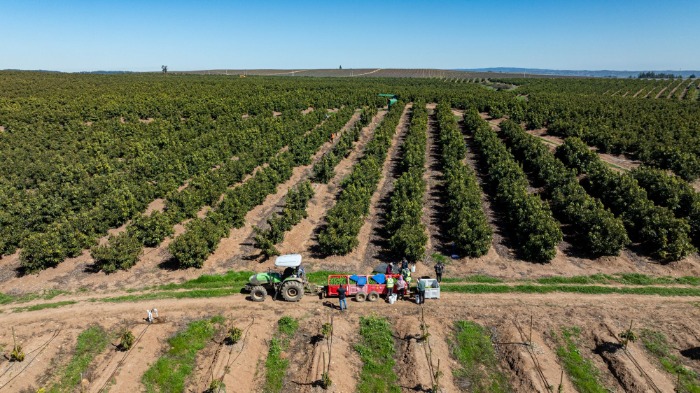
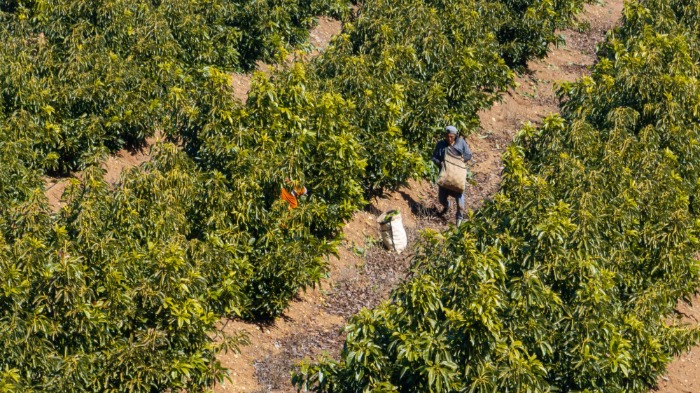
Ucuquer and Alicura, two of Baika's projects in Chile, together comprise 1,100 hectares of avocado orchards and have already begun a new season. The start of the campaign is marked by a high percentage of dry matter, a favorable fruit size range, and a high percentage of fruit destined for export.
Within this operation is Ucuquer, located in Litueche, with 693 hectares of Hass avocados. The farm begins production at the end of August and is part of Baika's fruit supply during the Chilean season.
According to Andrés Silva, manager of the Ucuquer Project, the field has conditions that favor early production. As it is a new project, the quality of the plants stands out, while the warm springs in the area promote the fruit set of the first blossoms.
This allows the fruit to reach the necessary dry matter levels to begin harvesting earlier and, at the same time, develop good sizes.
The 23% dry matter content marks the start of the harvest
Harvesting does not begin simultaneously throughout Ucuquer. Different areas progress according to the fruit's ripeness, using the percentage of dry matter as the main indicator.
“The harvest indicator is that the fruit has a dry matter content of over 23% ,” Silva explains.
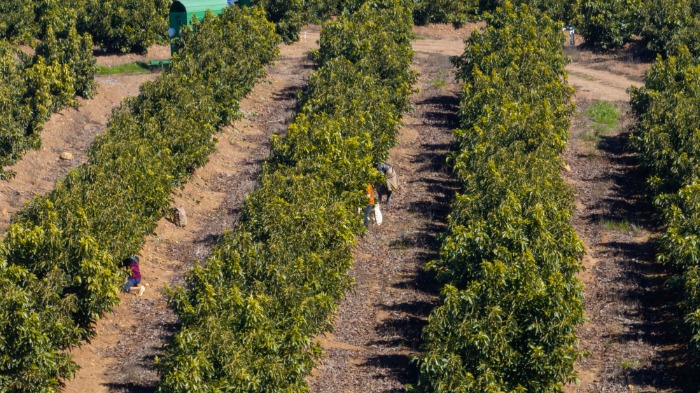
This distinction is especially relevant considering that avocados complete their ripening after being harvested. “If they are not harvested with that minimum dry matter content, there are repercussions for the quality of the fruit at its destination. It is important to remember that avocados are a fruit that ripens after being harvested,” explains Silva.
According to the executive, reaching 23% dry matter allows for proper fruit ripening and avoids problems at the destination.
Knowledge of each sector is also essential for organizing an operation of this scale. The team holds weekly meetings to plan tasks and anticipate needs for machinery, labor, and supplies, while each manager considers the specific characteristics of the sectors under their responsibility.
Irrigation, one of the main production challenges
Among the agronomic challenges, Silva identifies water management as one of the most relevant points not only for Ucuquer, but for avocado orchards in general.
“The biggest challenge in any avocado orchard, not just in Ucuquer, is irrigation management. You have to be very precise with the right time to water the plants, since avocados are very susceptible to excess moisture,” he points out .
Due to the species' sensitivity to excess moisture, the team digs soil pits three times a week to check the conditions in different areas. The information obtained allows them to determine both the timing of irrigation and the amount of water needed.
The goal is to adjust decisions to the specific soil conditions and avoid excesses that could affect plant development.
A productive window that extends throughout the year
In the case of Ucuquer, production runs from the end of August until the first days of January. Afterwards, other fields belonging to the holding company begin to be harvested, some of which continue until April.
According to Silva, this extension of the Chilean window is complemented by production from Peru and Colombia within Baika's strategy to maintain a flow of fruit 365 days a year.
Thus, Ucuquer is part of a broader supply schedule, in which different fields and origins are progressively incorporated throughout the year.
Baika projects a potential of 16,000 tons
Together, Ucuquer and Alicura have 1,100 hectares of avocados and a productive potential of 16 million kilos, equivalent to 16,000 tons.
In the case of Ucuquer, the project still has hectares that have not yet reached full production. Silva explains that the goal is to produce as much fruit as possible with high quality standards, reducing costs and progressing sustainably, along with ongoing work on efficiency and continuous improvement.
For the project manager, Ucuquer's evolution can also be seen in the transformation of the land. "The main evolution of this field is seeing how, today, the land is capable of producing a large quantity of excellent quality avocados, in addition to being a source of employment for many people in the area," he points out.
The next challenge will be to continue consolidating the productive development of Baika's fields in Chile. In the case of Ucuquer, Silva aspires to consolidate a socially and economically responsible farm that "produces the best fruit in Chile . "