Click here to go directly to the content

Peru reduces weekly shipments, but maintains record-high volumes

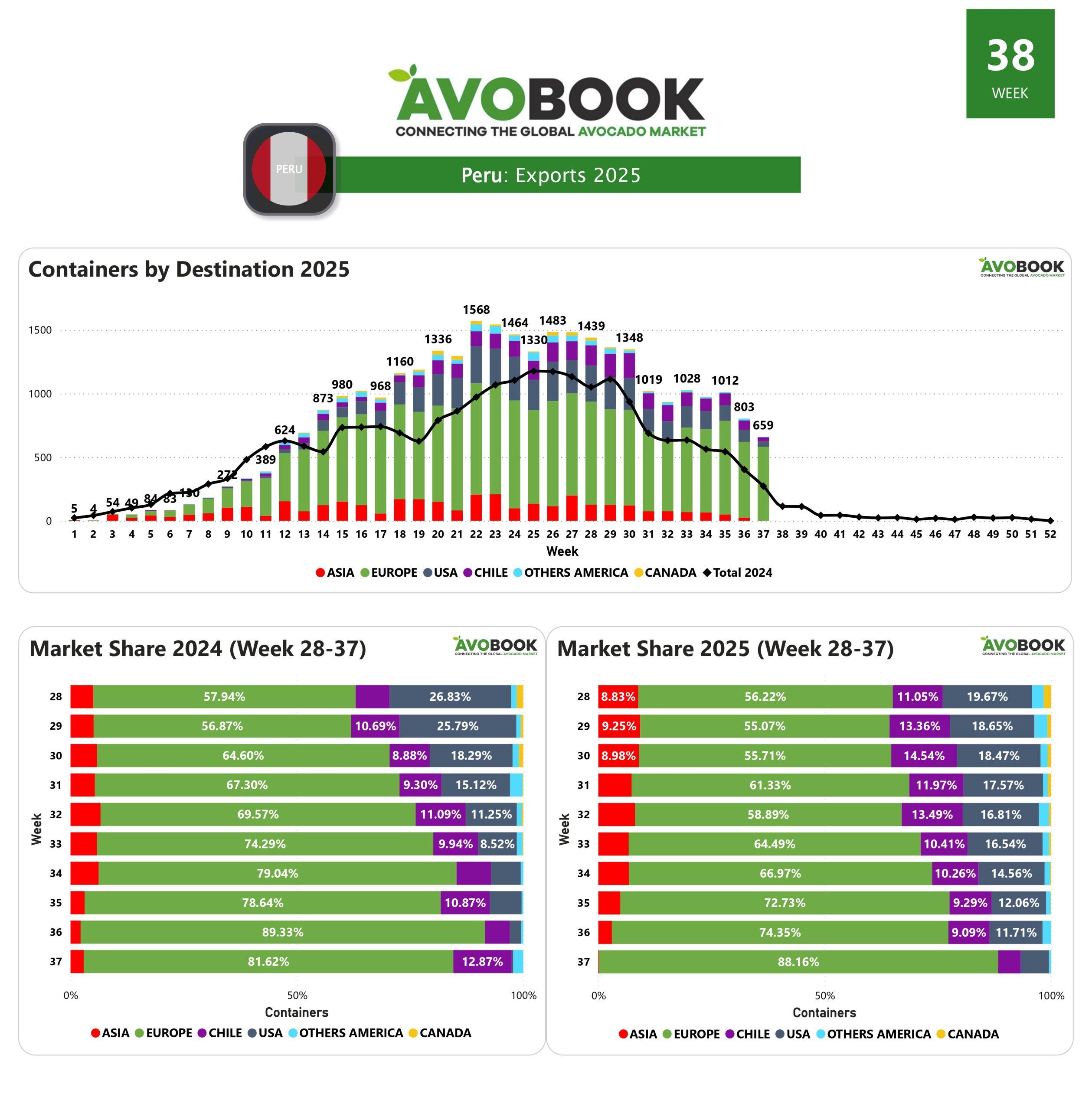
Avocado exports from Peru closed week 37 with 659 shipments, a figure that reflects an 18% decrease compared to the previous week. However, the volume remains well above the records for this same date in 2014, with more than double the number of shipments compared to last year.

In terms of destinations, Europe consolidated its position as the preferred market, accounting for 88% of Peruvian exports. The United States received 6%, Chile 5%, and the remaining percentage was distributed in marginal volumes to other countries.

The trend confirms that, in these final weeks of the campaign, Peru's export focus is increasingly oriented towards the European market, which absorbs most of its supply.

Remember that the detailed breakdown of each figure and the weekly evolution of global avocado market movements across all markets and origins can be found in the Avobook Premium Report . Subscribe now at avobook.com
Tags

Related articles

Peru celebrates National Avocado Day and recognizes a globally recognized industry

This August 21st, the country commemorates a date created to recognize the productive and social value of one of its main agricultural export products.

View more
Francisco Contardo on the start of the avocado season: “We do not expect an impact on the supply available to the market”

Following the rains, winds and frosts of the last few weeks, Paltas de Chile estimates limited losses of between 4% and 7% without foreseeing changes in supply or in the calendar of the 2026-2027 season.

View more
Small sizes plentiful and large fruit scarce. What's happening with prices in the US?

The Mexican harvest began with a high presence of small fruit, while the lower supply of large sizes widened the price gap.

View more