Given the weather conditions
Francisco Contardo on the start of the avocado season: “We do not expect an impact on the supply available to the market”
Following the rains, winds and frosts of the last few weeks, Paltas de Chile estimates limited losses of between 4% and 7% without foreseeing changes in supply or in the calendar of the 2026-2027 season.

Recent weather conditions in the central region of the country have caused early fruit drop in several orchards right at the start of the 2026-2027 season. However, the senior management of the industry is calling for operational and commercial stability.
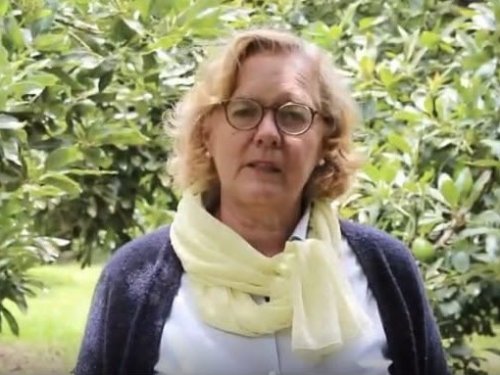
Francisco Contardo Sfeir , CEO of Paltas de Chile , explains that the industry is currently in the process of compiling a census to finalize the season's estimate in the coming days. However, preliminary data allows them to narrow down the scope of the phenomenon.
"Our preliminary assessment indicates that fruit loss due to this frontal system ranges between 4% and 7%, depending on the area. The greatest impact has been concentrated in the O'Higgins Region, where frosts severely affected some of our partners, while in the Valparaíso Region the impact has been comparatively less, reflecting better agronomic management and the lessons learned by producers in previous seasons ," Contardo explains.
Productive strength and stability in schedules
To understand the true impact of this 4% to 7% loss, the CEO of Paltas de Chile emphasizes the need to consider the recent historical context. The sector has just completed two high-yield seasons: 240,000 tons in 2024-2025 and 265,000 tons in 2025-2026.
This productive strength is what allows Contardo to assure that there will be no shortage or structural cut in the fruit projected for national and international markets.
"We do not expect to see an impact on the supply available to the market ," the union leader firmly maintains.
Regarding rumors about possible delays in shipments, Contardo rules out any changes to the start or end dates of the marketing window. The reason is technical: the Chilean harvest is not governed by specific weather events, but rather by the strict progression of physiological maturation (accumulation of dry matter) in each producing valley, a parameter that has not been altered by the August rains.
The advantage of the slopes and the study alongside Cazalac
One of the main agronomic concerns after heavy rains is root asphyxiation due to waterlogging in the soil. In response, Francisco Contardo explains why the geography of Chilean avocados acts as a natural shield.
Since a significant percentage of plantations in Chile are located on hillsides to ensure constant drainage, the effects of excess water have been limited to valley orchards, which represent a smaller portion of the national cultivated area.
To support this diagnosis with scientific evidence, the executive highlights the progress of an investigation that the trade association is developing together with the Water Center for Arid and Semi-Arid Zones of Latin America and the Caribbean (Cazalac):
"As part of an ongoing study with Cazalac, the scientific team in charge has been able to verify on-site, during these same rain events, that the impact of water on plantations located on hillsides has been practically nil, partly because the rooting of the tree helps to fix the soil ," reveals Contardo.
Fallen fruit: a direct warning to the market and consumers
One point Contardo emphasizes is the fate of fruit knocked down by wind, rain, and ice. From Paltas de Chile's technical and quality perspective, this volume should not enter the commercial chain, not even for pulp processing.
The executive points out that avocados in Chile are harvested strictly when they reach the minimum threshold of 23% dry matter, an essential requirement for the fruit to begin an optimal post-harvest ripening process. The fruit that was prematurely detached by the storm did not complete this physiological cycle.
"It will not ripen properly and, consequently, should not be used for other purposes, at least with regard to its pulp ," warns the president of the guild.
As a result of this situation, Contardo is taking advantage of the opportunity to make a direct appeal to end consumers to be skeptical and find out about the origin of the product when they detect offers with "abnormally low" prices in the informal market.
Europe and the global stage: technical rigor in a competitive market
Regarding foreign trade, Contardo reaffirms that Chile's export position in Europe will not undergo any changes in its entry protocols. The industry will maintain its usual phytosanitary, traceability, and quality certifications without alteration.
"These standards, which are a structural part of how the Chilean export industry operates, will not be altered by the weather situation of the last few weeks ," he asserts.
Finally, the CEO outlined the sector's strategic agenda for the Global Avocado Summit , scheduled for November 11th at the peak of the harvest. Beyond the current local weather conditions, Contardo noted that the industry's focus must be on the growing international competition and the increasing global supply.
"The meeting will focus on the technical aspects, with an emphasis on providing tools and learning opportunities to our farmers, consolidating current and growing markets, and the sustainability work we are carrying out as an industry ," concludes Francisco Contardo.