Export strategy
Mexico is betting on established export markets
Despite opportunities in Europe, the Mexican industry prioritizes the stability of the US, Canada, and Japan due to logistical advantages.

Each new season brings adjustments to the global avocado supply and opens opportunities for different countries to strengthen their presence in international markets. This year, the temporary reduction in Peruvian availability in Europe could create a trading window for other suppliers; however, Mexico is viewing the situation with caution.
For Ricardo Vega, CEO of Frutícola Velo, the focus remains on strengthening markets where the country has built a solid position over decades. The United States , Canada, and Japan will continue to be the primary destinations for export efforts, thanks to logistical, commercial, and supply advantages that are difficult to replicate in other markets.
"The responsiveness of Mexican avocados is incredible in meeting market needs, with excellent quality fruit and availability 52 weeks a year," Vega points out.
A strategy supported by closeness and continuity
Unlike other exporting countries , Mexico has a geographical advantage that allows it to respond quickly to the needs of its main buyers. As Vega explains, an order placed from the United States can arrive at the border just 24 hours later, a responsiveness that has solidified the country's position as the natural supplier to the North American market.
In addition, there is a consistent supply throughout the year, even when production experiences seasonal variations. Although availability decreases slightly during July and August and larger sizes are often scarce, the supply never disappears. This continuity allows the company to maintain stable commercial relationships with its main markets and respond quickly to changes in demand.
Quality as the basis for consolidating markets
Maintaining this position requires preserving a consistent quality standard, especially at the start of the new season. One of the main challenges is the so-called " loca" flower , an off-season crop that represents between 10% and 15% of an orchard's annual volume and whose harvest extends roughly from June to October. Although its quality may be equivalent to that of the rest of the year, the risk arises when the fruit is harvested before reaching physiological maturity.
To avoid this problem, the Mexican industry applies strict dry matter controls. Currently, the fruit can only be harvested when it reaches a minimum of 23% dry matter in the orchard and 22% once evaluated at the packing facility , a measure that seeks to ensure a proper ripening process and preserve the product's organoleptic characteristics.
"The most important thing the Mexican industry has done has been precisely the control of dry matter, because that guarantees that we are in the market with fruit of optimal quality ," Vega maintains. 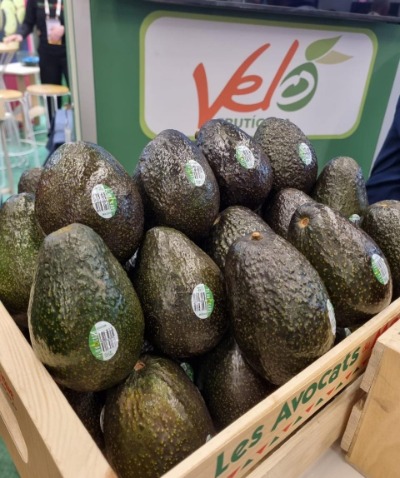
Europe represents an opportunity, but it doesn't change the strategy
In this context, the reduction in Peruvian supply could create a temporary window of opportunity for the European market. However, Vega considers it unlikely that this will alter the Mexican industry's export strategy. While he acknowledges that some exporters might take advantage of this opportunity, he believes these will be isolated cases and not a widespread trend.
The main reason is due to a combination of logistical and commercial factors:
- Maritime transit times: As the journey exceeds 30 days, the chances of facing physiological problems in the fruit increase considerably, while after 35 days the risk becomes critically high.
- Marketing model: In Europe, schemes such as consignment sales or guaranteed minimums predominate. In Mexico, where fruit is usually purchased at a fixed price at the orchard before harvesting, assuming that level of commercial uncertainty is unattractive.
"If you buy the fruit at a fixed price and send it on consignment, that's suicide," Vega says, recalling the experience of numerous Mexican exporters during the 1980s and 1990s.
Recommendations for exporting to the European market
Despite this scenario, Vega does not rule out the possibility that some players will try to take advantage of the commercial window that could open in the coming weeks. However, he warns that doing so requires minimizing both logistical and commercial risks.
- Transportation efficiency: Having maritime routes that ideally complete the journey in a period of approximately 24 or 25 days, providing sufficient margin for marketing at the destination.
- Profitability balance: Ensure negotiation conditions that allow for the recovery of the initial investment and the generation of returns proportional to the risk assumed.
"It's not attractive to risk a truck worth $40,000 to earn $2,000," Vega exemplifies, referring to the balance that must exist between risk and expected profitability.
Recent experience in markets like China also reinforces this view: when transit times increased, Mexico lost ground to suppliers like Chile and Peru. This confirms that the industry's priority is not to expand to just any destination, but to consolidate its position in markets with clear competitive advantages.