Origin analysis
Kenya aims to become the world's third largest exporter of avocados
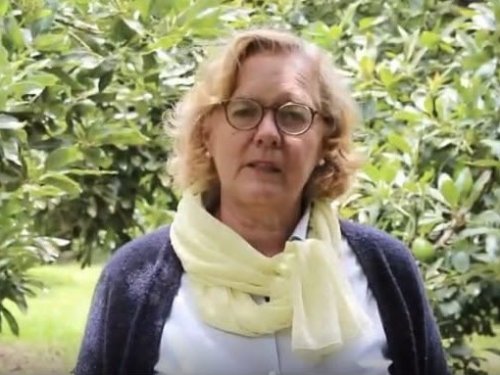
Christine Chesaro, director of the Horticultural Crops Directorate of the Agriculture and Food Authority (AFA), spoke exclusively with AvoBook about the projections for the African nation.

Over the past decade, Kenya has evolved from an emerging player into one of the origins that has gained prominence most rapidly in the international avocado market. Its growth is not solely the result of an increase in cultivated area or the dynamism of global demand. Behind this evolution lies a national strategy combining public policies, infrastructure development, support for smallholder farmers, and a strong emphasis on quality as its main competitive advantage.
This is explained by Christine Chesaro, Director of the Horticultural Crops Directorate of Kenya’s Agriculture and Food Authority (AFA), who spoke exclusively with AvoBook about the current state of the industry, the socioeconomic reality of avocado production in rural communities, the serious logistical challenges caused by the Red Sea crisis, and the ambitious vision aimed at placing Kenya among the world’s top three avocado exporters.
A Decade of Transformation: From 31,000 to 128,000 Tons
The figures clearly reflect the structural transformation experienced by Kenya’s avocado industry over the past decade. According to Chesaro, the sector has shown steady and sustained growth: while the country recorded avocado exports of approximately 31,000 tons in 2015, by 2025 that figure had exceeded 128,000 tons.
This progress reflects a consistent annual volume growth rate of approximately 15%, with only a few seasons experiencing declines. As a result, in 2025 the total value of exports reached KES 25 billion, equivalent to approximately USD 143 million in total export returns.
In terms of geographic distribution, production is largely determined by the country’s agro-climatic conditions. Currently, just 15 of Kenya’s 47 counties account for 90% of the country’s avocado production and exports, with some of these areas standing out for significantly higher productivity levels.
Another 10 counties contribute the remaining 10% of the national supply, while the rest of the country consists largely of arid and semi-arid areas whose soil and climatic conditions prevent optimal avocado production.
Regarding the destination of harvested volumes, there is a clear distinction between domestic consumption and export-oriented production. While local consumers primarily favor traditional green varieties such as Jumbo, domestic demand for Hass is very limited, with approximately 90% of Hass production destined exclusively for international export markets.
Quality as a Strategic Demand Driver
If there is one central concept underpinning Kenya’s agricultural export policy, it is quality control. Chesaro openly acknowledges that the origin faced serious challenges in international markets years ago due to the export of immature or defective fruit, but maintains that the strict regulations implemented by the AFA are beginning to improve the origin’s reputation.
This operational improvement is complemented by a natural differentiating attribute: the organoleptic profile of avocados produced under tropical conditions.
"We receive constant feedback that Kenyan avocados have a unique flavor thanks to our tropical conditions. However, the main lesson we have learned as a sector is that better quality directly generates greater demand in the international market," Chesaro highlights.
To maintain these standards, the authority continues to strengthen inspections at the beginning of the harvest season to prevent premature harvesting, while exporters are also being encouraged to pursue aggressive commercial partnerships at international trade fairs and events.
Smallholder Farmers: The Socioeconomic Pillar and Rural Model
Unlike other Southern Hemisphere exporters, where large-scale corporate developments tend to dominate, avocado production in Kenya is highly fragmented. Approximately 80% of farmers are smallholder producers.
This fragmented structure has a direct social impact on Kenya’s rural areas. Nearly 50% of the total value generated by exports returns to rural communities, meaning that of the KES 25 billion generated in 2025, between KES 12.5 billion and KES 13 billion flowed directly to farming families. This dynamic makes avocado production a primary source of employment and income, stimulating local economies and strengthening food security in producing areas.
To support this model, the government promotes strategic incentives through the National Value Chain Development Program, funding the free distribution of certified plants and seedlings in high-potential areas. At the same time, with the aim of reducing post-harvest losses, the government currently operates eight public packhouses equipped with cold-chain facilities and is constructing a ninth center, with plans to add new facilities each year through public-private partnerships.
Operational Challenges: Uniformity and the Red Sea Crisis
Despite the industry’s growth, working with thousands of smallholder farmers creates significant operational challenges when it comes to standardizing supply. When an export shipment is consolidated, the fruit inevitably comes from multiple small farms, making it difficult to achieve perfect uniformity in key parameters such as ripening time.
In addition to this origin-side management challenge, the industry is facing the critical impact of global logistical disruptions, particularly the crisis affecting navigation through the Red Sea.
Currently, Kenya’s export markets are distributed as follows:
- Europe: The traditional market par excellence, absorbing 80% of shipments.
- Middle East: Accounts for 14% of exported fruit.
- Other destinations: Represent the remaining 6%.
The inability to transit through the Red Sea has forced shipping lines to divert vessels around the African continent via the Cape of Good Hope and West Africa, generating serious operational and financial repercussions.
Maritime journeys to Europe, which normally took 25 days, have now extended to 50 or even 60 days at sea. This has also resulted in cargo losses at destination, as unpredictable transit times have led some exporters to face rejection rates of up to 50% of their containers due to fruit deterioration after two months in transit.
Another challenge is the substantial increase in freight rates. The heightened condition risk has led European buyers to reduce their sourcing programs or demand a return to the traditional 25-day routes.
To mitigate this impact, the AFA is working intensively to reduce international rejection rates to below 3% per shipment and accelerate market diversification.
Strategic Diversification into Asia and the Global Top 3 Goal
Faced with the volatility of the route to Europe, Kenya has turned its commercial attention toward Asia. Chesaro identifies China and India as the two major strategic priorities for the Kenyan industry, given that the country already has phytosanitary protocols and operational market access in both destinations. Their large populations and relatively shorter transit times position Asia as a major growth engine for the coming years, alongside the strengthening of the Middle Eastern market.
Despite the global logistical challenges, Kenya’s ambition remains firm. The country currently ranks between sixth and seventh worldwide in avocado production and exports. However, the official roadmap for the next five years sets an even more demanding target:
"Our vision for the next five years is clear: we want to position ourselves among the world’s top three avocado producers and exporters. To achieve this, we will continue to focus on three fundamental pillars: significantly increasing production volumes, diversifying our destination markets, and raising the quality of our fruit as our key competitive advantage on the international stage," concludes Christine Chesaro.