Consumption habits
Maturity and variety: the avocado retail gap in the US.
Ripeness tops the list of preferences in the US, followed by unblemished fruit and bulk sales. Today, competing demands quality beyond price.
September 16, 2026
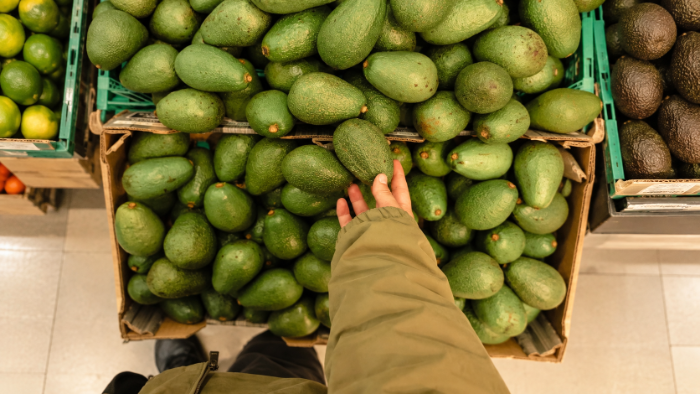
At the point of sale, avocados in the United States face a gap between what shoppers expect and what they actually find. The Rethinking Retail: Avocado Path-to-Purchase study by the Hass Avocado Board (HAB) found that while 93% of shoppers consider it important for displayed fruit to look fresh, only 59% said they found it in that condition during their most recent purchase.
Similar differences emerge in the availability of loose avocados, considered important by 87% of shoppers, compared with 61% who actually found them available. The widest gap appears in having an abundant selection of avocados: while 85% consider this important, only 39% had that experience during their most recent purchase, representing a 46-percentage-point gap.
This gap between consumer expectations and the reality at the point of sale is particularly relevant in a market where avocados have progressively become part of regular household shopping in the United States. The same study shows that 89% of purchases take place during regular grocery-shopping trips, while among frequent avocado shoppers, 85% already plan to purchase avocados before arriving at the store.
In this context, understanding what consumers look for when choosing fruit helps identify where the main opportunities lie for retailers. Ripeness leads the list of purchase attributes, at 89%, followed closely by the absence of bruises or imperfections (88%) and the availability of loose fruit, allowing shoppers to select each avocado individually (86%). Price also remains an important factor, at 78%, but ranks below these attributes related to quality and choice.
In the United States, avocados have evolved from an occasional purchase into an increasingly common household staple. An analysis published by Mission Produce notes that over the past decade, avocado purchasing has shifted from a trend to a habit. Today, avocados are part of the weekly grocery shopping routine for many consumers. In 2025, 21% of households also used both physical and online channels, compared with 5% in 2019.
This takes place within a market that continues to grow in terms of availability. The Hass Avocado Board (HAB) projected that the United States would surpass 1.36 billion kilograms of avocados during 2025, 4% more than the previous year. The organization has linked this growth, among other factors, to efforts aimed at maintaining year-round availability, improving quality, and educating consumers.
However, an important question remains: What does the consumer look for when arriving at the point of sale? The Rethinking Retail: Avocado Path-to-Purchase study, conducted by HAB, provides a detailed picture of the purchasing process.
Ripeness leads purchasing preferences
Among the attributes evaluated, ripeness ranks first, with 89% of shoppers considering it important. It is followed by the absence of bruises or imperfections (88%), the availability of loose fruit to allow individual selection (86%), and firmness and color (84% each). Finally, price ranks at 78%.
Fruit ripeness also stands out across different consumption occasions. Some 55% of the customers surveyed prefer to purchase avocados at their ideal stage of ripeness, while 26% combine different stages of ripeness. Among this group, 51% explain that their goal is to have avocados available both for immediate consumption and for the days following the purchase.
However, choosing the exact stage of ripeness remains a challenge for consumers. Although 81% of the sample say they feel confident when selecting the required level of ripeness, only 50% correctly identified a perfectly ripe avocado from an image. This gap creates an opportunity for information available at the point of sale to better support consumer decision-making.
Choosing the fruit remains part of the experience
The ability to select individual fruit also remains important to consumers. Some 86% consider it important to have loose avocados available so they can select them individually. At the same time, HAB has observed growth in purchases combining loose and bagged formats, particularly among frequent avocado shoppers, pointing to a coexistence between convenience and the ability to choose.
The challenge arises when customer expectations meet the actual in-store experience. While 93% consider it important for displayed fruit to have a fresh appearance, only 59% found this condition during their most recent purchase.
Loose-fruit availability shows a similar difference, with 87% considering it important compared with 61% who actually experienced it. The largest gap is found in the breadth of avocado selection: 85% consider it important, but only 39% said they found an abundant selection.
These results provide signals for the entire supply chain. For retailers and suppliers, responding to preferences for different stages of consumption requires greater attention to ripeness management and to how fruit is presented in stores.
At the same time, the value shoppers place on selecting their own avocados shows that convenience-oriented formats need to coexist with options that preserve this ability to choose.
According to the Hass Avocado Board's analysis, price remains an important factor, particularly among less frequent shoppers. However, the overall picture shows that purchasing decisions also depend on finding fresh fruit, at the desired stage of ripeness, and with enough variety to choose from.
In a market where avocados are becoming increasingly integrated into household routines, the shopping experience may be decisive in sustaining this purchasing frequency. HAB's study itself concludes that since 2015, consumers have increasingly treated avocados as a planned and habitual purchase, and that satisfaction with quality and availability contributes to encouraging future purchases.