Sustainability
Baika prevents approximately 346 tons of cardboard waste
With nearly 700,000 IFCO boxes in four years, the San Felipe plant demonstrates how to integrate the circular economy into 100% of its national fruit.
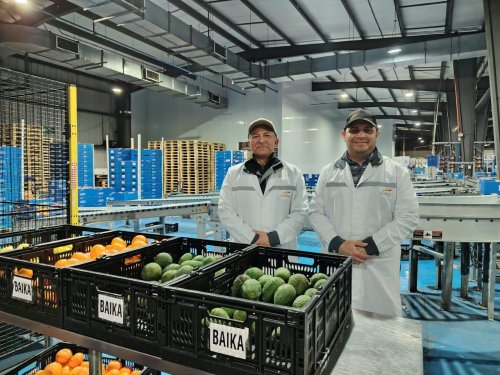
Moving from single-use packaging to reusable packaging may seem like a straightforward substitution. However, when the change must be sustained campaign after campaign and support the movement of fruit from packing to retail, it requires adjustments involving inventories, logistics, customer coordination, and the return of packaging.
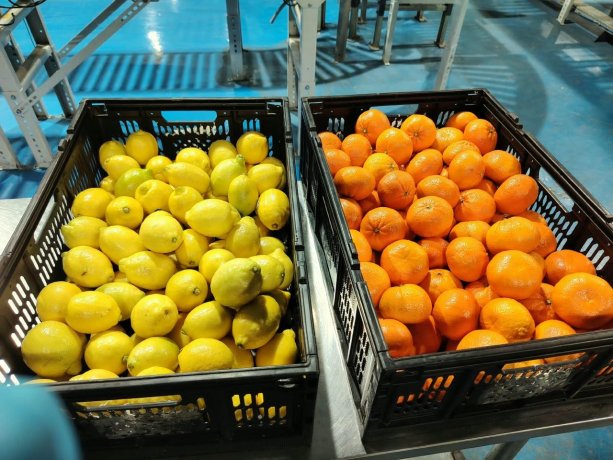
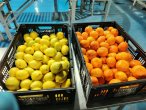
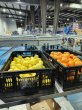
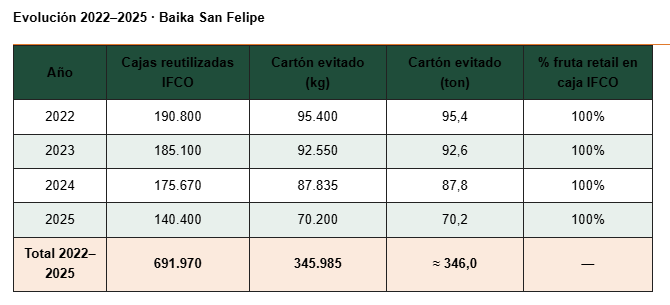
At the Baika San Felipe packing plant, this model has been in operation for four years. Between 2022 and 2025, 691,970 reusable IFCO crates were used, helping to avoid approximately 346 tonnes of single-use cardboard waste. Throughout this period, 100% of the fruit destined for the domestic market was marketed using this type of packaging.
For Daniel Benavides, Baika’s Deputy HSE and Sustainability Manager, these results demonstrate how the company’s environmental objectives can be translated into measurable actions.
“The use of 691,970 reusable crates between 2022 and 2025, avoiding approximately 346 tonnes of cardboard waste, is a clear example of how these principles can be translated into concrete and measurable actions,” he says.
Four Years of Reuse
The accumulated results were built progressively. In 2022, Baika San Felipe used 190,800 IFCO crates, avoiding 95.4 tonnes of cardboard. In 2023, the figures were 185,100 crates and approximately 92.6 tonnes; in 2024, 175,670 crates and 87.8 tonnes; and during 2025, 140,400 crates were used, avoiding a further 70.2 tonnes.
Overall, the four-year period represents 691,970 crates and 345,985 kilograms of cardboard avoided between 2022 and 2025.
The continuity of the system is one of the aspects highlighted by the company. Ahira General, KAM National Retail Chile at Baika Chile, explains that its adoption was initially driven both by the need to protect the fruit during transportation and by the goal of reducing the environmental impact of the logistics chain.
According to General, this was complemented by new demands from customers.
“The chains we work with were beginning to require their suppliers to make verifiable sustainability commitments, not just statements. Joining IFCO’s reusable packaging system allowed us to meet that standard,” she explains.
Over time, the model ceased to operate as an independent initiative and became integrated into packing, logistics, and commercial relationships with customers. General notes that all fruit shipped by Baika to the domestic market currently uses these crates.
From Packaging to the Supermarket and Back
Maintaining a reusable system also requires building a circuit capable of recovering the packaging after each shipment.
Hugo Olivares, manager of the San Felipe plant, explains that the crates operate under a rental and continuous supply model. The plant requests crates according to shipping programs confirmed by retailers, while maintaining safety stock to meet demand without saturating the available storage space.
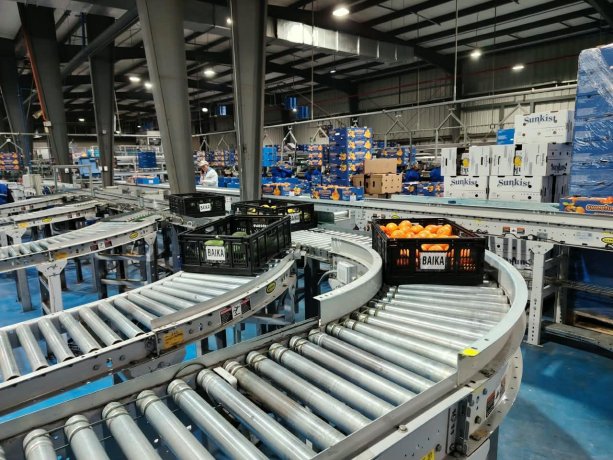
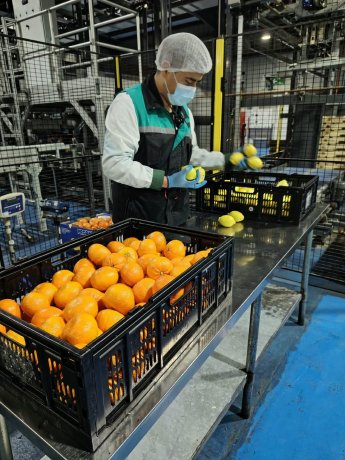
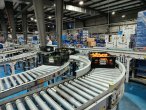
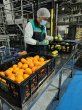
On the packing line, he says, the adaptation was quick and had a neutral effect on productivity, as the reusable crates directly replaced cardboard packaging.
Once the products have been packed, orders are shipped to retailers. At the supermarket, the physical receipt of the crates is certified by stamping the delivery notes. The empty crates are then consolidated and returned to IFCO distribution centers, where they are washed and sanitized before beginning a new cycle.
The system has also provided benefits related to storage and the material’s performance under operating conditions.
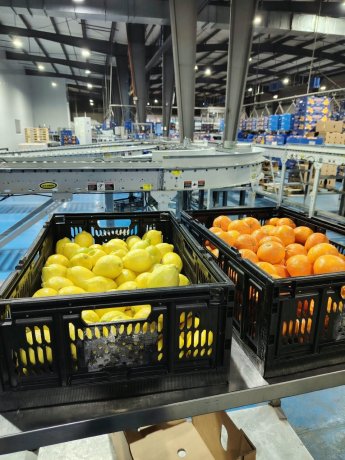
“Because they are foldable, the crates dramatically optimize warehouse space before use, allowing a greater volume of packaging to be stored per square meter compared with cardboard or rigid plastic crates,” Olivares says.
The executive adds that the material arrives sanitized at the plant and, unlike cardboard, withstands moisture from the fruit and cold-storage rooms, avoiding the risks of packaging becoming softened and pallets collapsing that he associates with cardboard containers.
Circularity Also Brings Operational Challenges
Implementation was not without adjustments. According to Olivares, the main initial challenge was inventory control, as the crates are managed outside the plant’s ERP system.
This led to the introduction of a dedicated role to manually manage inventories and monitor balances, losses, and requests—a necessary task to maintain supply and prevent discrepancies with the supplier.
After several years of operation, this administrative dimension also appears among the key lessons Baika identifies for other plants interested in adopting a similar model.
“Do not underestimate the administrative workload involved in the system. It is essential to assign dedicated personnel to control the IFCO crates from day one in order to keep everything organized and properly reconciled,” Olivares warns.
Keeping inventories up to date, accurately forecasting demand, and maintaining ongoing coordination with the supplier have been, according to the plant manager, essential to preventing stock shortages that could force the company to return to single-use packaging.
Beyond the Cardboard Avoided
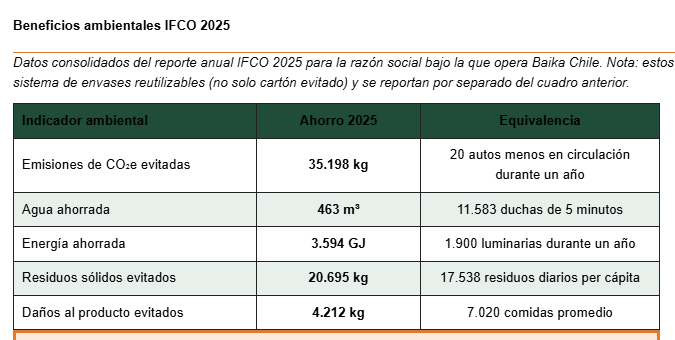
The environmental benefits associated with the system during 2025 were also measured separately. According to data consolidated in IFCO’s 2025 annual report for the legal entity under which Baika Chile operates, the reusable packaging system generated savings of 35,198 kg of CO₂e, 463 m³ of water, and 3,594 GJ of energy.
The same report records 20,695 kg of solid waste and 4,212 kg of product damage avoided. These indicators correspond to the overall environmental benefits reported by the IFCO system and are independent of the cumulative calculation of approximately 346 tonnes of cardboard avoided between 2022 and 2025.
From a commercial perspective, Ahira General believes that this type of information is becoming increasingly relevant in relationships with retailers.
“The circular economy has ceased to be an added value and is becoming an entry requirement. Retailers are no longer asking only about price and availability: they are demanding traceability, evidence of footprint reduction, and reusable packaging as part of their own ESG commitments,” she says.
For Benavides, meanwhile, the model’s scope also lies in connecting the operation with other players across the supply chain. He notes that participating in the system allows the company to work alongside distributors and retailers and create opportunities for collaboration around sustainability practices.
The San Felipe experience shows that replacing single-use packaging does not end with introducing a different type of crate. Sustaining the model requires modifying processes, managing the packaging throughout its entire cycle, and coordinating the different stakeholders involved from the packing facility to retail.
After four years of using reusable crates for 100% of its fruit destined for the domestic market, Baika’s experience illustrates circular economy not as a one-off action, but as a system that must be integrated into day-to-day operations in order to remain effective over time.