Peru slows down and everyone starts looking at what comes next
Peru's gradual withdrawal from Europe, Asia, and the US is reshaping the market and paving the way for seasons in Colombia and Chile.
In a planning meeting, some important questions arise from the first signs of decline.
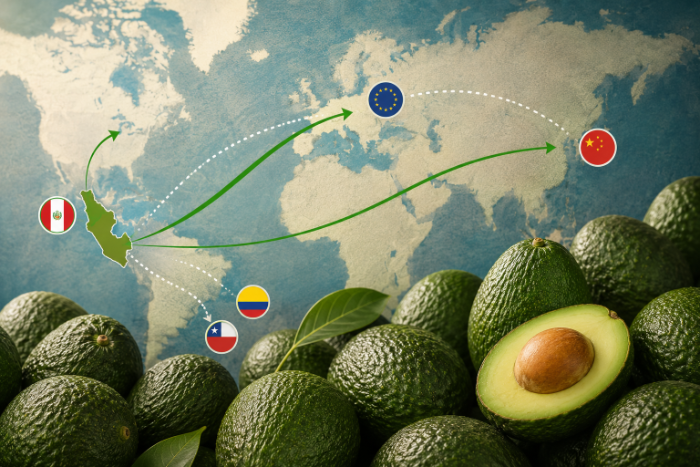
For several weeks, Peru maintained a significant market share. In Europe, it continued to ship volumes exceeding those of other origins. It also had a presence in the United States and maintained shipments to China and Chile.
Now the curve is starting to decline.
We still need to see how quickly that decline will be, but the change alters expectations. The weeks of exceptionally high volumes in Europe are unlikely to be repeated on the same scale.
This necessitates looking to other origins. In Europe, Kenya and South Africa appear after Peru, while Colombia and Brazil have maintained limited volumes. The lower availability of the Colombian off-season crop has prevented more intense competition with Peruvian fruit. But Colombia's main season begins between August and September.
In China, Peruvian shipments have been intermittent. August is typically a month with lower availability, before the transition that incorporates the first Chilean volumes.
Chile is also entering a crucial period. International buyers are beginning to look ahead to the upcoming season and assess the quality, condition, and availability of the fruit. Recent weather events have raised questions about excess water, winds, fruit drop, and changes in fruit size.
In our meeting, an idea emerged that summarizes this scenario: when Peru begins to withdraw, the markets are not left empty; they are reorganized.
Importers review their programs, exporters evaluate destinations, Mexico analyzes how far to extend its presence, Colombia prepares for its main season, and Chile receives the attention of European and Asian buyers.
In August we will follow that movement to understand the decisions that will define the following months.
Sebastian de la Cuadra
CEO of Avobook