Agtech and innovation
Baika scales up AI use to over 2,000 hectares in Chile
Together with the Neutral Farming Agricultural Co-Pilot, the company optimizes on-site management, achieving savings of up to 30% in water use.
The adoption of Artificial Intelligence (AI) in agriculture is moving beyond a promise and becoming a concrete management tool. This is the path being pursued by Baika in partnership with the Chilean startup Neutral Farming, with whom they have agreed to expand the use of their Agricultural Co-Pilot to more than 2,000 hectares in Chile during the upcoming season. The technology, initially implemented in 2023, allows for the recording, centralization, and analysis of agronomic information to reduce management time and optimize resource use.
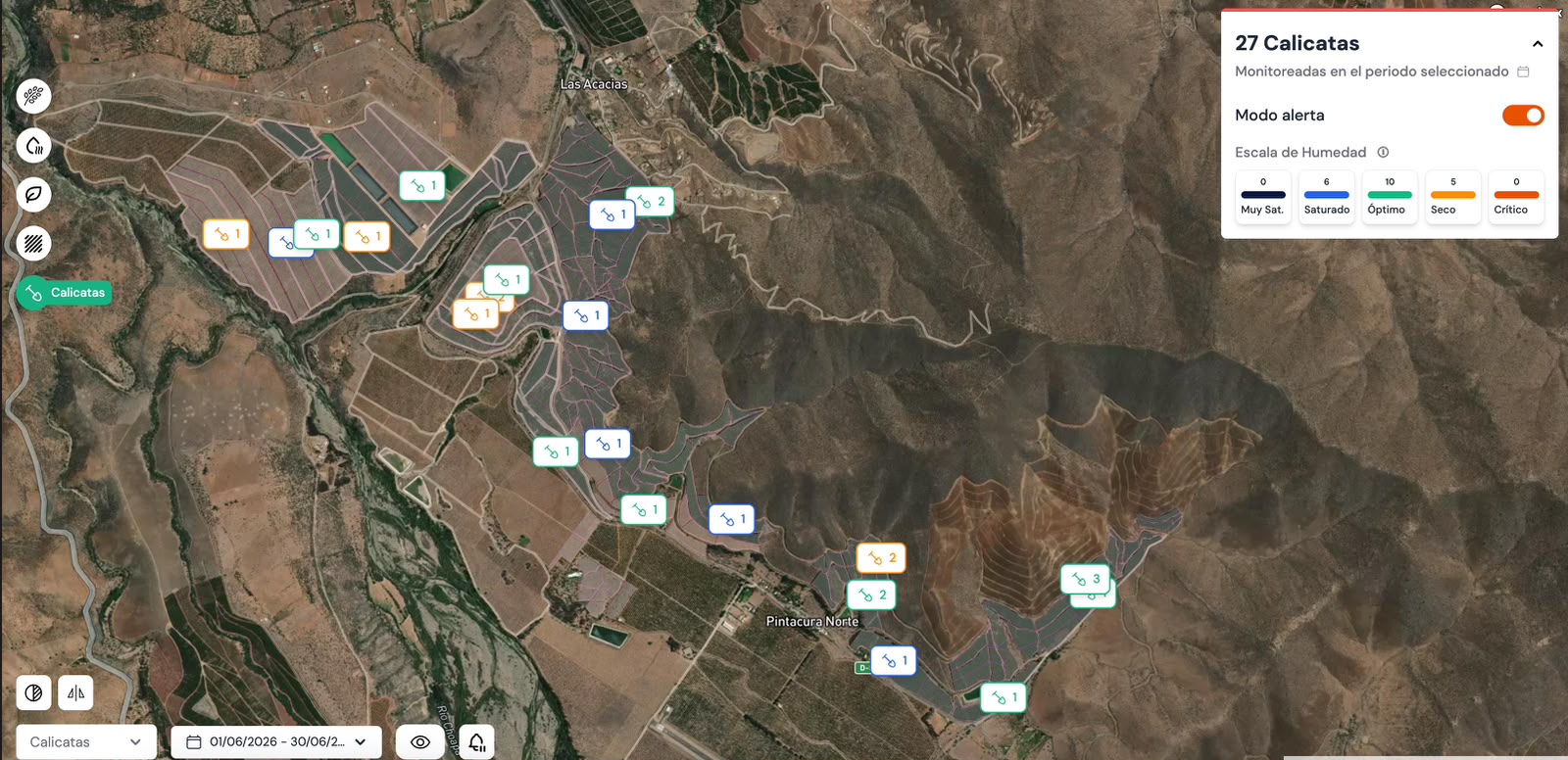
Map of test pits recorded by the field
Integration and centralization of agronomic data in one place
One of the main problems facing agricultural teams is the dispersion of information (irrigation, soil, production, weather, and fertilization data scattered across various spreadsheets). To solve this challenge, the startup developed a platform that integrates data from weather stations, irrigation systems, and laboratories. It even allows data to be captured via voice notes sent through WhatsApp, which are then processed and structured using Artificial Intelligence.
"The producer has all their agronomic and operational information consolidated in one place and can get immediate answers," explains Ignacio Streeter , CEO of Neutral Farming. The platform generates automatic reports, alerts, and predictions on key nutrition and productivity parameters.
Operational and water efficiency: The quantitative impact in the field
According to Neutral Farming, the results are strongly associated with operational efficiency and sustainability in two main areas. First, there are time savings, as farm teams save between 8 and 48 hours per week thanks to the automation of analysis and the centralization of manual data. The second area is water efficiency, where producers report reductions of up to 30% in water use in areas that were previously over-irrigated, without compromising productivity.
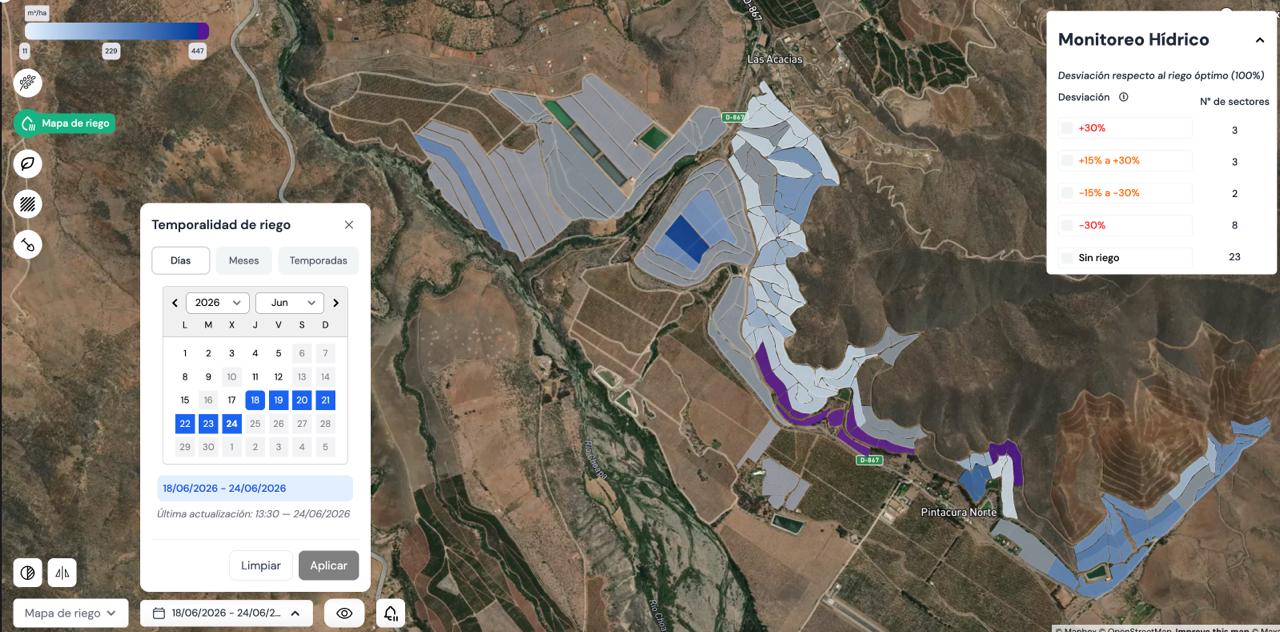
Dynamic irrigation monitoring map
Real-time decisions and their impact on sustainability strategy
The initiative is part of the company's sustainability strategy. "Having real-time information allows us to make more precise decisions about irrigation and nutrition, using resources more efficiently ," says Daniel Benavides , Deputy Manager of Sustainability at Baika.
This strategic vision is supported by operational experience in the field. Andrés Valenzuela, field manager at Valle Leyda, explains the direct impact of the tool on daily management : "Thanks to the platform's alerts, we have sometimes detected areas with lower-than-expected moisture levels, which led us to review the behavior of the entire field and advance irrigation in a timely manner. This has allowed us to make more informed decisions and act before the problem affects crop development . "
Step by step: scaling innovation
The implementation of this initiative has followed a gradual and strategic approach, progressing in stages that have allowed for the validation of results in controlled scenarios before scaling its application to larger areas. This methodology has been key to reducing risks, optimizing processes, and generating lessons learned that now allow for a significant leap in scope and impact.
While the initial phase was developed across just over 400 hectares in Valle Leyda, this second phase envisions implementing the technology across more than 2,000 hectares. This expansion presents an opportunity to multiply the benefits observed so far, increasing analytical capacity, improving data accuracy, and reducing response times in environments of greater operational complexity and geographical extent.
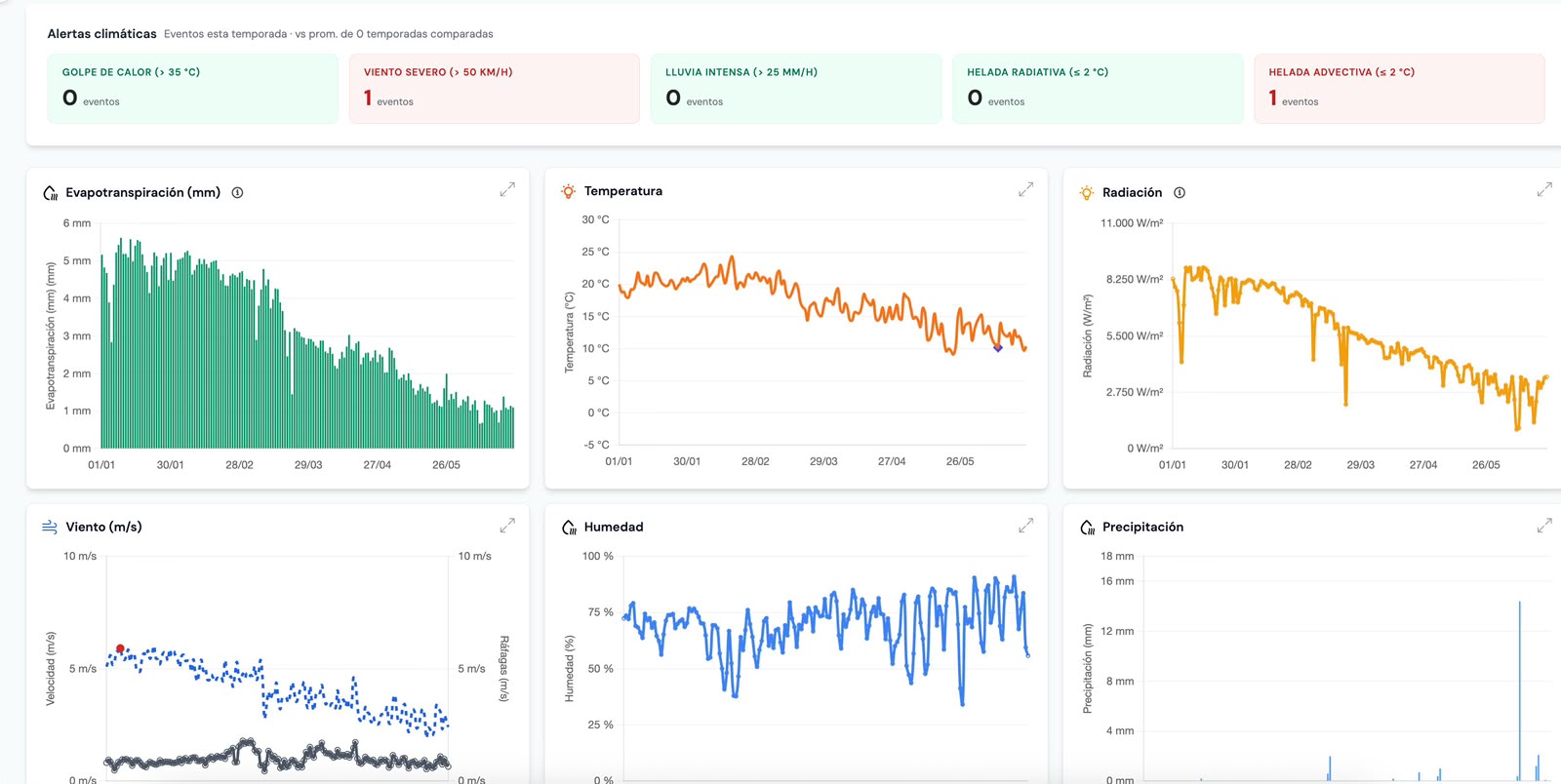
Record of weather events (frost, rain, severe wind, heat waves)
In this way, the project not only consolidates the progress achieved, but also demonstrates the potential of new technologies to transform agricultural management on a large scale, providing more efficient tools for decision-making and the sustainability of operations.
These technological and practical management advances directly contribute to reducing the carbon footprint and strengthening soil health. Thus, the agreement to expand the Agricultural Co-Pilot to more than 2,000 hectares represents one of the largest deployments of digital technology in Chilean agriculture, opening a new phase for consolidating an efficient, data-driven agricultural model.