Trade alliances and the avocado industry
Arba and Danper seek to achieve a continuous supply of avocados
Arba Colombia and Danper Trujillo (Peru) are promoting a joint model to guarantee the supply of avocados 52 weeks a year and mitigate risks.
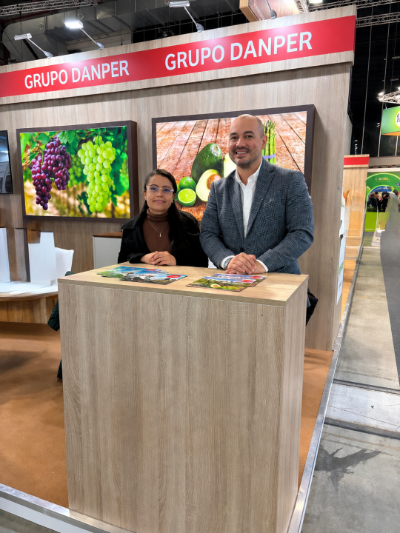
As the global avocado market continues to expand and new countries join the international supply landscape, competition is no longer defined solely by who produces the most fruit. For importers, retailers, and distributors, the ability to guarantee a stable year-round supply has become one of the key decision-making factors.
With this in mind, Arba Colombia and Danper have been strengthening a multi-origin strategy designed to leverage the strengths of both countries to deliver more stable commercial programs while reducing exposure to production, climate, and logistics risks.
"We have been working intensively on a multi-origin strategy that allows us to capitalize on the unique characteristics of each origin. Peru contributes scale and productivity, while Colombia offers a much broader harvest window, enabling us to serve our customers throughout all 52 weeks of the year," explains Carlos Echeverri.
Reliable Avocado Supply All Year Round
According to the executive, the main strength of this model is not simply the addition of production volumes, but rather the greater security it provides customers in an industry where uncertainty is part of everyday operations.
"The avocado industry increasingly depends on the ability to provide a reliable year-round supply. No single origin can guarantee that everything will unfold exactly as planned. There will always be weather events, production fluctuations, or logistical challenges," he notes.
Complementarity Rather Than Competition
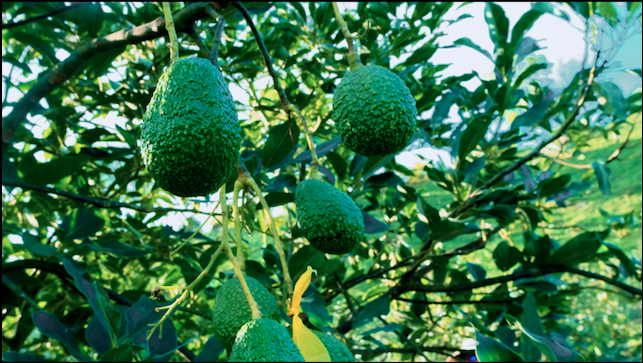
Arba Colombia emphasizes that the relationship between Peru and Colombia should be understood as a strategic partnership that creates value rather than as direct competitors in destination markets.
Vanesa Pérez explains that the complementarity between both countries helps reduce periods of lower supply while allowing suppliers to respond more quickly to the constantly changing demands of the international market.
"Peru remains the world's leading supplier during peak production periods, while Colombia provides fruit precisely during the windows when global supply is more limited. This combination enables us to build more stable commercial programs and ensure continuity of supply."
This approach is also reflected in markets such as the United States, where supply continuity is critical for importers and retailers. In this context, the multi-origin strategy combines Peru's production scale with Colombia's extended harvest season to build stable commercial programs, reducing the risk of supply shortages while strengthening the presence of both origins.
Pérez adds that Colombia's challenge is no longer simply increasing production volumes but developing a far more consistent supply.
"We need to improve consistency in quality, fruit size, dry matter, and all the conditions international customers expect when receiving the fruit."
Delivering Greater Certainty to the Avocado Market
From a commercial perspective, Echeverri believes the true value of a multi-origin strategy lies in enabling customers to develop annual supply programs with greater predictability.
"Ultimately, what the market values most is the certainty that what you commit to delivering is exactly what you will deliver."
When logistical delays, adverse weather conditions, or unexpected production variations arise, having multiple integrated origins allows companies to respond more flexibly while maintaining uninterrupted supply.
For Echeverri, this capability is especially valuable in markets such as the United States, which he considers both Colombia's greatest growth opportunity and one of its biggest challenges. The U.S. market still offers significant room for improvement in terms of positioning and the development of long-term commercial programs.
Within this landscape, Colombia's logistical proximity compared to other Southern Hemisphere suppliers represents a significant competitive advantage, while the multi-origin strategy provides greater flexibility in responding to unforeseen disruptions and ensuring continuous supply throughout all 52 weeks of the year.
"More than simply selling fruit, a multi-origin strategy allows you to manage customer uncertainty," Echeverri emphasizes.
According to the executive, maintaining this competitive advantage also requires a high level of internal management, including continuous and rigorous commercial planning, standardized operational processes across countries, constant communication with customers and logistics operators, and the growing use of advanced technologies to monitor temperature, controlled atmosphere, and transportation conditions.
More Demanding Consumers Are Driving a New Standard
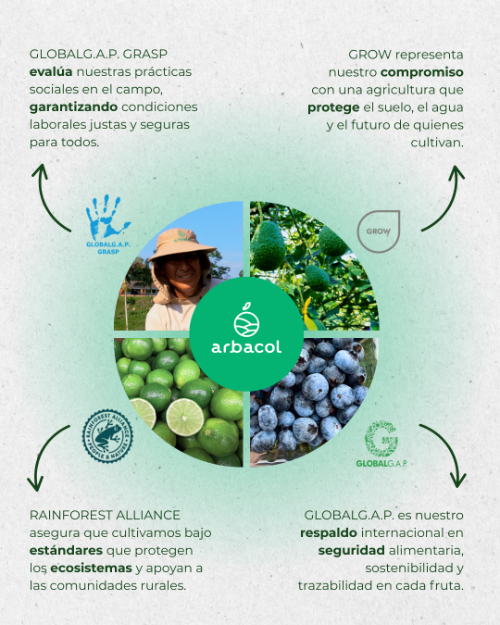
The continued growth in global avocado consumption has also transformed market expectations. In Europe, buyers increasingly seek information not only about fruit quality but also about origin, traceability, production practices, and sustainability standards throughout the entire supply chain.
"Today's consumers want to know where the product they are eating comes from and under what conditions it was produced," says Vanesa Pérez.
She identifies three key trends shaping today's European market:
-
Greater concern and stricter oversight regarding environmental sustainability.
-
Strong demand for consistent quality throughout the year.
-
The definitive consolidation of avocados as a regular part of consumers' daily diets.
This evolution is also raising the bar for global suppliers, requiring them to strengthen production processes, international certifications, and digital traceability systems.
The Challenge Is No Longer Producing More
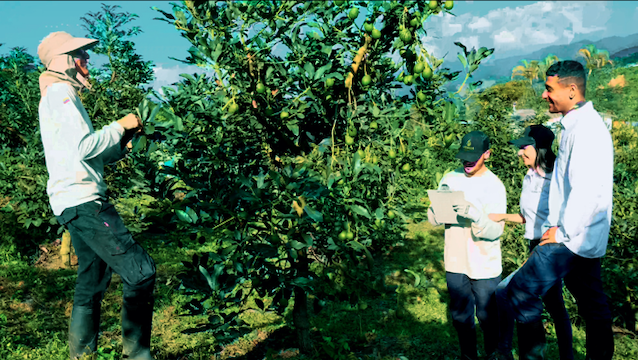
Although Colombia continues to demonstrate significant growth potential, Echeverri believes the next stage of the industry's development will depend less on expanding planted acreage and far more on the ability to consistently deliver a homogeneous and reliable supply.
"Colombia has already demonstrated that it can grow. The next test is proving that it can consistently maintain productivity, quality, and profitability."
This is accompanied by structural challenges such as climate variability, strengthening local agronomic knowledge, improving postharvest technology, and achieving greater standardization across producing regions. Within this context, the multi-origin strategy becomes an essential tool for increasing supply chain resilience in an increasingly unpredictable environment.
A Long-Term Strategy
Both professionals agree that multi-origin business models will continue gaining importance over the next decade. Rather than simply increasing the number of sourcing countries, the primary objective will be integrating those origins under a single value proposition capable of delivering continuity, quality, and trust.
"Ten years ago, the question was who could produce the most. Today, the question is who can deliver the right fruit, with the right quality, at the right time, and with the right traceability. That is where the industry's future competitiveness will be determined," concludes Carlos Echeverri.