Import and trade dynamics in the Southern Cone
Miguel Bauza: "The Argentine market chooses Chilean avocados"
A deep dive into the complex transition of origins, the logistical hurdles at the border, and the impact of the recession on consumption.
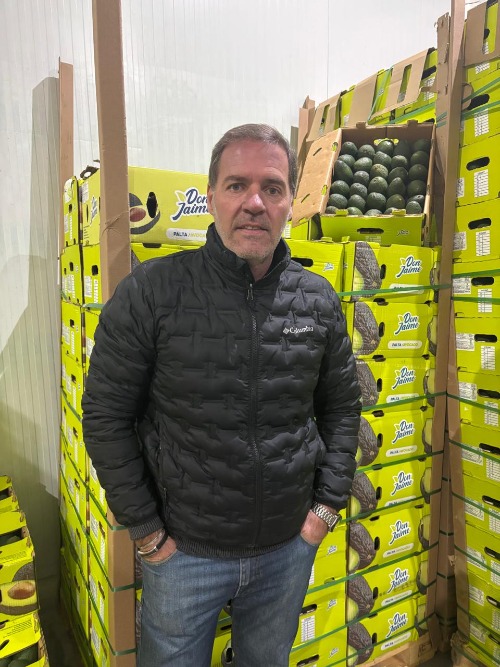
South American fruit supply is currently navigating one of the most challenging commercial windows of the year. In this interview, Miguel Bauza, representative of Don Jaime, provides a technical perspective on how the transition between Chile, Brazil, and Peru has been managed amid production volatility and a difficult economic environment.
Managing the Transition Between Origins
This year, the end of the Chilean season, the development of Brazil’s supply, and the beginning of Peru’s harvest overlapped significantly. How challenging has it been, from both a logistical and commercial standpoint, to coordinate this transition of origins while keeping the domestic market supplied?
These have been three very different commercial and operational realities. The end of the Chilean season was quite positive in terms of liquidation prices, mainly due to the limited remaining volumes available in orchards. However, we observed that some brands continued trying to artificially sustain price levels similar to those seen in previous weeks, a strategy that became increasingly difficult once arrivals from Brazil and Peru gained momentum and injected larger volumes into the market.
Brazil entered a particularly complex market window and, based on our direct receiving experience, presented serious condition and quality issues that ultimately dragged overall market prices downward. In Peru’s case, fruit harvested in late March and throughout April arrived with challenges related to low dry matter levels, although fortunately this condition has improved progressively.
Which Origin Does the Argentine Market Prefer?
The Argentine market has historically preferred Chilean avocados due to their excellent quality, ripening performance, and logistical proximity. However, the current economic recession has forced consumers to prioritize price, creating opportunities for lower-cost origins such as Peru and Brazil despite their quality-related challenges.
The Main Operational Challenge
What would you say has been the main operational challenge of working simultaneously with these three origins during the current season?
More than a purely technical challenge related to the growing regions themselves, the real bottleneck has been Argentina’s adverse economic environment. This year, the domestic market is experiencing a severe recession that has weakened consumption, while many suppliers and exporters at origin maintained sales and pricing expectations that exceeded what local purchasing power could realistically absorb.
This disconnect between expectations and market reality created significant pressure on prices in wholesale markets. As a result, a large share of imported products had to be marketed with very narrow operating margins.
Comparative Analysis of Quality and Postharvest Performance
From a technical standpoint, what substantial commercial differences do you observe between fruit originating from Chile, Brazil, and Peru?
For us as importers, there is a clear distinction in terms of organoleptic quality and shipping condition. Chile remains the absolute benchmark in the Argentine market, both because of the fruit’s firmness and its consistent, reliable behavior throughout the ripening process.
Brazil has mainly served as a lower-cost volume supplier, occupying an entry-level price segment. Unfortunately, it has faced significant quality and consistency issues during this season.
Peru began the season with challenges in fruit harvested during March and April, but today it offers a much more stable condition. If I had to rank the origins strictly by quality, I would place Chile first, Peru second, and Brazil third.
Postharvest Performance and Cold Chain Management
From a postharvest and cold chain perspective, how does fruit from each origin perform once it enters the country?
Chile enjoys a major competitive advantage due to its geographic proximity and efficient overland connectivity. Avocados can be available at Argentine distribution platforms approximately 72 hours after leaving the packing line. This short transit time allows us to receive fruit in excellent green condition and manage ripening processes with great precision.
Brazil faces greater challenges in this regard. Although the distance itself is not excessive, customs procedures and border-related processes can significantly extend total transit times. This becomes particularly problematic when fruit already carries latent condition issues from the orchard.
In Peru’s case, postharvest performance depends heavily on the exact harvest timing. Early-season avocados harvested during March and April exhibited more ripening disorders, while fruit harvested from May onward has shown a much more consistent and predictable commercial performance.
Consumer Habits and Second-Half Outlook
How does the Argentine consumer respond to these marked differences in quality and price?
Argentine consumers are highly knowledgeable about avocados. They clearly recognize the quality of Chilean fruit and have traditionally preferred it over any other option on the shelf. However, the current economic situation has dramatically altered purchasing habits.
Today, there is a significant price gap between origins. In many cases, consumers ultimately choose the option that best fits their daily budget, even while openly acknowledging the quality differences between products.
Considering the current season's performance and Argentina’s economic situation, what commercial outlook does Don Jaime foresee for the second half of the year?
Historically, the second half of the year tends to perform better for our business than the first. The arrival of spring and warmer temperatures shifts consumption habits toward fresher foods. We also benefit from the sales boost associated with year-end holidays, which typically acts as a driver of demand recovery.
However, our expectations for this cycle are considerably more moderate and cautious than they were last year. While avocado consumption per capita continues to grow and is becoming increasingly integrated into the Argentine diet, the pace of recovery will depend largely on the evolution of the domestic economy and improvements in purchasing power.
Key Purchase Factors in the Wholesale Market
Which specific attributes does the Argentine wholesale market value most when purchasing avocados today?
Currently, the dominant factor is unquestionably the selling price. Financial pressures have forced market operators to prioritize net purchase value above other traditional differentiating attributes.
This strong price sensitivity also directly affects demand for specific fruit sizes. Commercial turnover is primarily concentrated in sizes 96 and 70, which offer a more favorable cost structure per kilogram. Quality remains an important consideration and is still evaluated, but today price is the primary factor and the ultimate filter that determines purchasing decisions in the business.
Join our WhatsApp channel and receive the latest international avocado market news every week: https://www.whatsapp.com/channel/0029Vb81Exv1yT2Eff1Hjo2w