Climate impact on the global supply of avocados
Avocado season in Peru: impact of Super Niño
High temperatures are accelerating fruit ripening in the field. Experts anticipate a concentration of supply and an early end to the season.
The extreme heat recorded in various avocado-producing regions of Peru is beginning to generate concern in the global avocado industry. Although it is still too early to fully assess the macroeconomic impact of this situation on destination markets, several signs observed directly in the fields point to a marked acceleration in the fruit ripening process and an imminent earlier end to the export season.
One of the main effects observed by technical teams has been a significant disruption to the usual harvest schedule. After a slower-than-expected start to the season due to previous weather disruptions, the current situation is concentrating a larger quantity of fruit in a significantly shorter period. This overlap of domestic production windows could trigger a high supply concentrated in the coming weeks, challenging distribution strategies and increasing pressure on key international destination markets.
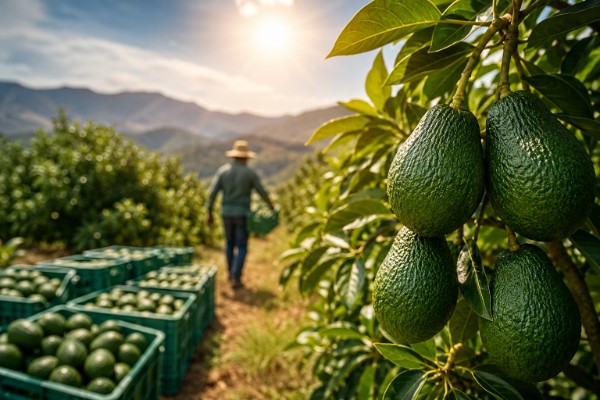
Avocado fields in Peru could be affected by the high temperatures of the Super Niño phenomenon.
How will the Super Niño phenomenon affect the avocado season in Peru?
This weather phenomenon accelerates the ripening of Peruvian avocados due to high temperatures. This will lead to a significant concentration of supply in just a few weeks and an early end to the season before August, opening up early sales opportunities for competitors like Chile and Colombia.
According toAlfredo Lira Chirif , CEO and founder of AgroLeal, the initial delay in the harvest, coupled with the subsequent acceleration of thermal maturation, will cause a strong and complex concentration of fruit during the weeks following the arrival of El Niño .
"There will be an earlier end to the harvest, which will generate a lot of fruit in a few weeks and could be a problem in the market," says the specialist from AgroLeal .
This unusually rapid ripening of the crop is forcing some producers to harvest early, prioritizing the preservation of the avocados during transit before they fall below the standards required by importers . As a consequence of this time pressure, in certain production valleys, some of the fruit that does not meet the requirements for fresh transport may be diverted to the frozen food industry and other processed products. This is a classic commercial strategy used when the rate of internal ripening far exceeds the logistical capacity for marketing and packing fresh fruit.
Lira warns that this scenario is becoming increasingly likely if high temperatures continue to accelerate fruit development. "Undoubtedly, some producers will have to divert fruit to freezing and other processing to avoid losses."
Changes in physical behavior and calibers
Unlike previous seasons marked by extreme weather events such as torrential rains or floods, the main risk this season is not directly related to internal quality problems or avocado rot. The current challenge lies in changes to the physiological ripening process and the deterioration of the skin's external appearance. For exporters, this factor drastically reduces the useful marketing window and limits their ability to retain fruit on the trees in search of better prices during the second half of the season.
Regarding fruit size, field audits conducted so far do not show a trend toward a higher proportion of small fruit or fruit discarded due to underdevelopment. On the contrary, the significant avocado drop observed during the summer months appears to have acted as a natural thinning process, reducing the overall productive load of the trees. With fewer fruits per tree, the average size of the fruit remaining on the tree has increased, concentrating the availability of medium and large sizes.
According to the AgroLeal executive, the behavior observed in the field points in the opposite direction to what some producers expected. "There was more fruit drop than normal during the summer, leaving less fruit on the trees, which causes the average size to increase."
Implications and new opportunities for the international market
If current weather conditions and the Super Niño temperature anomalies persist, the Peruvian export season will end much earlier than historically. The most recent estimates from the private sector indicate that the availability of avocados of sufficient quality to withstand long maritime transits could decrease significantly before August, bringing forward the supply gap compared to previous years.
This abrupt shutdown scenario will have profound strategic implications for various international markets, disrupting the usual seasonal price curve. An early exit from Peruvian supply will open an earlier and cleaner trading window for other sources in the Southern Hemisphere, allowing for a smoother entry and better opening prices.
This logistical gap will particularly benefit Chile's industry during September and October, allowing its avocados to enter a less congested European market. Subsequently, Colombia could also benefit from less competition in international markets and a smoother transition, provided its producers maintain stable levels of quality, phytosanitary compliance, and sufficient volume in their shipments.
Although there is still some uncertainty regarding the final magnitude and total economic impact of the phenomenon, the evolution of maximum temperatures over the coming weeks will be the determining factor. Only then will it be established whether Peru is facing merely a temporary concentration of its supply or a definitive advance in the end of its global export season.
Join our WhatsApp channel and receive the latest news from the international avocado market every week:https://www.whatsapp.com/channel/0029Vb81Exv1yT2Eff1Hjo2w