Together with an organization sponsored by UNESCO:
Chilean avocados promote pioneering study that measures biodiversity and CO2 in crops
The initiative, developed with Cazalac, already shows preliminary records of native fauna, areas with conservation potential and initial measurements of atmospheric CO2 on Hass avocado producing properties.
Santiago, June 23, 2026. With the aim of generating technical evidence on the relationship between agricultural production, conservation and climate change, Paltas de Chile continues to advance in the project “Inventory of Biodiversity and atmospheric CO2 in forests of Persea americana Mill ”, an initiative developed in conjunction with the Water Center for Arid and Semi-Arid Zones of Latin America and the Caribbean (Cazalac), an organization sponsored by UNESCO.
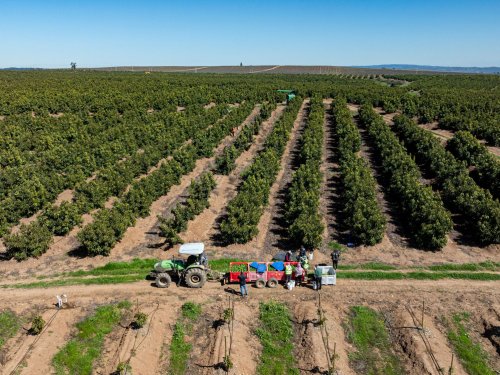
The study is being conducted on properties located in the Coquimbo, Valparaíso, Metropolitan, and O'Higgins regions, taking into account diverse production, climatic, and territorial realities. During its initial stages (summer and autumn seasons), the project has included exploratory visits, installation and monitoring of atmospheric CO2 sensors, use of camera traps, and technical field trips to identify species of fauna, avifauna, sclerophyllous forest, xerophytic formations, and potential conservation areas.
Francisco Contardo Sfeir, CEO of Paltas de Chile, emphasized that this initiative responds to a strategic need for the sector. “Today, consumers, markets, and communities increasingly value productive sectors demonstrating how they interact with their environment. This project allows us to better understand what is happening in the fields, identify conservation opportunities, and advance a more technical discussion about the role avocado trees play in semi-arid zones,” he stated.
According to initial reports, camera traps have recorded the presence of wildlife on the studied properties, with a common pattern of culpeo fox sightings and records of species relevant to local ecosystems. Birds of prey, woodpeckers, lesser grisons, pumas in some areas, and species of high ecological value, such as Darwin's long-eared mouse in the Panquehue sector, have also been identified.
Regarding atmospheric CO2, preliminary results show that within avocado forests, the average concentration was 10 PPM lower than in areas of native vegetation adapted to drought. In other words, avocado orchards have less carbon dioxide than areas without them. While this is a first approximation and the technical analysis is still underway, this data opens a line of research to better understand the relationship between orchards, CO2, and environmental conditions in areas affected by water scarcity.
Elir Rojas, geographer and project director, explained that the initiative's value lies in generating unprecedented information from a local geographical perspective: “One of the project's central focuses is identifying conservation areas surrounding avocado orchards. According to preliminary findings, all the studied units have areas with ecosystem value, and in some cases, the area of natural habitats exceeds the productive area.” Initial projections indicate that the areas with conservation potential could exceed 2,000 hectares in semi-arid zones.
The project will continue over the next few months with new technical explorations, analysis of CO2 measurements, wildlife review and systematization of background information to consolidate conservation and management proposals on the participating properties.