Current industrial news
Mandatory CLA for Mexican avocados: risks and benefits
From October 1st, Mexican exporters must prove their production chain's labor compliance through the Labor Certificate.
September 22, 2026
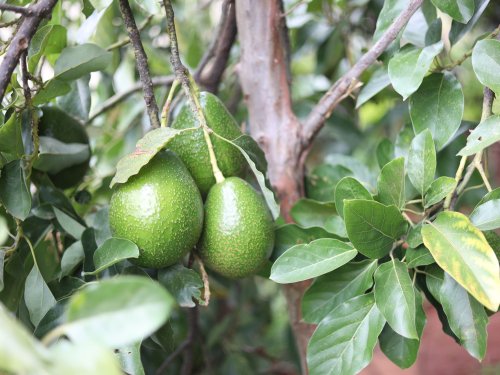
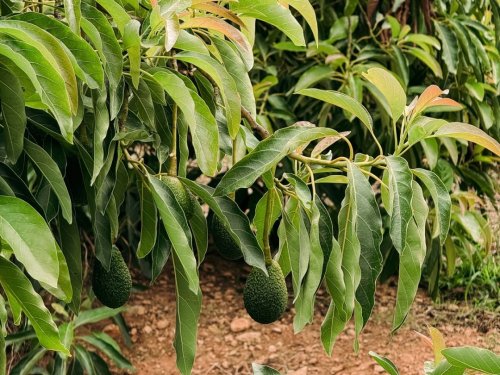
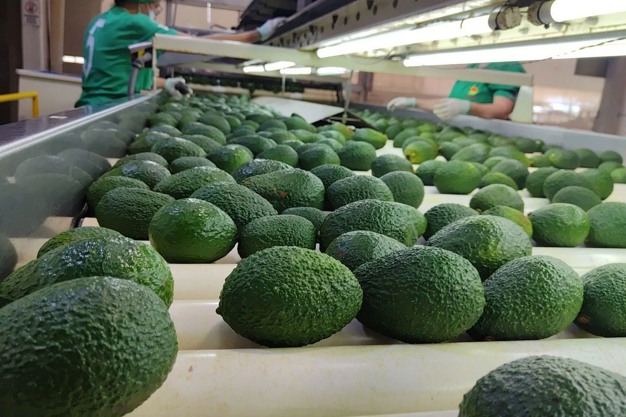
Mexican avocados, one of the country’s main products shipped to the U.S. market, became this week the first export fruit subject to a new labor oversight scheme.
Mexico’s Ministry of Labor and Social Welfare (STPS) launched the pilot phase of VELAGRO, a platform that issues the Labor Certificate for Agro-Exports (CLA). The institution confirmed that, as of October 1, this document will become a mandatory requirement for exporting companies wishing to continue shipping avocados abroad.
The administrative requirement obliges exporters to demonstrate, using supported and verifiable data, that their production chain complies with labor and social security standards.
The announcement comes at a delicate moment for the sector, as Mexican avocado exports fell 25% during the first half of 2026 compared with the previous year. In addition, the industry in Michoacán, the source of the vast majority of avocados consumed in the U.S., continues to face a challenging security situation due to episodes of extortion and violence that have previously affected inspections.
What is the Labor Certificate for Agro-Exports (CLA)?
According to the official definition provided by the STPS, the CLA is a “named and non-transferable document” certifying companies that comply with the labor and social security obligations applicable to individuals and legal entities participating in an agricultural export value chain.
The requirement is not imposed by the United States or the USMCA, but rather through a Mexican government mechanism. However, the introduction of the regulation comes amid increasingly critical scrutiny from international buyers and governments regarding working conditions in agricultural supply chains, as well as ongoing discussions between Mexico and the United States on agricultural and labor issues as part of the joint review of the USMCA scheduled for 2026.
The legal basis for the Labor Certificate for Agro-Exports comes from several reforms published on May 1, 2026, to the Organic Law of the Federal Public Administration, the Foreign Trade Law, and the Federal Labor Law. This week marks the beginning of its practical implementation, starting with avocado supply chains.
VELAGRO, the platform behind the certificate
The Labor Verification Platform for Agro-Exports (VELAGRO) is the digital tool that manages the CLA application process. According to the STPS, the system draws information from the Mexican Social Security Institute (IMSS), the Tax Administration Service (SAT), the Ministry of Agriculture, and the Ministry of Economy to verify the labor compliance history of growers, packing facilities, intermediaries, and service providers involved in exports. The maximum processing time for an application is five business days. If the authority does not respond within that period, the certificate is considered automatically approved.
Marath Bolaños López, head of the Ministry of Labor and Social Welfare, describes the mechanism as a way to link “the strength of agricultural exports with decent work and social security in the countryside.”
The authority links the mandatory nature of this certificate to commitment number 63 of the Mexican government regarding security for agricultural workers. The STPS estimates that, as the scheme is extended to other products, it could help formalize approximately 200,000 workers in the sector.
Timeline: the dates every exporter should have marked
The deadlines for the pilot program are tight and worth marking on exporters’ calendars, with the following key dates:
Between September 15 and 17, 2026, pilot programs began in Michoacán and Jalisco, the two largest avocado-producing states in Mexico. Subsequently, from September 17 through September 30 of this year, the registration window will be open at velagro.stps.gob.mx.
On October 1, 2026, a valid CLA will become an essential requirement for avocado exports, with the certificate issued during this round remaining valid until November 7 of this year. Finally, by November 2027, the pilot scheme is expected to evolve into a permanent system.
During the CLA pilot phase, the absence of the document will not automatically prevent exports. However, as of October 1, it will become an essential tool for companies seeking to maintain their operations.
Who must apply for the CLA
The application is only mandatory for exporting companies, which must create a user account on the platform and provide the requested information. Growers, harvesting companies, and packing facilities do not need to apply for the document individually. This does not exempt them from keeping their labor and social security obligations up to date, as this information will be used by the STPS to assess the exporter’s application.
This shifts traceability responsibility toward the exporting link in the supply chain, which depends on compliance by actors such as harvest workers, agricultural laborers, and packing facilities over whom it does not always have direct administrative control.
Why avocados and why now?
It is not by chance that avocados were chosen as the first product for this scheme. Between January and April 2026, Mexico exported 501,824 metric tons of avocados to the United States, 35% more by volume than during the same period in 2025.
That same year, avocado sales to the U.S. market reached $3.653 billion, consolidating the fruit as Mexico’s second most valuable agricultural and food product after beer.
Combined with the media exposure the avocado industry already receives due to episodes of violence in Michoacán, the economic weight of the fruit makes it a highly visible test case. If the scheme works with the most scrutinized crop in bilateral agricultural trade, the government will have a strong argument for extending it to other products.
What implications does this have for the global avocado business?
For growers, packers, and marketers — organizations already operating under public scrutiny over issues such as security and deforestation — the arrival of the CLA adds another layer of administrative compliance at a time when exports were already declining.
The STPS acknowledges that “competitiveness will no longer depend solely on the product that reaches the border,” but also on the ability of exporting companies to demonstrate, using data, the labor conditions throughout their entire supply chain, including actors over whom they have historically had limited formal visibility.
At the same time, those who are able to obtain certification smoothly could turn the document into a commercial advantage when dealing with buyers and retailers in the United States and Europe, who are increasingly attentive to ESG and labor rights criteria within their supply chains.
For other industry players in Peru, Colombia, Chile, and other exporting countries competing for the same U.S. market, it is worth closely monitoring whether this Mexican model becomes a de facto standard that also begins to be required, formally or informally, in other producing regions.
A new landscape for the industry
While the Labor Certificate for Agro-Exports does not, by itself, resolve the structural challenges facing the Mexican avocado industry, it does mark a shift in the landscape that exporters cannot postpone addressing. Registration closes on September 30, and failing to have the document in place by the following day could mean exclusion from the export supply chain.
For an industry already facing a complex environment, reviewing labor compliance throughout the production chain is a task that should not be postponed until this new requirement comes into force.