Market analysis
Peru surpasses 83,500 hectares of avocado
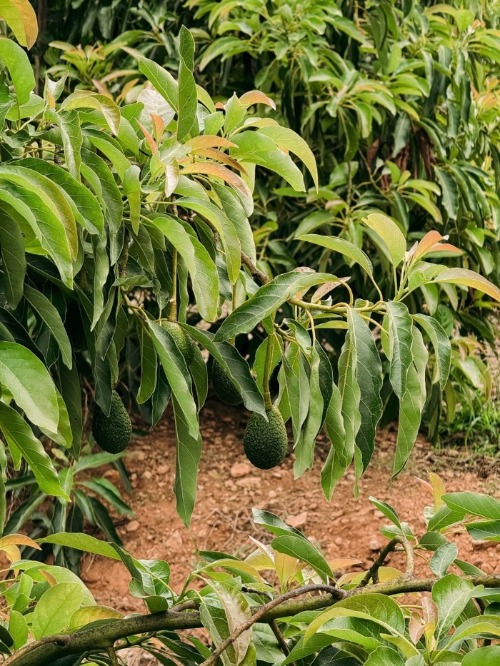
The area dedicated to Hass avocado cultivation in Peru exceeded 83,500 hectares, although its rate of expansion has slowed in recent years.
September 21, 2026
Peru has consolidated one of the world's largest Hass avocado production areas in recent years. The country increased its planted area from 54,302 hectares in 2018 to 83,529 hectares in 2025, according to figures from Senasa presented by Arturo Medina, general manager of ProHass, during the 2026 Jalisco Avocado Congress.
This represents an increase of nearly 54% in seven years. However, the trajectory also shows a gradual slowdown. The area grew by 18% in 2019, 11% in 2020, and 9% in 2021. The increase then moderated to 6% in 2022 and 2% in 2023, before falling to 0.3% in 2024 and 0.03% in 2025.
The figures indicate that Peru maintains a broad production base, but that the incorporation of new hectares has stabilized after the growth recorded at the beginning of the period.
An area distributed among more than 30,000 producers
ProHass's report places the number of producers involved in the crop at 30,409, with a national average of 2.7 hectares per producer. However, the distribution shows marked differences between the various operation sizes.
In the segment of up to one hectare, there are 22,079 producers, who together own 8,402 hectares. At the other end of the spectrum, 45 producers with areas equal to or greater than 201 hectares control 30,167 hectares.
Thus, approximately 73% of producers fall into the smallest size category and account for about 10% of the total area. Larger operations, on the other hand, comprise roughly 36% of the hectares with a significantly smaller number of producers.
La Libertad leads the national area with 19,106 hectares, followed by Lima with 14,892, Ica with 13,858 and Lambayeque with 12,844. Together, these four departments concentrate about 73% of the reported area.
The potential of irrigation projects
During his presentation, Medina also presented information from ProInversión and the Ministry of Agrarian Development and Irrigation on the country's main irrigation infrastructure projects.
The portfolio comprises 1,201,000 hectares of agricultural land, including 348,000 hectares of improved land and 853,000 hectares of newly developed land. Among the initiatives included are projects such as Chavimochic III, Chinecas, Majes Siguas II, Alto Piura, and Olmos II, as well as other projects distributed across various regions.
The magnitude of these figures demonstrates the potential for developing new agricultural infrastructure. However, the 853,000 hectares do not correspond exclusively to avocado cultivation, nor do they represent a projection of how much its area will grow.
Growth is available, but there's still no defined ceiling.
Irrigation projects could expand the country's agricultural base, but available data do not allow us to establish a limit to the growth of Peruvian avocado production. For now, recent trends show an industry that rapidly expanded its acreage for several years and then entered a more stable phase.
The challenge will be to observe how much of the new agricultural land is actually incorporated and what role avocados play in that process. Until there are clear definitions regarding the implementation, availability, and productive use of these areas, irrigation figures should be understood as representing overall agricultural potential, not as future hectares guaranteed for Hass avocados.