Andrew Logan
The influence of raw materials on avocado oil yield
New Zealand
Defining Avocado Oil – Part 2 – Technical Background
Part #2 introduces a higher level of detail regarding the benefits of processing only the avocado flesh (mesocarp) to produce all varieties of avocado oil.
Suppliers need to understand that avocado seeds are very different in composition, structure, and impact from olive pits.
-
The use of a hammer crusher is excellent in olive oil production because a hard, dry, woody shell surrounds a small pit. A hammer crusher breaks the olive pits into fragments that subsequently act as a natural bulking agent during malaxation, facilitating phase separation in the centrifuge without the release of destructive chemicals or oil absorption. Olive pits contain a minimal amount of active lipase compared with the surrounding mesocarp.
-
Avocado seeds contain high concentrations of lipase and polyphenol oxidase. When ground with a hammer crusher, these enzymes hydrolyze triglycerides into free fatty acids and catalyze rapid oxidation, causing a sharp increase in free fatty acids and instantly raising peroxide values. Crushing soft, wet (>50% moisture), bulky avocado seeds requires extreme shear force, which releases starch and bitter polyphenols into the oil-and-water emulsion.
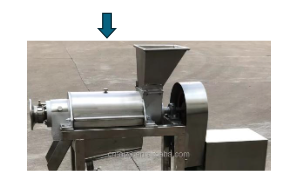
Suppliers of machinery must stop recommending hammer crushers for all avocado oil extraction. This is because processing the whole fruit causes damage to every part of the avocado, reduces oil quality, and compromises efficiency.
After one year of research, I began producing extra virgin avocado oil on a very small scale in September 1999. We removed the seeds and skin by hand.
-
In 2000, for a higher-capacity line, a separate destoner was purchased. Since then, this has been an integral part of AvoHealth's machinery recommendations.
-
In 2018, for a production line destined for Ethiopia, the European equipment supplier strongly recommended using a hammer crusher — intended for crude oil production — to extract oil from the seeds and skin as well. The destoner was reserved exclusively for extra virgin oil production. It is unfortunate that the information contained in these articles was not “discovered” until 2026!
Comparing Oil Yield
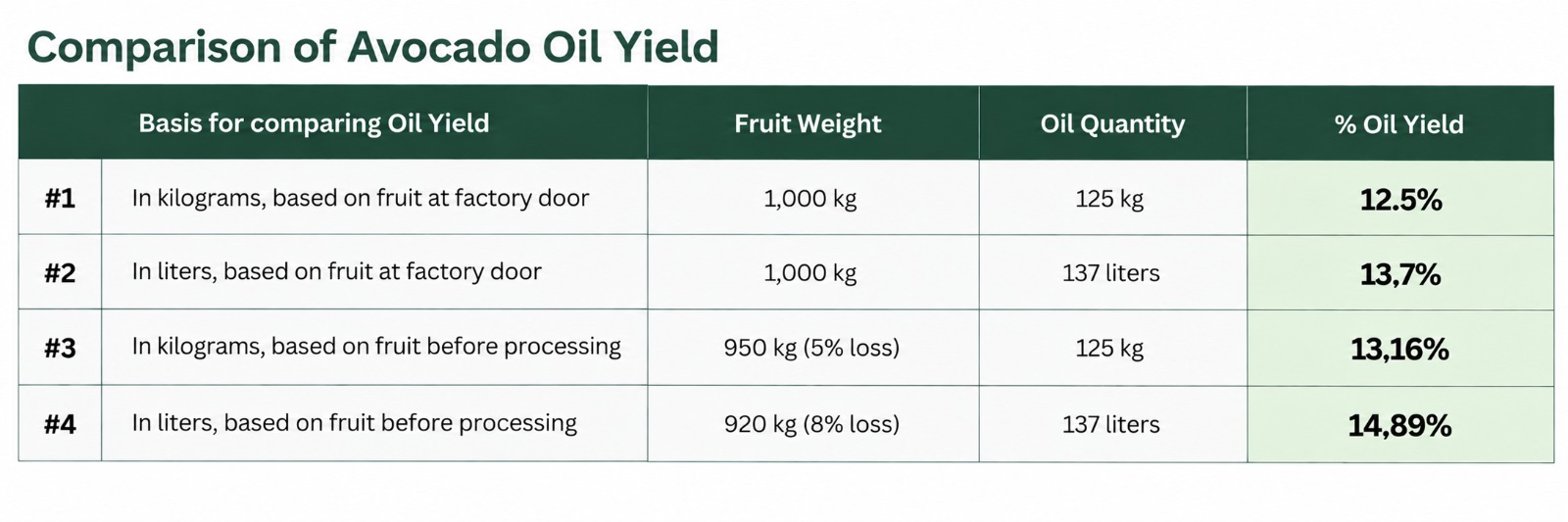
Comparing oil yield is confusing because producers measure yield in four different ways, producing four different results:
-
Liters versus fruit weight at the factory gate.
-
Kilograms versus fruit weight at the factory gate.
-
Kilograms versus fruit weight at the time of processing. Recommended
-
Liters versus fruit weight at the time of processing.
Imagine a factory processes 1,000 kg of fruit and obtains 125 kg, or 137 liters, of oil (specific gravity ratio of 0.914). Using the four different oil-yield calculations:
-
Oil requires accurate measurement — ideally using electronic scales — after passing through the vertical separator. One liter of oil is 9% (±9%) lighter than one kilogram; therefore, calculating yield based on volume will always produce a different result from measuring it by weight. The weight-to-volume ratio varies because the amount of waxes or solids present in the oil (measured through specific gravity) changes.
-
Although we often pay avocado suppliers based on weight upon arrival at the factory, the fruit weighs less if weighed just a few minutes before processing begins, because moisture has evaporated during ripening, not oil.
Why Does Processing the Whole Avocado Destroy Quality, Yield, and Value?
|
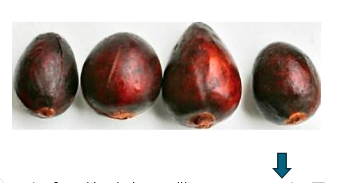
Seed weighing +/-20% is mostly complex starch capable of absorbing oil & water equal to 69.1% of seed weight. When crushed, the starch traps oil which the malaxer + decanter cannot release. |
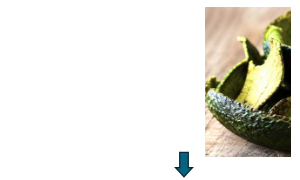
Skin weighing +/-10-12%, is made of tough, structural, waterproof, corky, plant waxes. As avocado grow & mature, skin becomes even tougher & thicker. Not possible to extract fluid Oil. |
 |
|
|
Broken fragments of Seed ‘grit’ and leathery skin pieces create an irregular, highly abrasive, solid phase that won’t compress. This gritty material causes a chaotic flow inside the decanter bowl and turbulence that physically disrupts the delicate "oil ring" forming in the center. As a result, the oil moves back into the heavy solid waste which the decanter can’t separate. Oil yield is lower and is rated by: |
|
|
Qualitative Results – Expert opinion In whole avocado oil, skin waxes & complex seed compounds cause a much darker color. Taste & smell are unpleasantly strong, harsh and bitter. |
Quantitative Results – Laboratory Tests The oil has higher Free Fatty Acid (FFA) & higher Peroxide (rancidity) levels. Oxidative stability is much lower as high chlorophyll levels cause faster photo-oxidation |
A More Technical Description
1. Reduced Oil Yield
There is a great deal of theory, but few published research studies demonstrate lower oil yield when processing whole avocados and higher yield when the seed and skin are removed.
Whole avocados provide less oil because the seed is composed primarily of starch rather than oil. Research indicates that starch in crushed avocado seeds can absorb 69.1% of its weight in oil and water (0.691 grams of oil per gram of seed).
All porous starch granules — not only those found in avocado seeds — absorb and retain free oil rather than releasing it. A paste of crushed avocado seed traps oil within its structure, preventing it from being released during malaxation or decanting.
The seed typically accounts for around 20% of the total avocado weight. Therefore:
-
For every 1,000 kg of whole avocado crushed in the malaxer, there may be 200 kg of seed with a potential capacity to absorb 138.2 kg of oil (1,000 kg × 0.2 × 0.691).
-
In reality, the amount is lower because the seeds also absorb water. The cost of losing, say, 30 to 50 kg of oil for every 1,000 kg of whole-fruit paste is ENORMOUS. A machine five times larger could “lose” between 150 and 250 kg of oil — valued at more than USD 1,000 — every hour!
-
When processing 100,000 kg of fresh avocado per day, there is the potential for:
20,000 kg of crushed seed to absorb 13,820 kg of oil and moisture!
Part of the oil, trapped in a microscopic and highly stable oil-in-water emulsion, is not extracted.
-
The seeds release large quantities of soluble starch and complex proteins, while the skin contributes structural waxes. Together, these compounds act as highly efficient natural emulsifiers that retain the remaining oil in an incredibly stable matrix during malaxation and decanting. Centrifugal force is not sufficient to break this chemical emulsion bond.
As the avocado ripens, the seeds store more energy (starches and complex carbohydrates) for future germination rather than oil.
-
Pulp only: Because there are no complex emulsifiers derived from the seeds, less oil remains in the residual paste.
Solid Waste Compaction and Centrifugal Physics
A decanter centrifuge takes advantage of differences in density to move heavier solids toward the outer wall and channel lighter oil toward the center.
-
Fragments of seed “grain” and pieces of leathery skin create an irregular, highly abrasive solid phase that does not compress. This granular material causes chaotic flow and turbulence inside the decanter drum, physically disrupting the delicate “oil ring” that forms in the center and causing oil to move back into the heavy solid waste stream.
-
Between 10% and 12% of each avocado consists of skin, which contains approximately 1.0% to 2.0% lipids composed almost entirely of resistant, cork-like, waterproof waxes that protect the fruit from dehydration and pests.
As the fruit grows and ripens, the skin produces more structural waxes to reinforce the cell walls and create an even more resistant barrier. Skin lipids increase slightly, but these are high-melting-point plant waxes, not extractable fluid oil.
-
Paste composed exclusively of pulp is homogeneous and uniform. In the decanter, it forms a perfectly uniform and compact layer of solids against the drum wall. This fluid separation maximizes recovery by allowing oil droplets to move easily toward the liquid outlet tubes.
-
Decanter losses: The centrifugal force of a decanter cannot extract oil absorbed into the hard fragments of seed. This oil is permanently lost together with the “heavy solids” or “solid waste.”
Removing the bulky skin and hard seed fragments allows the energy of the processing line and the centrifugal force of the decanter to focus exclusively on separating oil from a homogeneous and uniform paste, rather than overcoming the chemical and physical barriers created by the seed and skin.
This enables maximum residence time in the drum and clean, precise phase separation, ensuring that nearly all free oil flows toward the oil outlet rather than being carried away with the heavy solids.
Water Absorption
Because of their high starch and fiber content, crushed avocado seeds absorb both water and oil. They swell like a sponge, and this swollen, sticky matrix physically prevents oil droplets from freely floating in the decanter.
Pure avocado pulp requires less water during the malaxation and decanting stages. Process water easily removes residual oil from pulp fragments, allowing it to be extracted by centrifugation rather than becoming trapped.
The absence of skin and seed in the pulp allows for higher oil yield through emulsion chemistry, the physics inside the decanter drum, and mechanical friction.
2. Lower Oil Quality
The removal of the seed and skin has always been an established standard for extra virgin olive oil.
From a qualitative perspective, oil obtained from the whole fruit has a much darker color, as well as a more intense and unpleasant taste and aroma, often described as harsh and bitter; the waxes from the skin and complex compounds from the seed are the main contributors to this.
Unfavorable laboratory results corroborate this lower quality, in addition to subjective factors that depend on personal interpretation. Oil made from whole avocados presents higher levels of free fatty acids (FFA) and peroxides (indicators of rancidity). Its oxidative stability is also considerably lower, as high chlorophyll levels accelerate photooxidation.
3. Lower-Quality Waste Paste and Wastewater
Waste paste containing fragments of ground seed is highly abrasive, increasing mechanical wear on decanters and pumps.
Waste paste from whole fruit contains high levels of indigestible woody fiber and retained oil, making it less suitable for the production of high-value animal feed or soil amendments compared with paste composed exclusively of pulp.
Whole-fruit processing extracts a complex mixture of organic compounds from the seed and skin. The resulting wastewater is essentially a kind of “avocado soup” loaded with pulp residues, natural sugars, plant waxes, and microscopic oil droplets.
If this untreated waste reaches a river, local bacteria feed on it and multiply rapidly, depleting the oxygen in the water. This causes fish to suffocate and destroys the ecosystem due to extremely high levels of Biological Oxygen Demand (BOD) and Chemical Oxygen Demand (COD). Processing only the pulp minimizes these problems.
Andrew Logan
Avocado Health Limited
WhatsApp:+64 21 428 645
andrew@AvoHealth.com
www.AvoHealth.com|