Industry growth
Productivity and markets define Avocado Territory 2026
Productivity, profitability, climate adaptation, technology and market access will be among the main topics addressed at the meeting, which will bring together different actors in the Hass avocado chain in Medellín on November 4 and 5.
September 17, 2026
The Colombian Hass avocado industry enters 2026 with a question that goes beyond how much it can continue to grow: how to transform that growth into greater productivity, profitability and competitiveness in the face of an increasingly demanding international scenario.
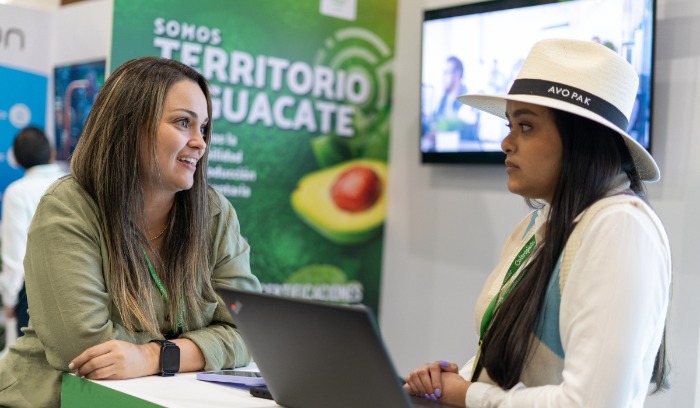
That debate will be at the heart of Territorio Aguacate 2026 , an event to be held on November 4 and 5 in Medellín, bringing together producers, exporters, buyers, investors, processors, researchers and companies linked to the value chain.
The meeting will address some of the main challenges currently facing the sector: cost structure, productivity, adaptation to climate risks, genetics and plant material, incorporation of technology, sustainability and the search for new business opportunities.
The discussion takes on particular relevance given Colombia's growth. According to the Corpohass sector report cited by the organization, the country exported 201,479 tons of Hass avocados in 2025, while the value of fresh avocado exports reached approximately US$375 million FOB.
Information to anticipate changes
For Katheryn Mejía, executive president of Corpohass, one of the challenges of this new stage is to strengthen the sector's capacity to use information in decision-making.
“Information has become the nervous system that helps us understand what is happening and anticipate what may come,” he noted.
This need cuts across various aspects of the business. Production and marketing decisions must respond to variables ranging from agro-climatic and phytosanitary conditions to costs, market behavior, and the evolving demands of buyers.
In that context, Mejía argues that having better background information allows one to move from reacting to changes to developing a greater capacity for anticipation.
Productivity, profitability and new markets
Part of these discussions will be part of the Avocado Territory Academic Summit 2026, whose agenda includes productivity, profitability, cost structure, markets, genetics and plant material, efficiency, adaptation and competitiveness.
According to information provided by the organization, the confirmed specialists include researchers, businesspeople and international figures linked to institutions such as CIRAD, CSIC-IHSM La Mayora and the Autonomous University of Chapingo.
The commercial component will also have its own space through AvoMatch, the business matchmaking event that will connect buyers, suppliers, producers, exporters and potential strategic partners.
The initiative seeks to complement the technical discussion with concrete opportunities for commercial connection, in an industry that currently takes Colombian Hass avocados to more than 30 international markets, according to Corpohass.
An industry seeking to refine its growth
The scale achieved by Territorio Aguacate also reflects the interest surrounding the development of the sector. According to the organizers, its 2025 edition brought together more than 3,900 attendees, 157 exhibiting companies, and delegations from 24 countries, in addition to registering more than 920 business meetings and over 100 academic talks.
By 2026, the meeting returns to Medellín at a time when the growth of the industry opens up challenges that no longer involve exclusively increasing volumes.
Improving productivity, managing climate risks, controlling costs, incorporating new technologies, and understanding market changes all appear as part of the same discussion: how to sustain the expansion of Colombian Hass avocados and turn it into a more competitive chain, better prepared to respond to changes in the global industry.