Industry evolution
Avocado oil can provide valuable data to the fresh food sector
The avocado oil industry is leaving behind its origins linked to discarded fruit and moving towards greater efficiency, standards and specialization.
October 5, 2026
In its early days, the avocado oil industry had a very close relationship with fruit that was discarded from the fresh market. These deteriorated avocados or those unsuitable for fresh sale could be used for crude oil extraction, which was subsequently subjected to a refining process.
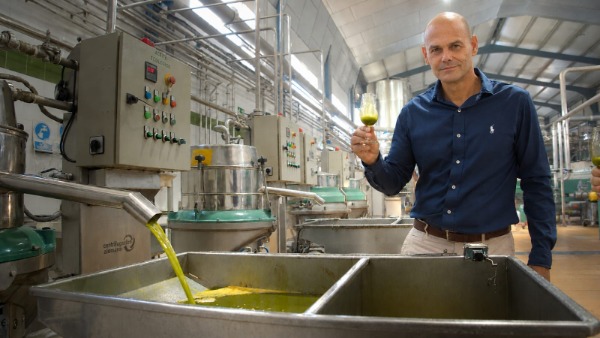
Enrique García, president and one of the founders of the Avocado Oil Manufacturers Association, explains that this scenario has begun to change. Today, the industry receives higher-quality fruit, including avocados that, although they could be considered first grade, are excluded for other reasons.
“When we started, the avocado arriving at the factory was of very poor quality. Now that has changed; now we have very good-quality avocados,” says García, who considers that this transformation opens the door to a new stage for the sector: improving process efficiency and moving toward higher-quality oils.
An Increasingly Close Relationship with the Fresh Market
Today, the development of the avocado oil industry closely follows the fresh market sector. According to García, the greatest opportunities for processing and subsequent oil production arise where production increases and part of the fruit does not enter the export chain.
“The oil industry follows what happens in the fresh industry. That means we are intimately linked to the fresh market,” he maintains.
For García, closer collaboration would also allow fresh-market companies to continue obtaining information about the fruit after selling it for oil. Processing plants can observe how each lot arrives, how it ripens, and what oil yield and quality it achieves. According to him, this information could help review what happens to fruit that leaves the fresh-market chain.
His proposal is to develop agreements between companies from both sectors, with AOMA as a platform for coordination, to record these results and share them with whoever supplied the fruit. García maintains that doing so requires monitoring and communication between the parties. “I continue to see what happens to your avocado,” he explains, referring to a stage that the selling company usually stops observing.
This scenario helps explain the growth observed in Africa and South America, where Mexico maintains a leading role. However, García points out that further progress requires a closer relationship between both sectors.
“The fresh-market sector now has to go hand in hand with the oil sector and talk. We need to talk at another level, at a higher level, between the large oil company and the large fresh-market company,” he states. His proposal is for large companies in both segments to develop joint strategies in an industry that, until now, has operated closely linked to the cycles and needs of the fresh market.
According to García’s analysis, the United States is currently the market with the greatest development and potential for continued expansion. Europe would follow in terms of growth possibilities, but at a considerable distance, according to the AOMA founder.
The Challenge of Professionalizing Processes
The growth of the industry is forcing greater attention to the efficiency and operation of processing plants. García argues that the wide margins the activity enjoyed allowed the industry for years to coexist with losses during extraction. Today, with greater competition for raw material and more demanding costs, he considers that training and process optimization are becoming increasingly important.
For García, improving extraction capacity and reducing losses will become increasingly relevant as the industry becomes more competitive. “These are processes where training and education are needed,” he states.
It is in this context that García points to the opportunity to take advantage of the experience of the olive oil industry. The executive explains that both processes share important similarities. However, in the case of avocado, a ripening process is required AFTER harvest.
This is why García proposes combining the processing experience of the olive oil industry with the knowledge of the fresh-market sector in fruit handling.
Another development that represents a challenge for avocado oil is standards. The inclusion of oil in the Codex represents, in García’s view, a first step toward establishing international parameters, although he maintains that research must be expanded by adding samples from a greater diversity of countries and production conditions so that the references are more representative.
In terms of quality, this gap is especially visible. García points out that there is still no quality standard establishing parameters that allow an avocado oil to be defined as “extra virgin,” even though this designation can already be found on the market.
“We are telling the industry: we have to start producing quality; we are capable of producing quality.” For the founder of AOMA, the development of higher-quality oils is precisely one of the opportunities opened up by the evolution of the raw material.
The World Congress as a Platform for Collaboration
The 1st World Avocado Oil Congress, organized by AOMA in Seville from October 29 to 31, seeks to bring together manufacturers, researchers, technology suppliers and institutions to share advances and discuss common challenges. García links it to the need to join efforts that different companies are currently developing separately.
The program will address standards and methods for evaluating oil quality, extraction efficiency and processing technologies. It will also include avocado physiology, ripening and postharvest handling: topics that directly connect with the information García proposes sharing between the fresh-market sector and processors. Visits to olive oil facilities also draw on the experience of another industry that he considers useful for the development of the sector.
A Dedicated Supply Chain for Oil
In the longer term, García projects an even greater change: that the industry could develop production specifically aimed at oil extraction.
“In the future, there would be avocado plantations exclusively for oil,” he suggests. His vision involves selecting fruit varieties based on their fat content and determining harvest timing according to the expected extraction yield.
Currently, he explains, fruit destined for processing continues to primarily follow the timing of the fresh-market sector. However, the optimal point for obtaining oil could come months later. That is why he emphasizes that this model is still a projection for the future.
For García, this possibility encapsulates the change he is beginning to observe in avocado oil production: an industry that was born by making use of discarded fruit and is now seeking to move toward a more specialized and efficient supply chain, capable of developing its own quality parameters.