Industry evolution
How to test AI in avocado exports before using it
Reviewing documents and detecting inconsistencies are key uses. Jorge Rosés suggests identifying the task and the risk of an incorrect answer.
September 28, 2026
For an avocado exporting company, the decision to incorporate artificial intelligence into logistics begins with a question: What work needs to be solved faster? Jorge Rosés, International Sales Manager at Seemann Trader, proposes distinguishing between tasks that prepare information for the team and decisions that commit the company to customers or authorities.
In his column published in Avobook, Rosés identifies AI applications in tasks such as checking whether the documentation for a shipment is complete, detecting inconsistencies between files, summarizing emails and gathering the background information of a container. In the event of a logistics disruption, the tool could also present the available information and alternatives for the team to evaluate.
This scope offers a first criterion for anyone considering incorporating technology: define a specific process and verify whether the tool provides verifiable information for making a decision. The distinction is particularly important when data arrives incomplete or from different sources. As Rosés warns, AI can fill gaps with incorrect information if it is asked to interpret information that is insufficient.
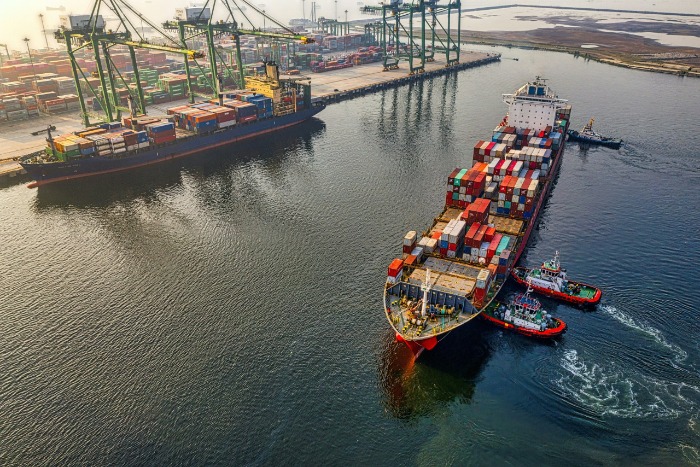
The specialist illustrates the risk with a port delay. The fact that a shipping company reports the departure of a vessel does not by itself confirm that the exporter’s container has been loaded. If a system automatically informs the customer that the cargo is continuing along its itinerary, an incorrect conclusion can become a commercial problem.
For a company seeking to complement its processes with artificial intelligence, Rosés’ recommendation begins with narrowing down the first use: choose a specific task, such as cross-checking shipping documents, and define who will review the alerts before taking action.
The OECD guide on responsible AI use adds another step: identify the risks of that application and verify how the system works under conditions similar to those of its real operation. In this case, this could mean testing it with the company’s own documents and shipment statuses, including incomplete or contradictory records.
A limited test would make it possible to compare the tool’s work with the company’s current process, how long it takes to review documents, what inconsistencies it identifies and which errors require human correction.
It would also help define what information the system may receive and who is responsible for the communications generated from its results. This is a way to evaluate its usefulness in the specific operation before expanding its use, in line with the OECD’s recommendation to measure performance under conditions similar to those of implementation.
The decision to incorporate it, then, is not limited to whether AI can process information faster. It also requires verifying which errors it detects, which ones it misses and at what point a person intervenes. Rosés summarizes the operational limit: there is «an important difference between helping to decide and deciding.