Inputs and technology
Artificial intelligence to estimate the avocado harvest
A study combined drones, multispectral imaging, LiDAR sensors, and artificial intelligence to estimate avocado yield and quality.
October 14, 2026
The study Precision management in Avocado: UAV-based monitoring of nitrogen use efficiency, yield, and postharvest quality , published this year in the journal Smart Agricultural Technology, evaluated a system that integrates information obtained with drones, sensors and environmental records to estimate the nitrogen status, production and postharvest quality of avocado tree by tree.
Even within the same orchard, the number of avocados each tree produces can vary, even with similar irrigation and fertilization. The research explores how to combine drones, sensors, and artificial intelligence to estimate the potential yield of each tree.
From aerial images to production estimation
The study compiled measurements taken between 2022 and 2024 in three systems. A controlled trial with different nitrogen levels was conducted in Gilat and two commercial orchards, Kabri and Kfar Menachem, all in Israel, with contrasting climatic conditions. Hass variety trees were monitored at all sites.
The drones captured multispectral images, which record the vegetation's response in different light bands and provide indicators related to its nitrogen status. This information was supplemented with LiDAR measurements, a laser technology that allows for the description of the three-dimensional structure of the canopy, including its height and surface area.
Using this data, the researchers developed Random Forest machine learning models, a method that combines multiple data analyses to generate an estimate. The models were trained and tested using field measurements, leaf analyses, and harvest records for each tree.
The yield model obtained a coefficient of determination (R²) of 0.71 in the independent prediction set, with a root mean square error of approximately 12.4 kilograms per tree. This result shows an ability to estimate yield differences, although it does not guarantee knowing exactly how much will be harvested from each tree. The study also identified greater uncertainty in the highest-yielding trees.
Nitrogen interpreted through the structure of the cup
One of the contributions of this work was to integrate leaf nitrogen concentration with information on canopy structure. In this way, the diagnosis incorporates size differences between trees that may have similar foliar nitrogen concentrations.
When the models were evaluated using data not used for training, they explained 78% of the observed variation in leaf nitrogen concentration and 73% in canopy nitrogen content. These results demonstrate their ability to estimate differences between trees, although the predictions still have a margin of error.
This approach allows for the identification of differences in the nitrogen status of trees and the targeting of sampling in specific areas of the orchard. This information could support fertilization decisions better tailored to the conditions of each zone, although the study did not test the application of variable doses in commercial orchards.
In Gilat's controlled trial, researchers evaluated five nitrogen concentrations in the fertigation solution: 10, 20, 40, 80, and 120 milligrams per liter. The 20-milligram-per-liter treatment yielded the highest efficiency, measured as the amount of fruit produced per unit of nitrogen applied and per unit of nitrogen absorbed. Increasing the supply above this level did not result in a proportional increase in production.
The finding shows that adding more nitrogen doesn't necessarily improve its utilization. However, the trees in the trial were grown in containers with perlite and under controlled conditions, so this level doesn't constitute a fertilization recommendation for other orchards.
Exploring post-harvest quality and fruit behavior
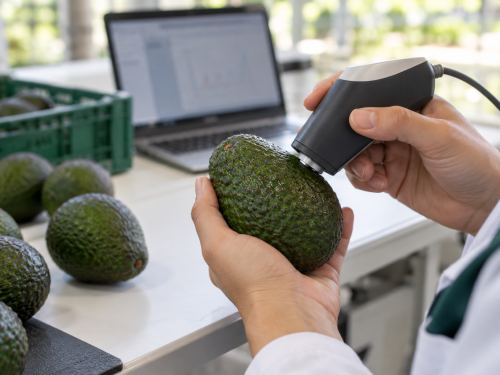
The research also evaluated indicators of rot, internal browning, and fruit firmness. The rot indicator models achieved R² values between 0.83 and 0.92 in the independent test, while the firmness prediction yielded a lower result of approximately 0.65.
The analysis identified end-of-season nitrogen status, canopy structure, and environmental conditions as relevant variables for these estimates. The authors clarify that these relationships are statistical and do not, on their own, demonstrate causality.
A step towards high-precision agricultural management
The potential application lies in providing tree-by-tree diagnostics and estimates to support more targeted orchard management. However, the study did not implement variable-rate fertigation or evaluate its economic benefits under operational conditions.
The researchers point out that further validation is needed in other seasons, regions, and varieties. For now, the work suggests that combining sensors and machine learning can provide growers with a more detailed understanding of their orchards, giving them more specific information on how much each tree could produce, its nitrogen status, and how its fruit might behave after harvest.