Agronomic innovation
New directions in avocado harvesting with genetic reconversion
The first harvest on Dusa clonal rootstock in Cabildo marks a milestone in uniformity, root development and water efficiency.
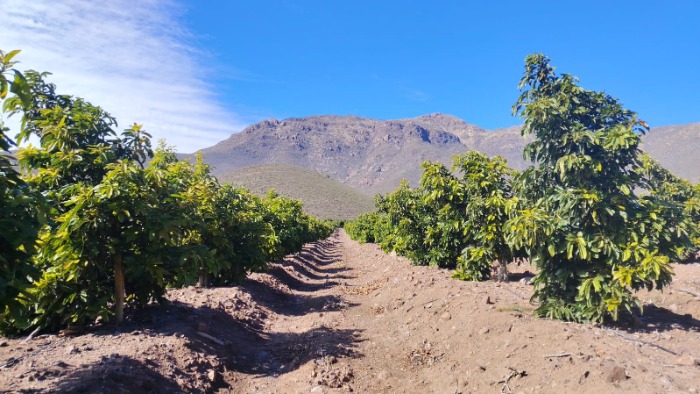
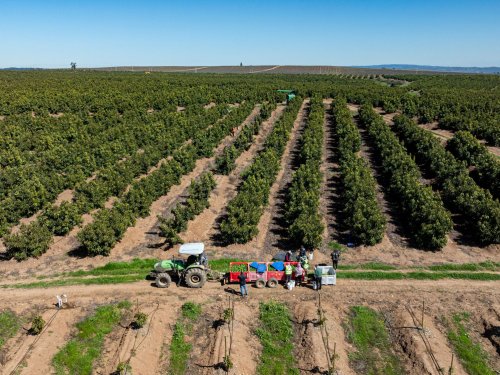
Cabildo is an area historically associated with avocado production. Therefore, the fact that a first commercial harvest on Dusa is now taking place there carries special significance. It is not simply the introduction of a new rootstock, but an opportunity to evaluate a new way of establishing and managing avocado orchards.
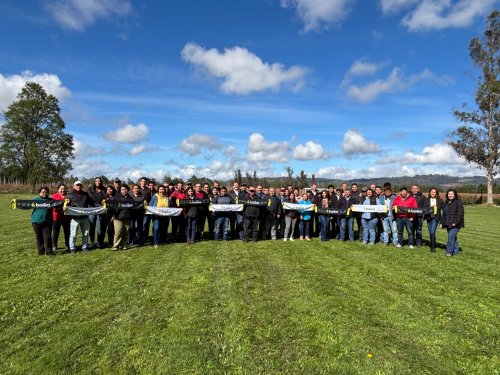
"For BAIKA, having our first commercial harvest of Hass avocado grafted onto Dusa clonal rootstock marks a turning point for the Cabildo area, a region with a long avocado-growing tradition based on traditional seedling rootstocks from Mexican and Guatemalan races," says Juan Antonio Delpero, Baika Production Manager.
For many years, growers have worked primarily with seed-derived rootstocks. The problem is that even when seeds from the same variety are used, there can be significant variability between plants. Trees may differ in vigor, root development, architecture, and production performance.
"Clonal rootstocks seek precisely to reduce this variability. In the case of Dusa, the experience accumulated in Chile has shown good root system development, vigor, and productive capacity," Delpero confirms. Evaluations carried out in the Valparaíso Region have shown favorable differences in yield and fruit size compared with some traditional rootstocks.
A More Uniform Root System
From an agronomic perspective, one of the main advantages of working with a clonal rootstock is greater orchard uniformity. "This facilitates management, because trees tend to respond more similarly to irrigation, fertilization, pruning, and other management practices," Delpero adds.
Dusa also stands out for its development of fine roots, a characteristic that may help explain part of its strong productive performance. However, greater vigor should not be viewed simply as an automatic advantage. This potential must be properly managed to achieve a balance between vegetative growth and production.
"Our first commercial harvest at the San Ignacio farm allows us to observe precisely this response under field conditions. One of the aspects of greatest interest is to determine how the trees perform in terms of uniformity, development, and production. However, the evaluation must be carried out from a medium- and long-term perspective," Delpero explains.
In an avocado orchard, observing a single harvest is not enough. It is necessary to monitor tree development over several seasons and analyze cumulative production, fruit size, fruit quality, response to stress, and, particularly, production stability from one year to the next.
Water Remains a Decisive Factor
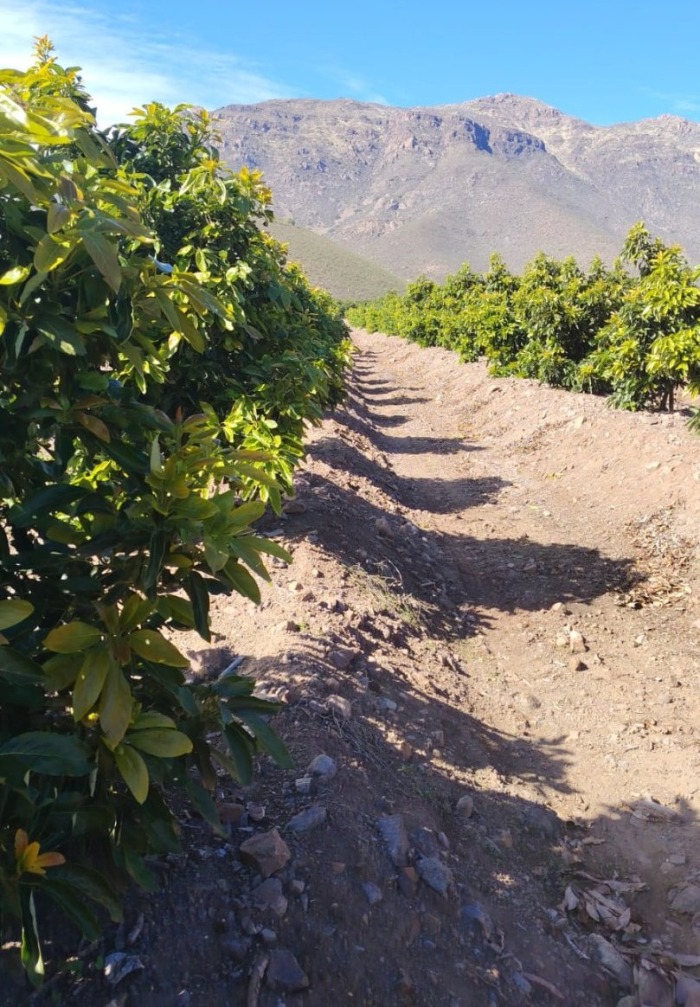
The experience takes on even greater relevance considering Cabildo’s recent history. The area has experienced a prolonged drought, making water management one of the main factors conditioning production.
Rainfall in recent years has helped restore part of the region’s water availability, but this does not mean that the water issue has disappeared. The scenario is changing, and so are management priorities.
After years of water deficits, greater attention must now be paid to how soils respond to periods of high moisture. Trees need water, but they also require oxygen in the root zone. Therefore, soil drainage and aeration become just as important as water availability.
In this context, a rootstock such as Dusa can be one tool within a broader strategy, but it does not replace proper irrigation design, drainage, soil management, and nutrition.
A New Chapter for Cabildo?
The incorporation of clonal rootstocks could represent a significant change in the way avocado orchards in Cabildo are renewed.
Until now, the genetics of the scion, primarily Hass, has received much of the attention. With clonal rootstocks, root genetics is beginning to play a much more important role in orchard planning.
This suggests that, in the future, the decision to establish an orchard will not be determined solely by the fruit variety to be produced. It will also be necessary to ask which root system is best suited to the specific conditions of each farm.
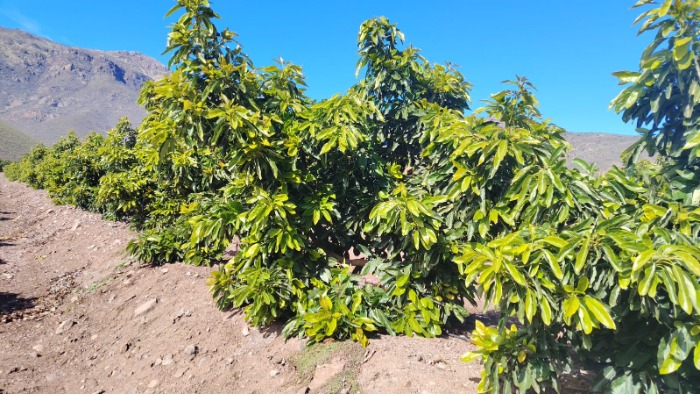
For this reason, the recommendation should not simply be to “plant Dusa.” The important step is first to conduct a site assessment and determine which genetic material can best respond to those conditions. As Delpero confirms: "Soil texture and depth, drainage, water quality, salinity, field history, the presence of phytosanitary problems, and water availability are some of the factors that should be considered before selecting a rootstock."
Chilean Hass Avocado in the Years Ahead
Over the next five to ten years, Hass avocado production in Chile will likely move toward increasingly technified and efficient production systems.
The challenge will be to produce high-quality fruit while making better use of increasingly limited resources. Water-use efficiency, productivity per hectare, yield stability, and fruit quality will play an increasingly important role in competitiveness.
In this scenario, the renewal of older orchards will become an important process. And this is where clonal rootstocks could play an increasingly relevant role.
The trend, however, should not be to seek a single rootstock suitable for all conditions. Instead, the future will most likely move toward much more site-specific selection: rootstock, variety, and management practices determined according to the characteristics of each farm.
Dusa is emerging as one of the materials that already has production experience in Chile and can contribute to this transition. But the real transformation lies in beginning to view the root system as a strategic component of orchard design.
Ultimately, the future competitiveness of Chilean Hass avocado production will not depend solely on producing more kilograms. It will be necessary to produce them with greater efficiency, consistency, and quality. And within that equation, the genetics of the root system will become increasingly important.