Industry Analysis
The invisible cost of low quality in avocados
Pedro Hevia warns that lower quality does not appear on balance sheets, but it can become a silent drain on future demand.
September 24, 2026
Indicators such as exported tons, prices achieved, market share and returns obtained by the producer are indicators that are frequently used to evaluate performance in the avocado industry.
These figures mainly describe what happens at origin, in the packing chain and during shipments. However, they do not necessarily reflect the experience that the consumer will have weeks later, when they open the fruit at home.
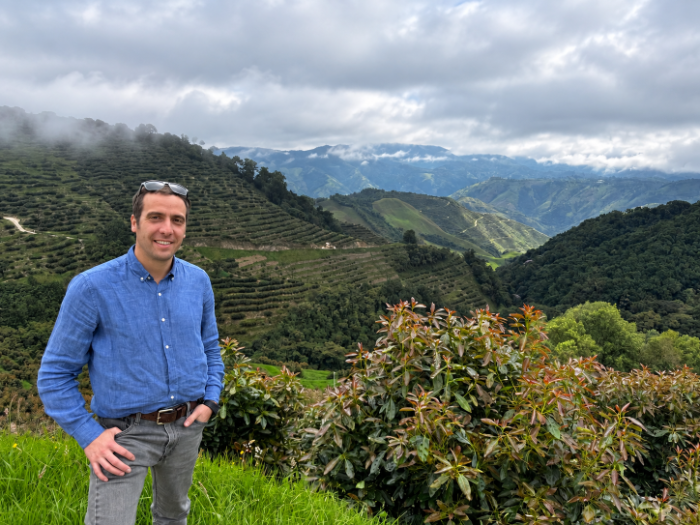
Can the industry continue growing in volume if it fails to offer a consistent experience? For Pedro Hevia, CEO & Founder of Puro Connection, asking this question requires us to rethink the way quality is understood and to follow the avocado’s journey beyond its arrival at destination.
“The quality control that is looked at at origin is a snapshot, a photograph of a given moment, which is packing. One must look at this more as a movie that keeps moving forward rather than as a photograph,” he points out.
This movie does not end when the fruit completes the journey without external damage. It continues during ripening, selection at destination, arrival at the point of sale and, finally, the consumer’s decision to buy again.
Two different evaluations for the same product
For Hevia, the gap begins with the way each actor evaluates the product.
At origin, a fruit may be considered acceptable because it arrived firm, met the expected size and shows no visible damage. For the consumer, however, these attributes do not guarantee a good experience. Their evaluation takes place after ripening and considers aspects such as flavor, texture, internal color and the ability to reach the proper eating stage.
“They are two different tests, taken at different times and by different evaluators,” he explains.
A fruit may pass the first test and fail the second. It may arrive correctly at the market, but develop black flesh, fibers, uneven ripening or fail to reach a satisfactory condition. From a logistics perspective, the shipment achieved its objective. From the consumer’s perspective, quality failed.
For Hevia, the determining test is precisely the latter, because it defines whether the person will purchase again.
The silent leakage of future demand
The problem is that the cost of this negative experience rarely makes its way back to the actor who could have made different decisions during production.
The “cost of poor quality,” understood as the losses associated with fruit that does not consistently meet consumer expectations, does not always appear reflected in companies’ results.
“The cost of that ‘low quality’ never appears on the income statement of the person who could prevent it, which is the producer,” states the CEO of Puro Connection.
The exporter may receive a discount on the settlement or a complaint regarding some boxes. The supermarket may process a return. However, none of these records necessarily shows that a consumer decided not to buy avocados again during the following weeks because they found black, fibrous or underripe fruit.
In this way, the industry interprets the failure as an isolated event, while its true impact could extend to purchases that will never take place.
“The cost of poor quality is seen as an isolated event and, in reality, it is a leakage of demand, a silent leakage of future demand,” Hevia warns.
This loss is difficult to observe because it does not appear as an independent line item in financial statements. Nor can it easily be attributed to a specific orchard, producer or agronomic decision if the information does not travel back through the chain and the necessary feedback is provided.
Measuring consumer experience to incentivize the producer
To incorporate the consumer into production decisions, Hevia proposes complementing traditional indicators with information generated at destination.
One of these data points could be the importer’s pack-out: the percentage of fruit that, after ripening and a new selection, can effectively be sent to the supermarket in its final format. Consumer complaints, compliance with ripening specifications and, although more complex, attributes such as flavor could also be considered.
Hevia mentions the case of the United Kingdom, where retailers can rate the performance of their suppliers by considering order fulfillment, fruit condition and the number of complaints received.
However, this information usually remains between the supermarket and the importer. The producer receives the price obtained as the main signal, but does not necessarily know the reasons behind it.
The proposal is for this information to be transferred back to origin and for a performance history to be built for each orchard over several seasons.
“Transferring the information that the retail importer has to the producer is something that is not done today,” he maintains.
Who pays for producing more consistent fruit?
Changing production practices or incorporating additional treatments can increase the producer’s costs. The challenge is that currently there is not, according to Hevia, a direct and consistent economic reward for delivering fruit that ripens more uniformly and generates a better consumption experience.
Indirect rewards do exist. For example, a better size can favor the price mix, while a higher percentage of exportable fruit can improve returns. However, these mechanisms do not necessarily recognize ripening consistency or consumer acceptance.
“The incentives are not in place. If the producer has no real reward or premium, they have no incentive to spend more or apply any additional treatment,” he argues.
One alternative would be to build records that make it possible to differentiate fruit according to its behavior at destination. A producer capable of demonstrating consistency season after season could have better tools to negotiate and capture additional value.
This would make it possible to establish a base return and add premiums associated with certain attributes, such as size, the production window, dry matter or the fruit’s subsequent performance.
Hevia highlights that there is a relationship between dry matter, the evolution of ripening and the flavor the avocado reaches when marketed. Incorporating this parameter into an incentive system could bring field decisions closer to the experience expected by the consumer.
The role of technology and the relationship between producer and exporter
The proposal also involves reviewing the relationship between producers and exporters.
Hevia recalls that consignment models allowed the commercial result to more clearly reflect the final performance of the fruit. Although many producers currently prefer to avoid this mechanism, he considers that a well-executed consignment can favor more prolonged support from the exporter.
Rather than appearing only at harvest time, when many decisions can no longer be changed, the exporter could participate from the beginning of the production cycle.
That collaborative relationship, according to Hevia, has weakened. Producers and exporters often negotiate from opposing positions, when consistency requires both to work toward the same objective.
Bargaining power is also not identical across all origins. In markets with high domestic consumption, such as Chile or Mexico, the producer has more alternatives for marketing their fruit. This reduces the incentives to accept additional conditions if there is no clear reward for meeting them.
Therefore, transferring destination indicators to the field would allow requirements not to be perceived solely as an imposition by the exporter, but as information capable of generating value for the producer.
Postharvest as insurance, not a magic solution
Ripening and postharvest control technologies can reduce losses and stabilize results, but they cannot completely correct problems that originate in the field.
According to Hevia, these tools make it possible to manage part of the variability that accompanies the fruit, but not eliminate it. If the avocado arrives with internal problems or inadequate dry matter due to agronomic or harvesting decisions, technology can reduce the risk of failure, although it cannot make it disappear.
“Postharvest technology should be understood as insurance, not as a solution,” he summarizes.
Insurance can be necessary and valuable, but it does not replace a quality strategy. Technology increases the chances of obtaining a better result; it does not automatically turn deficient fruit into a consistent experience.
Retail as an engine for feedback in the chain
Retail occupies a central position in this change of perspective; it is the actor that maintains the direct relationship with the consumer and concentrates information on sales, complaints, returns and product behavior.
Hevia considers that this link uses this information to decide which suppliers to continue working with, but rarely returns it systematically to the rest of the chain.
The importer may know that its performance was good or bad and receive an increase or reduction in the program for the following season. However, this evaluation does not always explain what worked, what failed or what should be corrected at origin.
“Instead of being just a judge that says yes or no, retail could become an engine for feedback that allows for improvement,” Hevia suggests.
Growing with a consumer-focused perspective
A truly consumer-oriented industry would not stop measuring volumes, prices or returns, but would give equal importance to the consistency of the fruit at destination.
This would make it possible to differentiate producers capable of sustaining good results, reward practices that generate a better experience and identify the causes of problems before they become a permanent loss of buyers.
The challenge, therefore, is not only to produce and export more avocados. It also requires understanding what happens to the fruit after its arrival and how much an experience that fails to meet expectations can cost the industry.
As long as quality continues to be evaluated as a photograph taken at packing, the chain will continue to lose part of the movie. It is precisely in its final scenes, when the consumer opens, tastes and decides, where future demand is defined.