Avocados from Jalisco are betting on quality to face the new global competitive landscape.
Mexican avocado volumes reach historic levels and prices face constant pressure.
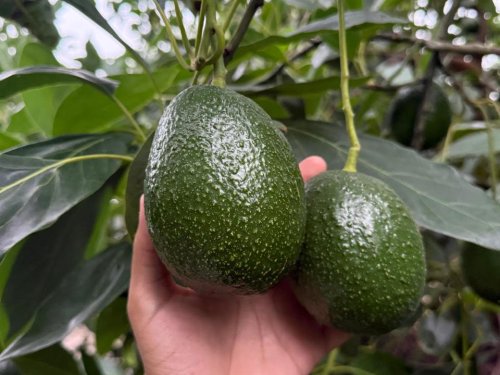
While Mexican avocado volumes reach historic levels and prices face constant pressure, in Jalisco the discussion is no longer focused solely on how much to produce, but on how to maintain a competitive advantage in an increasingly global market.
For Saúl Medina Tejeda, president of the Association of Avocado Producers and Exporters of Jalisco (APEAJAL), the growth of the world supply forces producers to perfect aspects ranging from productivity to the quality and condition of the fruit upon arrival at its destination, when it comes to distant markets, such as Japan or South Korea.
The advantage of Jalisco avocados
One of the elements that distinguishes Jalisco within the Mexican industry is the structure of its orchards, characterized by a larger productive scale and a high level of technology.
“The truth is that Jalisco has an advantage, because the orchards are a bit more technologically advanced. There are producers with 100, 200, 500 hectares, that is, larger producers, who from a single orchard can send many containers to any destination. So that helps a lot in achieving greater uniformity and making the post-harvest work better,” Medina explains.
According to the leader, this condition becomes a particularly relevant advantage when facing the challenge of analyzing growth in the supply of distant markets, where the fruit must maintain its quality for several weeks.
“You’re sending it to a destination like Japan, where from harvest to when the customer eats it, 40 or 35 days pass, knowing that transit takes 22 or 25 days, but everything turns out well. The fact that it comes from a single orchard, at the same altitude, and that the avocados are managed the same way by one or two producers at most, helps a lot,” he points out.
Productivity and health: the next challenges for avocados in Jalisco
Although Mexico maintains a privileged position in international markets, Medina warns that competition is intensifying and that the sector cannot rely solely on its historical leadership. Therefore, two key concepts emerge: health and productivity.
“I believe that, as a country and as Jalisco, we have to work hard on our phytosanitary status with the new mutations of pests that have been under control for a long time. We also have to place great importance on productivity, increasing the tons per hectare. If you're averaging 10, then you need to think about how to get up to 12 or 14.”
The leader maintains that improving yields will be fundamental to sustaining profitability in a scenario where buyers have an increasingly diverse supply. This is especially true considering that the phenomenon of high volumes and low prices could persist for some time in the United States, which will continue to be the main market for Mexican fruit.
Avocado competitors worldwide
For APEAJAL, the main change in recent years is that the avocado industry is no longer dominated by a few players. According to Medina, all plans must take into account that competition now extends globally.
“For example, Guatemala is already close to entering the United States, Peru is growing more and more, Chile has been disappearing from the North American market, but it was there for a long time and when fruit from that country is needed, it can send it. So it is a global market,” he explains.
In that context, he warns that the Mexican industry must prepare to coexist with more origins and greater demands from buyers.
“It’s not just Michoacán. It’s not just us. A buyer anywhere in the world can source avocados from all over. But we still have advantages: we’re in a very privileged area like Jalisco and Michoacán, where North American consumers greatly prefer our avocados. Obviously, Californians do too, because they’re domestic and local, since they absolutely have to be harvested and sold there. But if you put a U.S. consumer in a preferred avocado situation—and I’m not trying to speak ill of anyone—they prefer ours.”
According to the industry leader, that advantage remains relevant, but it is no longer sufficient on its own. The future will depend on the industry's ability to produce better, maintain quality, and respond to an increasingly competitive market, where there are players "always ready" to offer their fruit.