Avocado industrialization
Avocado oil: quality and challenges of a premium market
Andrew Logan, founder of AvoHealth, analyzes how technology, quality, and fruit utilization are redefining the avocado oil market.
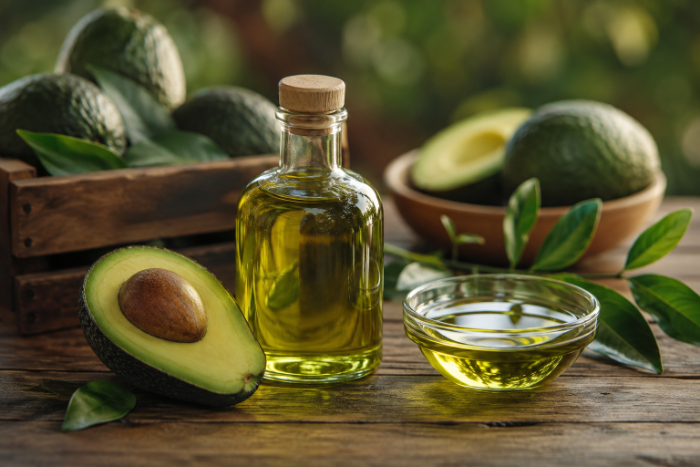
During decades, avocado was recognized almost exclusively for fresh consumption. Today, that reality has begun to transform profoundly. The development of new industrial processes has made it possible to turn this fruit into a source of high-value-added products, among which avocado oil has gained an undisputed prominence in international markets.
Its growing use in gastronomy, the cosmetics industry, and the production of specialized foods has driven investment in different producing countries, opening new opportunities to make use of fruit that previously had little commercial value.
However, this accelerated growth has also brought new operational and commercial challenges. Product quality, processing efficiency, and consumer trust have become factors as decisive as the ability to produce greater volumes.
According to Andrew Logan, founder of AvoHealth and one of the world's pioneers in the production of extra virgin avocado oil, the future of the sector will depend less on how much oil a company is capable of processing and much more on its ability to guarantee an authentic, consistent product made according to the highest standards.
Founded in New Zealand in 1999, AvoHealth was one of the first companies in the world to produce extra virgin avocado oil on a commercial scale. Since then, it has participated in the development of processing projects in various producing countries, providing advice on feasibility studies, plant design, process optimization, and the implementation of solutions aimed at improving the industry's yield, quality, and sustainability.
A premium product with constantly expanding demand
Avocado oil is no longer an ingredient reserved for niche markets. It is now part of a premium category within vegetable oils, driven by global consumers seeking less processed and naturally sourced foods.
Its popularity is due both to its culinary qualities and its nutritional profile, standing out for its predominance of monounsaturated fats, the natural presence of vitamin E, antioxidant compounds, and high stability at elevated temperatures, which favors its use in hot preparations where other oils have serious limitations.
At the same time, the cosmetics industry has established avocado oil as a key ingredient in formulations for skin and hair care, further expanding its international demand. However, maintaining this premium positioning entails an additional operational responsibility: ensuring consistent quality from the agricultural origin of the fruit through to the final packaging.
Processing Key Factors: Extra Virgin vs. Refined
Although both products come from avocado pulp, their production processes respond to different commercial objectives. Extra virgin oil is obtained through physical or mechanical processes carried out at low temperatures, preserving the aroma, flavor, and natural compounds of the fruit, and is mainly intended for direct consumption and gourmet applications.
Refined oil, on the other hand, incorporates additional refining stages to improve its thermal stability, neutralize color, odor, and flavor, as well as extend its shelf life, and is widely used by the food and cosmetics industries. In both cases, rigorous process control remains the determining factor.
An industrial operation more complex than it appears
Behind every bottle lies an industrial operation that is considerably more sophisticated than consumers often imagine. Contrary to popular belief, processing avocado oil is not simply a matter of extracting juice from discarded fruit.
Final yield depends on multiple interconnected variables: the variety used, degree of ripeness, percentage of dry matter, climatic conditions in the area, supply logistics, and the efficiency of extraction equipment.
Andrew Logan argues that one of the most common mistakes among new investors is assuming that experience gained in other oilseed industries, such as olive or soybean processing, can be directly transferred to avocado processing.
Each project requires specific technical solutions, since the chemical and physical characteristics of the fruit can change drastically between regions, seasons, and even between different orchards.
Consequently, the success of a plant depends not only on its installed capacity, but on the integration of processes capable of maximizing yield without compromising oil quality.
Quality from the orchard and the value of Process Grade
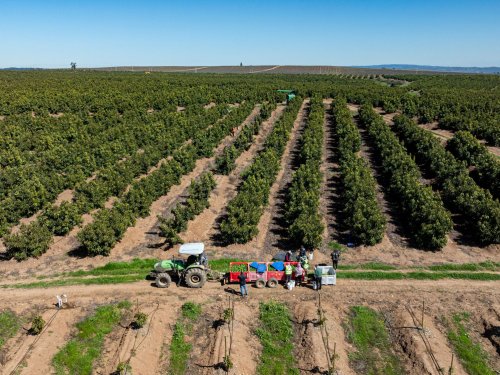
The final quality of the oil is determined long before the fruit enters the plant. Factors such as agronomic management, harvesting at the optimal dry matter level, and transportation conditions directly influence how the pulp behaves during extraction.
Subsequently, controlling time, temperature, and operating parameters along the processing line makes it possible to preserve the fruit's natural attributes and obtain a chemically stable product. For Logan, the main competitive advantage lies in consistency: producing greater volumes is important, but ensuring homogeneous quality over time is essential to consolidating commercial programs.
In this context, one of the most significant advances for the value chain has been the revaluation of what is known as process grade. This refers to fruit that does not meet the aesthetic or size standards required for fresh export, but retains excellent organoleptic conditions for oil extraction.
This model provides a second commercial opportunity for part of the harvest, reduces economic losses in the field, and maximizes farmers' profitability. At the same time, new plants are moving toward a circular economy, incorporating technologies to reuse by-products such as skin, pits, wastewater, and pulp. Reducing the environmental footprint and increasing returns for fruit producers.
The test of trust: Authenticity and transparency
As often occurs in rapidly growing sectors, the expansion of avocado oil has also tested market transparency. The sustained increase in demand attracted investment and accelerated the installation of processing plants, but it also favored the emergence of adulterated or blended oils marketed as 100% pure avocado oil.
Various academic studies and inspections in destination markets showed that some products available did not meet the standards declared on their labels, negatively affecting the trust of buyers and consumers.
These episodes marked a decisive turning point for the industry. Traceability, authenticity testing, and transparency moved to the center of commercial strategy. Today, the sector's focus has shifted from simple volume expansion toward efficiency, sustainability, and the development of long-term partnerships based on certification.
The future of avocado oil will continue to show positive prospects in global markets thanks to its versatility and ability to add value to agricultural production. However, its definitive consolidation will belong to those companies that manage to demonstrate that excellence and authenticity begin long before a bottle is opened.
Based on the experience accumulated by AvoHealth over nearly three decades, Andrew Logan maintains that the sustainable growth of this industry will depend on the ability to combine innovation, efficiency, and transparency at every stage of the process, from the orchard to the final consumer.