Processing and technology
HPP technology: the key to preserving guacamole and pulp
High pressure processing (HPP) extends the shelf life of guacamole and avocado pulp without heat or chemical additives.
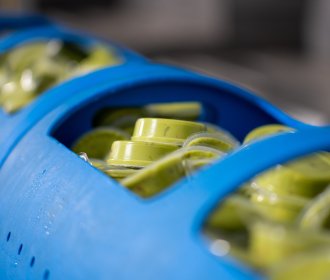
The growth in consumption of fresh, natural and ready-to-eat foods has led the agri-food industry to develop advanced preservation methods that allow the quality of the product to be maintained for longer without altering its organic characteristics.
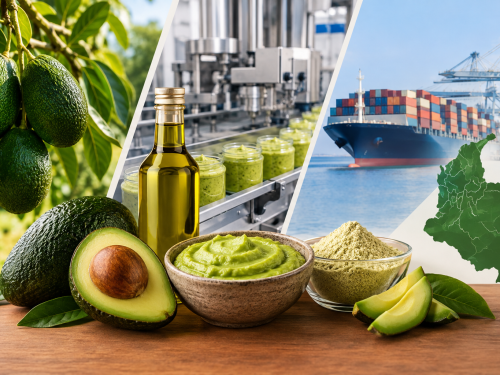
In this context, High Pressure Processing (HPP) technology has become fundamentally important within the avocado industry, especially in the production of pulp, guacamole, and high value-added processed products. Its application allows for extended shelf life, increased food safety, and easier access to highly demanding international markets.
What is HPP technology and how does it work in cold conditions?
HPP technology is a non-thermal preservation system that uses extremely high hydrostatic pressure to inactivate microorganisms that cause product spoilage and potential pathogens.
Unlike traditional pasteurization, this process is carried out at a low temperature, maintaining a virtually constant level. Thanks to this, the food retains its sensory, nutritional, and natural freshness properties, and is widely used today in juices, dairy products, and avocado derivatives.
The operating procedure begins once the product has been manufactured and sealed in its final packaging. These packages are then placed in a sealed, high-pressure chamber filled with water, where they are subjected to isostatic pressures of up to 6,000 bar for several minutes.
This force is transmitted uniformly and instantaneously throughout the food, regardless of its shape or volume. As a result, the product's structure remains virtually intact, maintaining its cold chain until commercial distribution.
Guacamole preservation and advantages over thermal methods
Avocado is a fruit with high enzymatic sensitivity once processed. When mashed, polyphenol oxidase triggers rapid oxidation that alters its color, flavor, and appearance. HPP technology overcomes this bottleneck by drastically reducing the microbial load and slowing down natural oxidation without modifying the food's matrix. This makes it possible to guarantee the bright green color, creamy texture, and original aroma profile without resorting to chemical preservatives or artificial additives.
Compared to conventional pasteurization, avoiding high temperatures offers decisive competitive advantages for the agro-industrial chain:
- Substantial extension of shelf life in refrigerated storage.
- Retention of the characteristic green color and natural creamy texture.
- Preservation of the original flavor profile and thermolabile nutrients.
- Clean label formulation with a lower presence of preservatives.
- Microbiological safety guarantee for long-distance export.
Financial viability and impact on the production chain
Adopting plants with HPP equipment represents a higher capital investment (CAPEX) than conventional methods due to the cost of the high-pressure machinery. However, the processing industry offsets this initial outlay through reduced post-harvest losses, extended profit margins, and access to global markets with stringent food safety requirements.
High-pressure processing also allows for the channeling and revaluation of fruit that does not meet the aesthetic standards for the fresh market, maximizing the overall profitability of the harvest.
In Latin America, the adoption of this technology has grown steadily in leading producing and exporting countries such as Mexico, Peru, Colombia, and Brazil. These nations are consolidating their processing infrastructure to meet the growing global demand for minimally processed, safe, and clean-label foods.
A tool to maximize the added value of the industry
The evolution of the sector demonstrates that competitiveness depends not only on the volume of fresh fruit exported, but also on the technical capacity to transform raw materials into stable, high-value products. In this context, HPP processing is consolidating itself as a strategic solution that expands the avocado supply, safeguards its quality during maritime and land transport, and precisely meets the evolving demands of the global consumer.