Growth of the Agro-industry
From the fresh market to the industrialization of avocados
Technology, industrialization and new habits are transforming the avocado sector, driving the creation of value-added products.

For decades, the success of the avocado industry was associated almost exclusively with a single objective: producing more fresh fruit and supplying new international markets. The exponential growth in consumption across Europe, North America, and Asia established Hass avocados as one of the world's fastest-growing agricultural commodities, driving new orchards, massive investments in logistics, and intense commercial competition among the leading exporting countries.
Today, however, the industry is entering a new phase. Long-term growth no longer depends solely on increasing production volumes or expanding into new geographic markets. Instead, industrial processing, value-added product development, and the professionalization of the entire supply chain are reshaping the global avocado business.
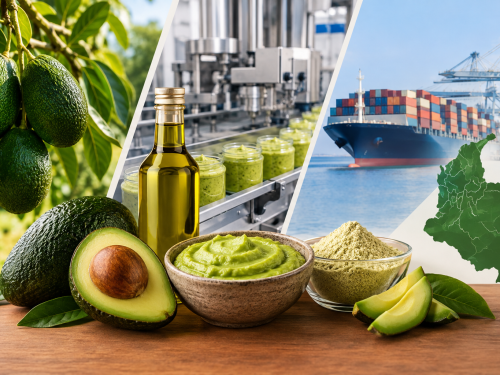
Extra virgin avocado oils, frozen avocado pulp, ready-to-eat guacamole, and innovative food service solutions are all part of a profound transformation. This evolution reflects not only changing consumer preferences but also the industry's need to maximize the utilization of total agricultural production.
At the same time, processing facilities are incorporating increasingly sophisticated technologies to ensure food safety, product quality, and full traceability, while emerging markets are rapidly embracing product formats that until recently occupied only niche segments within the industry.
In this context, avocado processing has evolved from being merely an outlet for fruit rejected by the fresh market into a strategic pillar of industry growth. Understanding how this transformation is unfolding, the opportunities it creates, and the challenges it presents is essential to understanding the future of an industry that continues to expand at a remarkable pace.
The Comprehensive Transformation of the Fresh Produce Industry
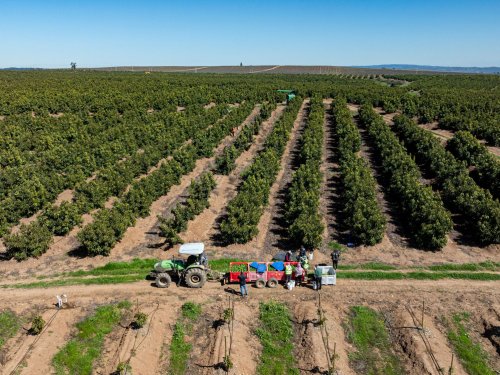
The recent history of this superfruit can be understood as the evolution from a largely seasonal product into a highly specialized global supply network. Over the past two decades, sustained international demand has fueled rapid expansion of cultivated acreage, encouraged new producing countries to enter the market, and accelerated the development of cold-chain logistics capable of supplying consumers virtually year-round.
Initially, the industry's primary challenge was increasing orchard productivity while strengthening logistics for fresh fruit exports. However, as global production volumes expanded, competition among exporting origins intensified, and customer expectations became more sophisticated, the industry's strategic priorities began to shift.
Today, the avocado sector faces a fundamentally different landscape. Companies are now focused on delivering superior eating quality, year-round supply consistency, sustainable water management, digital traceability, and increasingly, higher-value avocado products.
In mature markets, growth is no longer driven simply by selling more whole fruit. Success increasingly depends on meeting consumer demand for convenient, ready-to-eat, healthy products that comply with the highest food safety standards.
Meanwhile, expanding global production has forced leading companies to find profitable uses for fruit that, despite maintaining excellent internal quality and nutritional value, fails to meet the strict cosmetic standards required by the fresh export market.
This paradigm shift has accelerated investment in avocado processing, transforming it into an indispensable strategy for diversifying revenue streams, reducing postharvest losses, and strengthening the industry's long-term competitiveness.
Why Is Avocado Industrialization Accelerating?
The rapid expansion of avocado processing is driven by a critical need to optimize the value chain: generating greater value from an ever-growing supply while reducing the financial risks associated with fluctuations in fresh fruit prices.
One of the strongest drivers has been the revaluation of second- and third-grade fruit. Rather than representing sunk costs or financial losses for growers, these volumes are increasingly directed to advanced processing facilities, where they are transformed into premium avocado oil, High Pressure Processed (HPP) avocado pulp, and ready-to-eat guacamole for large-scale commercial markets.
This transition has fundamentally changed the perception of avocado processing. Far from being merely a secondary or residual channel, industrial processing has become an independent business segment with strong growth prospects, capable of opening new market opportunities while providing producers with greater price stability during periods of oversupply.
The industry's leading business segments include:
Avocado Oil
Key Benefits
Makes full use of fruit with cosmetic or mechanical skin defects while producing a premium oil characterized by excellent thermal stability and an outstanding nutritional fatty acid profile.
Target Markets
Specialty retail, gourmet food products, the cosmetics industry, and the health supplement sector.
HPP Avocado Pulp and Guacamole
Key Benefits
High Pressure Processing (HPP) preserves the avocado's natural color, fresh flavor, texture, and nutritional value without requiring chemical preservatives or heat treatment, while significantly extending refrigerated shelf life.
Target Markets
Supermarket chains and the rapidly expanding food service industry.
Ready-to-Eat Avocado Products
Key Benefits
These products offer maximum convenience by eliminating peeling, cutting, and ripening time in commercial kitchens and households alike, reducing waste caused by overripening while delivering a consistent, standardized product.
Target Markets
Urban consumers seeking convenience and institutional food distribution channels.
The combination of increased raw material availability, advances in cold preservation and High Pressure Processing technologies, together with changing urban lifestyles, explains why value-added avocado processing has become one of the industry's most powerful engines of innovation.
Toward a More Efficient and Resilient Industry
Ultimately, industrialization is not intended to replace the fresh fruit market—it is designed to strengthen it.
By transforming climate-related challenges and production surpluses into stable, high-demand products, the avocado industry not only reduces food waste but also builds greater financial resilience against the volatility of international fresh fruit prices.
The maturity of the avocado industry will no longer be measured solely by the number of export containers leaving the orchard, but by its ability to reinvent the fruit at every stage of the value chain.