Success at the first Technical Protocol Seminar for Hass Avocados in Colombia: Perspectives by Gonzalo Vargas
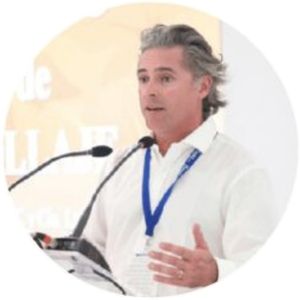
On September 26 and 27, Arvi Park in Medellín hosted the First Technical Protocol Seminar for Hass Avocados in Colombia, organized by Goliat Agrícola and Corpohass Colombia. This event, which brought together producers, technicians, and industry experts, was designed to strengthen the technical capacities of key stakeholders in Hass avocado production in the South American country.
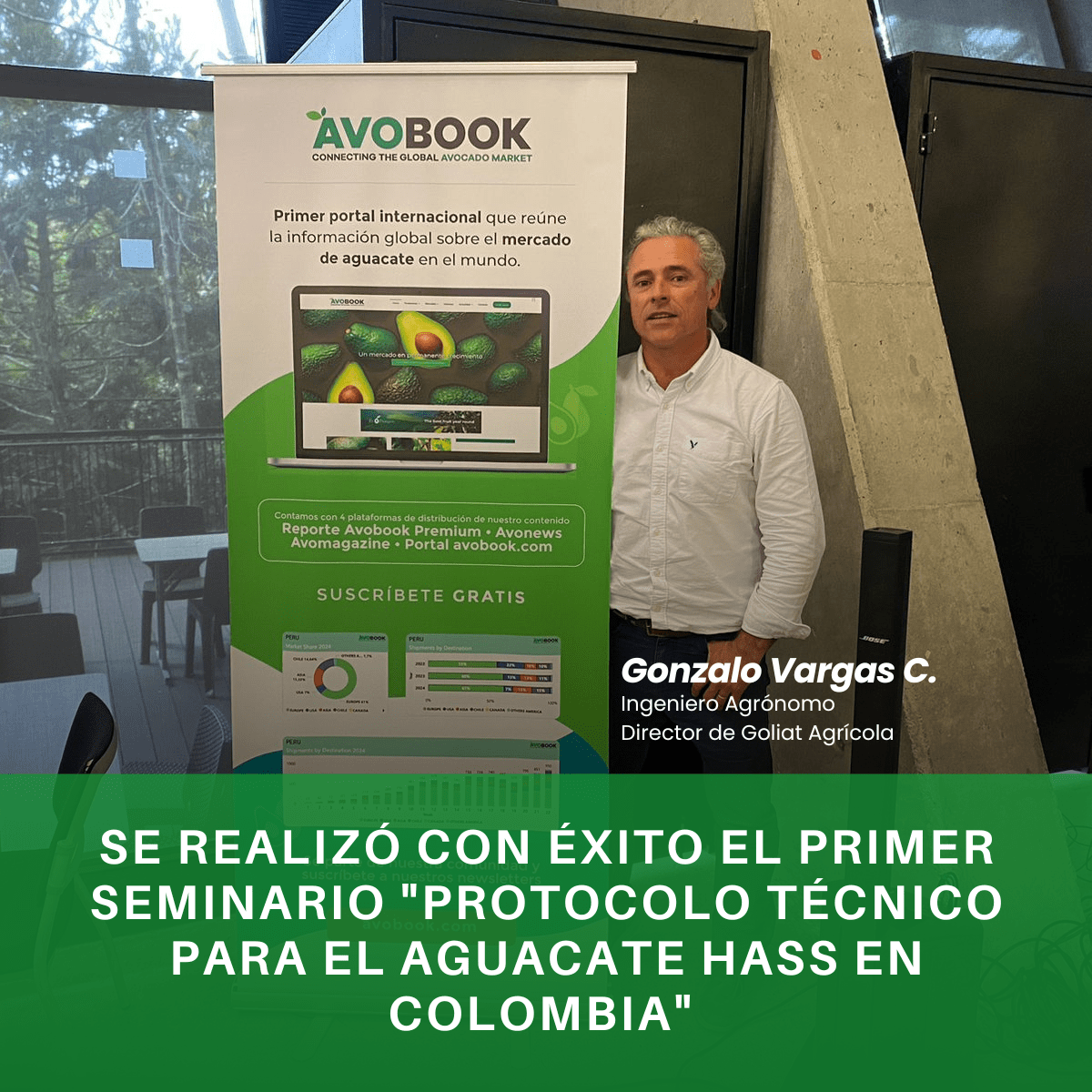
Gonzalo Vargas, organizer of the seminar and representative of Goliat Agrícola, emphasized during an interview with Avobook that one of the main objectives of the event was to share a unified technical protocol with Colombian producers, encompassing best practices from crop management to phytosanitary and export aspects. “We want Hass avocado producers in Colombia not only to maintain their competitiveness, but also to be able to optimize the productivity of their farms sustainably,” Vargas explained.
The event was attended by more than 200 producers from various regions of the country. Participants benefited from presentations on topics such as pest and disease control, efficient water resource management, and the impact of climate variability on crops. According to Vargas, “the exchange of experiences among the attendees was one of the seminar's greatest achievements, as it fostered a more united community, aware of the common challenges facing the sector.”
Furthermore, Vargas mentioned that “the importance of conducting technical visits to nearby farms allowed participants to observe firsthand the practices discussed in the conferences.” This practical approach was key for attendees to immediately apply the knowledge they had gained.
The First Technical Protocol Seminar for Hass Avocados in Colombia was a resounding success, both in terms of participation and content. “This seminar is a platform where advanced technical knowledge is shared, but also where producers can learn from each other, which strengthens the entire industry,” Vargas added.
Thanks to the initiative of Goliat Agrícola and Corpohass Colombia, the Colombian avocado sector continues to move towards more efficient and competitive production, with a view to further positioning itself in international markets.
An X-ray of the avocado market in Colombia
The situation of avocados in Colombia presents serious challenges that require the commitment of everyone involved in the sector.
Vargas pointed out that "the management of avocados must change completely for the industry to move forward," emphasizing that the production cycle in Colombia is much more complicated than in other countries like Chile.
“In Chile, you start harvesting in the second year; in Colombia, the plant remains in a vegetative state, especially at altitudes near 2,000 meters,” he warned. This reality has generated unrealistic expectations among new producers, who are often unaware that “orchards begin producing in the fourth year.”
Furthermore, Vargas emphasized the problems in Colombian nurseries, where “the quality of the roots is poor and there is a heterogeneity of plants that translates into fungal problems in the field.” This fungus, which affects the plant's vascular system, has begun to appear in areas that traditionally did not have it. “Fighting the fungus is complicated, but it can be controlled so that it doesn't manifest itself so severely,” Vargas added.
To address these problems, Vargas emphasized the importance of implementing proper plant vigor management and using growth regulators. “Although many fear the unknown, adopting practices such as girdling and pruning is fundamental to balancing foliage and achieving better yields per hectare,” he stated. With these measures, and increased education and training, Vargas is convinced that Colombia can transform its avocado production, optimizing not only fruit quality but also profitability.
Vargas closed the interview with a hopeful message: “In Colombia, we can produce excellent fruit, with good sizes and better post-harvest characteristics. We are clear on how to address these problems and make the business profitable.”