Gonzalo Vargas
Fallen fruit in winter also tells a story
Chili
Every winter, low temperatures once again raise concerns among avocado growers. However, not all the fruit that falls to the ground is due to severe frost, nor is it necessarily a sign of poor quality. The current season is exhibiting unusual behavior that warrants close observation.
Over the past few weeks, various fruit-producing sectors have reported fruit drop associated with the cold. In many cases, these are not severe frosts with sub-zero temperatures, but rather periods when temperatures remain between 0 and 2 °C. Although the plants do not freeze, these conditions generate physiological stress that typically manifests itself around two weeks later through partial fruit drop.
Adding to this scenario are the frontal systems that have occurred and those expected in the coming days, accompanied by strong winds that increase the amount of fruit falling to the ground. This phenomenon is expected during the winter months and is part of the crop's normal production cycle.
However, the current context is very different from previous years. Technological development and the incorporation of frost protection systems have considerably reduced the area of highly exposed orchards. Today, fewer and fewer properties suffer widespread damage from low temperatures, so the presence of fruit truly affected by frost has decreased significantly.
A few years ago, it was common for the domestic market to be supplied for weeks with frost-damaged fruit after intense weather events. These avocados had reddish hues, low dry matter content, uneven ripening, and were of a much lower quality than the fruit normally harvested.
Much of that volume consisted of fruit collected from the ground, which also found a market, primarily in the sandwich industry, where it can be processed and some of its defects disguised. In contrast, more demanding segments, such as sushi, require uniform pulp, free of browning, and with excellent visual characteristics.
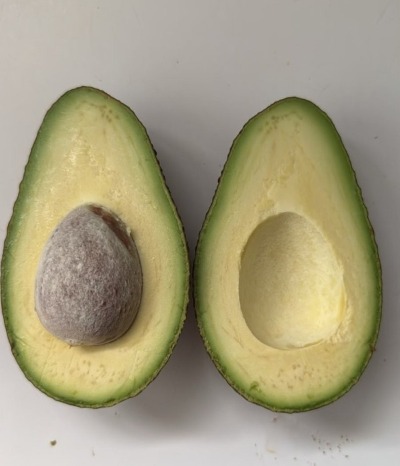
What's interesting this season is that this pattern seems to be changing. The avocados currently falling, both from the cold and those that might be blown off by the wind, mostly have already reached a certain level of dry matter content. The warm autumn accelerated the fruit's physiological development, allowing many orchards to reach the point necessary for proper ripening earlier than usual.
The result is a very different type of fruit drop than what was traditionally observed during the winter. Evaluations show uniform ripening, good internal quality, no browning, and no problems with stem rot or mold, further aided by the fact that significant rainfall has just begun and the fruit was not exposed to high humidity for extended periods.
This physiological advancement is not only observed in avocado trees. Other fruit trees, especially citrus fruits, also show earlier development compared to previous seasons, reflecting the effect of an autumn with above-normal temperatures.
Fruit drop will continue to be a part of the winter season, and the next frontal system will likely increase its volume. However, this year offers an important lesson: fruit that falls to the ground has not necessarily lost its quality. In a scenario where climatic conditions and agronomic management continue to evolve, the criteria we use to interpret what happens in orchards also change.