Sebastián Peragallo, from Baika: “Chile will grow productively, but in an orderly manner”
The Business Manager for Fresh Fruit at Baika Chile and Baika Peru spoke with Avobook about the different origins and markets of avocados handled by the company, just as the transition between Chile and Peru is taking place.
Sebastián Peragallo is the Fresh Fruit Business Manager for Baika Chile and Baika Peru. He says he entered the world of avocados “almost by chance.”
“I’ve worked in the food industry my whole life. I started at Agrosuper, with the Minuto Verde brand of food and fruit, but when I got to avocados, I fell in love. It’s like a love that always gives you butterflies in your stomach, because you have to be very hands-on with the business. It’s like a nervous, but happy, love, and I hope to stay in this industry for a long time. I’m approaching seven years,” he tells Avobook.
In this conversation, he analyzes the market from the perspective of what is happening in Chile, both as a consumer and producer country, in addition to providing his projections regarding the different origins and destinations that Baika handles.
- How do you see the trend in avocado export volumes from Chile?
“I believe we will be higher than last year. I estimate that in terms of production, we should reach between 220 and 230 million kilos. That is between 25% and 30% above the previous year. In terms of exports, the growth will be very similar. Last year Chile registered close to 90 million kilos exported. This year we should be around 115 or 120 million kilos.”
Beyond the weather factors, the season started strong, with double the exports at the same time last year. But we imagine that the early decline in exports from Peru and some delayed origins, like Morocco, are playing a role. How long can Chile maintain this momentum?
“We’re going to ship the entire volume, no matter what. The question is how the price will evolve. I think that until week 44 or 45, arrivals from Chile will continue to be very strong. After that, with the entry and normalization of shipments from Mexico, and with the arrival of shipments from Israel and Morocco, in addition to those from Africa, the price situation should begin to stabilize somewhat. Therefore, Chile should stop this current surge, in which we’re shipping double the volume compared to the same period last year. In the case of Baika, it’s four times more. I think we have at least four more weeks of quite strong volumes and prices as they are.”
- What are the prices for Chilean fruit reaching?
“Chilean avocados always have a higher value than those from other origins. We're not talking about us being like Coca-Cola competing with other soft drinks, but Chilean avocados have a different added value than those from other origins.”
- But, beyond the fact that Chilean fruit already commands a good price due to its quality, what is the current price being traded at given the current scenario?
“Today, the price in Europe for the larger sizes, from 12 to 18, is around €15.50 per 4-kilo box, which is quite high for the European market. We're two to two and a half dollars, and two to two and a half euros, higher than at this time last year. China is paying exorbitant prices, although it depends on the size. China mainly consumes smaller sizes, from 22 to 30. A 10-kilo box is going for almost $35, which is a great price for those sizes. Argentina is paying almost 20% more than at this time last year; the United States always pays good prices for Chilean fruit, but doesn't always buy Chilean avocados. In general, all markets are much higher, except for Chile's domestic consumption, which I would say is fairly stable.”
- Staying in Chile, how do you see the evolution of the domestic market in recent years, in this interaction between local production and imports, where new players such as Brazil are expected to enter?
“In Chile, we have the demand very well covered. In the case of Brazil, we don't know the protocol. And that's important because, for example, we have a protocol with Mexico, but for the Chilean industry it's quite complex and expensive, because you have to pay inspectors to certify the fruit when it's harvested and then again when it's packed. An inspection in Mexico costs between $10,000 and $12,000. So, the volume you have to import is quite significant for your cost per container to be as profitable as possible. It would be ideal if it worked like SENASA in Peru: basically, they're the ones who give the go-ahead. If that protocol improves, I think Mexico could be a very interesting source for Chile.”
- Why is this happening with Mexico?
“Our Agricultural and Livestock Service is very demanding. But there’s a reason for that: Chile’s great advantage is that we have our beautiful Andes Mountains as a protective barrier against millions of pests. That makes us very particular about what comes in. And I mean that in a positive way. That’s why I say that, in the case of Chile opening up to Brazilian fruit, it’s necessary to review the protocol and analyze what it will mean. Because Brazil, with its high level of pests, might require specific measures. I believe that by simplifying Mexico’s protocol a bit, it could be a very good opportunity for Chile.”
- What does the projected avocado imports from Colombia and Peru look like?
“Colombia also has protocols in place for Chile today. It’s a bit simpler, but the Chilean authorities only have certain packing facilities and orchards authorized. I’d say there haven’t been more than ten imports from Colombia to Chile. And the protocol has been in place since 2022. It’s similar to what happened with Peruvian fruit: at first, Chileans didn’t know how to handle it. It’s a different fruit, with a different ripening process. But they’ve learned. In the case of Colombia, it’s a much more complex fruit to work with than Peruvian fruit. So I’d say that, rather than simplifying things, there’s post-harvest work that needs to be done to improve. In the case of Peruvian fruit, I think things have been done much better. Peru produces 560 million kilos. This year it will reach 530 million, and next year it should be at 580 million, and Chile continues to be a very important target market for Peru. First, because of its proximity; second, because it pays good prices; also, Chile is a big consumer; and Peru is reaching the quality that Chileans expect, which He already knows its origin well. He already knows, for example, that you shouldn't wait until it turns completely black to eat it.”
- What is the trade relationship like between avocados and Argentina?
“We have an Argentina that produces avocados, and we also have a protocol, which is very simple. But Argentina is a country that hasn't focused on avocados. Due to the economic and political situation, no major investor has set their sights on the country. But I think it could be a very interesting source for Chile. There are cases of other companies that have brought Argentine avocados to Chile and have had good results, but only by monitoring the process from the field to Chile.”
- If Brazil has the conditions to market its fruit in Chile, what effects would this have on the market?
“If Brazil enters with a relatively simple protocol, it will hit Peru hard, because it will directly access the market with Peru. This will mean that Chilean consumers, having a greater supply, will have access to better prices.”
- In the case of Chilean production, are there options to continue growing in volume?
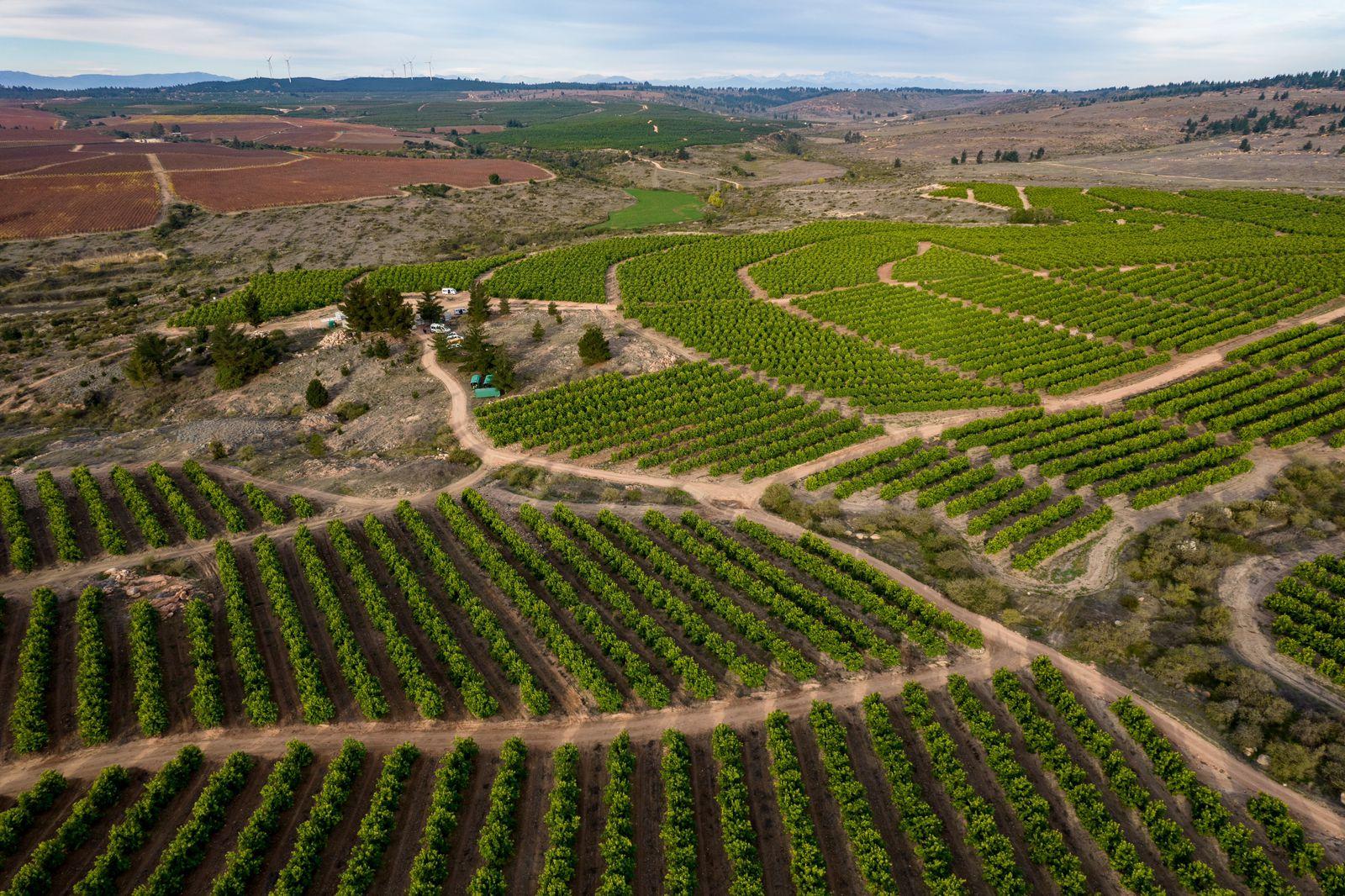
“I believe that all the areas that were destined to disappear are already productively dead. There won't be any further reduction. In Petorca and Cabildo, what's left is what's left. They've already cut down everything they had to cut down. In Quillota and La Cruz, there isn't much space to incorporate more hectares. The new productive areas are being developed towards the Sixth Region, and that's where the big challenges and major projects lie. I believe that Chile's production will grow in an orderly fashion, without giant leaps, but with constant growth. This growth will be primarily focused on the Melipilla-Rapel area, which I believe will become Chile's next avocado-producing hub.”
- Do you think that, at some point, there will be a conflict between this growth in local production and the increase in imported fruit to Chile, or will the two markets continue to complement each other?
“That’s Chile’s great advantage: we’re in the opposite season to almost every other country. Peru, which is our main supplier, overlaps with us by a couple of weeks.
Brazil, which has a shorter window, is in the same window as Peru. Colombia, a source we haven't yet fully developed, isn't a relevant source for Chile; and Mexico is focused on the United States. I don't see a threat from imports in the short term. The only one that could really make a difference is Mexico, but with everything I've mentioned, it's complicated: the protocol is expensive, there are challenges with transit time , and given that, Mexico isn't willing to complicate things by sending fruit further afield. As a producer, I wouldn't either. As long as there's a huge consumer market nearby that pays well and consumes all the production, why get creative? I see imports as more of an opportunity for Chilean avocados because they allow us to continue boosting consumption. Besides, the Chilean avocado season is very distinct: by March and April, it's almost over.
- Could this productive growth in Chile at some point mean that the percentages of what stays in Chile and what is exported will change, with an increase in what is destined for international markets?
“I believe Chile will continue to maintain the same 50/50 consumption pattern, given that avocados are practically ingrained in Chilean culture and are a product with almost no price elasticity of demand. So, if the price of avocados rises, they will still be bought. Chile is a market willing to pay. It even pays almost the same as for exports. It's a country that consumes a lot, so I don't see the distribution of consumption of Chilean production changing.”
- Argentina and Uruguay have significantly increased their consumption. What does this growth mean in terms of percentage and prices?
“In terms of price, it’s subjective. It depends on the campaign. In terms of consumption, I’d say we’re growing in Argentina at a rate of 15% annually. Today we’re at double last year’s figure, a dynamic driven by the industry due to everything I mentioned earlier. They consume around 1.3 kilos per capita per year. Uruguay does too. In Chile, consumption is 10 kilos, and both countries could adopt similar consumption habits, influenced by Chile. If they grow to 3 or 4 kilos, that’s very good. So I think these are markets that can easily grow at double-digit rates for the next five years, without major problems.”
- How would you describe the growth in production in Colombia?
“In terms of planted hectares, Colombia isn't growing. But it is growing in yield per hectare, because they are indeed learning to do things better. That's how everyone starts. Like Chile and Peru did, in their time. Agriculture is about trial and error. It's not an exact science. Productively, Colombia should grow between 15% and 20% as an industry from 2023 to 2024. We, at Baika, have a much bigger challenge. We are growing at 50%.”
- Is there any scenario in which Mexico begins to grow in shipments to destinations other than the United States, despite this comfortable position it currently enjoys with its neighbor?
“Mexico is always a source that offers opportunities for all destinations. In fact, there's a lot of air freight to various destinations, like the Middle East, Dubai, Europe, and Chile. It's also shipped to Argentina when there's an opening. But it's a source very closely tied to what the United States can consume. I think it still has a couple of years of stability, without making major investments, certifications, or extensive post-harvest work, to continue supplying the United States without any problems. However, if they continue growing at current levels, both Michoacán and Jalisco will reach a point where they will indeed have to invest a bit more in certifications, post-harvest processing, and pressure shipping lines for better routes and transit times. But I think it still has a comfortable market in the United States.”
- What is the reason for the continued growth in production in the Mexican industry? Is it because the United States is demanding more fruit or because it is growing?
inorganically?
“It’s like the cherry producers in Chile, who say, ‘Let’s go, let’s go, let’s go,’ but at some point they’re going to realize they can’t eat all their fruit. Mexico needs to look a bit longer-term. Today it’s in a very comfortable position, which is perfectly fine.”
- Those are his circumstances.
“Exactly. It has a secure, nearby market that pays very well for its fruit. The United States has its own production in California, but California is becoming increasingly expensive, affected by drought and wildfires. California has almost completely filled its valleys due to real estate development. So, there are multiple factors that could affect whether domestic U.S. production remains stable or declines. This gives Mexico the opportunity to continue supplying the United States comfortably. But I believe Mexico's plan needs to set a medium-term goal, explore other origins, and improve the transportation of its fruit.”