Our goal is to achieve a sustainable production of more than 8,000 tons per year by 2027.
This was stated by the manager of Baika Colombia, who also elaborated on the productive hectares and the strategies that Baika Colombia is implementing to improve the fields.
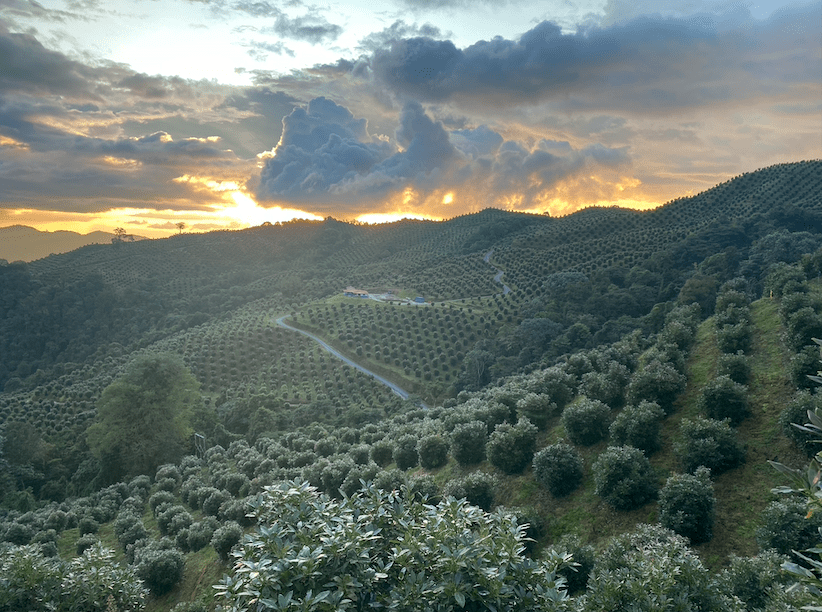
In the heart of Colombia's coffee region, Baika has solidified its position as one of the leading Hass avocado producers. With three strategically located farms—one in the department of Caldas and two in Quindío—the company has established an efficient and sustainable production model that aims to guarantee harvests throughout the year.
The agroclimatic characteristics of these crops are key to their success. Baika's farms are located at altitudes between 1,600 and 2,600 meters above sea level, allowing for a wider production range. Furthermore, the average annual rainfall of 2,000 millimeters and the sandy loam soils with high organic matter content favor the optimal development of the avocado trees. As Sergio Plata, manager of Baika Colombia, points out: "The three projects were strategically chosen by Baika to ensure continuous, integrated production for at least 10 months of the year."
Currently, Baika has over 600 hectares in production, with an additional 20 hectares slated for planting. This area represents 60% of the company's total crops in the country, while the remaining 40% is dedicated to the conservation of native species, the protection of water sources, and the maintenance of ecological balance. This strategy not only strengthens the company's sustainability but also reinforces its commitment to the environment.
The strategic location of the crops allows for a continuous production window that extends for at least ten months of the year. Baika organizes its harvests into two seasons: the off-season, which runs from April to July, and the main season, from October to February. "Given the different altitudes at which our crops are located, we have the advantage of being able to have a fairly long production window throughout the calendar year," Plata emphasizes.
Challenges and future prospects
Baika has set a goal of achieving an average yield of 12 tons per hectare by 2027. To achieve this, the company has developed a genetic improvement strategy.“Our main challenge is productive sustainability over time and the improvement of plant material for the homogenization of our fields, in addition to our strategy of replacing plants that present development problems with more productive and sustainable clonal material over time,” Plata explains.
For the time being, Baika has decided to consolidate its production without expanding its cultivated area. However, the company is evaluating the possibility of diversifying its fruit portfolio with new species that complement its offerings, leveraging its infrastructure and expertise in the agricultural sector.
The avocado market in Colombia
Colombian Hass avocados have experienced exponential growth in recent years, positioning themselves as one of the star products in the international market. According to data from Corpohass, in 2024, Colombia exported 138,316 tons of Hass avocados to various countries, consolidating its presence in key markets such as Europe and the United States.
The departments of Antioquia, Risaralda and Valle del Cauca have led the growth of Hass avocado production and export in the country, with Antioquia being one of the main producers.
This growth has generated a significant economic impact, with more than 32,000 hectares dedicated to the cultivation of Hass avocados with an export focus.
Beyond its economic impact, Baika plays a fundamental role in job creation and social development. Currently, the company directly employs more than 200 people and indirectly benefits over 500 people in the region. "Our commitment in Colombia is to continue contributing to the development of the industry and our employees with dignified and well-paid work, under standards of social and environmental responsibility," Plata concludes.
With a vision focused on sustainability and innovation, Baika continues to consolidate itself as a benchmark in the avocado industry in Colombia, demonstrating that it is possible to balance business growth with respect for the environment and social development.