Click here to go directly to the content

Biocontrol in the field redefines crop health

Entomopathogenic fungi boost crop health

Baika Colombia is making progress in biological control with fungi, reducing pests, diseases and agrochemicals, improving productivity and sustainability.

Avocado production is moving toward an increasingly demanding model in terms of sustainability, traceability, and production efficiency. In this context, Baika Colombia has taken a significant step by promoting a strategy based on the use of entomopathogenic fungi as a biological alternative for managing pests and diseases in the field.

According to Ricardo Botero, Production Manager at Baika Colombia, this initiative stems from an agreement signed in May 2025, driven by the need to find more sustainable solutions in response to the growing demands of markets and international certification bodies.

“The agrochemical products allowed by clients increasingly require more environmentally responsible strategies that also consider consumer health. That’s why we are seeking biological alternatives that we can even produce in the field, with strong concentrations and proven effectiveness,” he explains.
Focus on the main phytosanitary issues

The strategy has focused on addressing two of the main production challenges for the crop in Colombia. On one hand, the control of Phytophthora cinnamomi, a disease that severely affects the root system, causing weakening, loss of productivity, and even tree death. On the other hand, the control of insects, which are responsible for a significant portion of fruit rejection.

The objective is clear: to improve crop health in order to achieve more vigorous trees, higher productivity, and fruit that meets better export standards—directly translating into greater profitability.

So far, the program has prioritized the production and application of two key fungi: Beauveria bassiana and Trichoderma asperellum, each with specific roles within the production system.

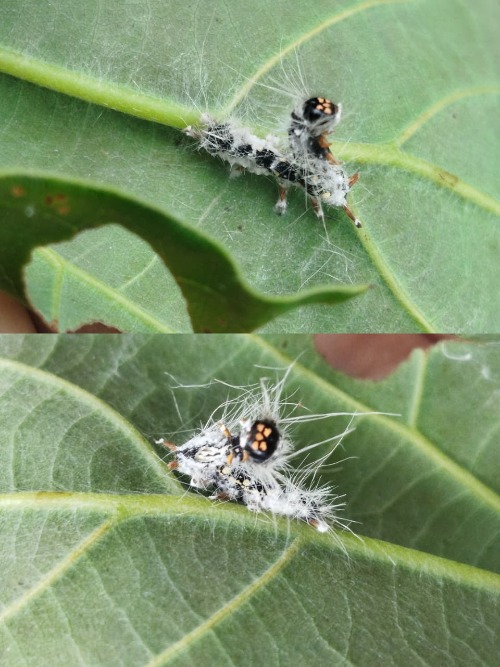
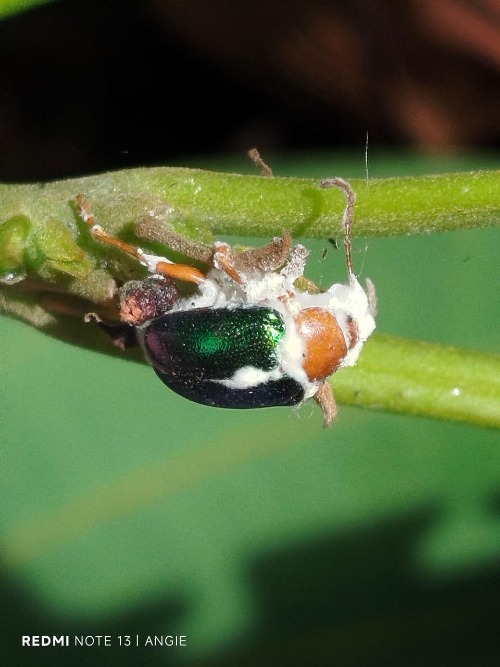
Trichoderma asperellum is mainly used to control Phytophthora cinnamomi, contributing to root system recovery and overall tree vitality. In parallel, Beauveria bassiana acts on a wide range of insects, including coleopterans such as weevils (e.g., Compsus), hemipterans like Monalonion, and lepidopterans.

In addition, the program includes the gradual incorporation of other microorganisms that expand the spectrum of control and benefits: Metarhizium anisopliae for coleopterans; Isaria fumosorosea for mite control; and Penicillium pinophilum, which plays a key role in phosphorus solubilization and other minerals, directly contributing to soil nutrition.

Results and Transition Toward a Sustainable Model

Field results have been significant, particularly in the management of root diseases. According to Botero, the application of Trichoderma asperellum has enabled the recovery of between 90% and 95% of trees that showed weakening symptoms associated with Phytophthora cinnamomi.

This result is the outcome of an integrated management approach that includes practices such as soil decompaction, proper nutrition, the use of root stimulants, and, in some cases, supportive fungicides.

In the case of Beauveria bassiana, effective control has been observed across various insect species, significantly reducing their impact on fruit quality. A key factor in the success of this strategy has been the technical management of applications: using the correct doses, maintaining consistent application, and avoiding mixtures with fungicides that may affect its viability.

One of the central objectives of the project is to progressively reduce the use of agrochemicals. To achieve this, continuous field monitoring of pests and diseases allows for the identification of specific hotspots and the optimization of interventions.

As these fungi reduce the incidence and severity of phytosanitary issues, control periods are extended and the need for chemical applications decreases. In this regard, Baika Colombia is advancing toward a “biological flooding” strategy, aiming for these microorganisms to establish themselves and create a more stable balance within the crop.

This experience reflects a clear trend in the avocado industry: the transition toward more resilient, sustainable, and efficient production systems, where biological control is no longer an alternative but a cornerstone of modern agronomic management.

Tags

Related articles

Fruit Attraction São Paulo and its impact on the avocado business

Fruit Attraction São Paulo and its impact on the avocado business

The fair consolidated Latin America as the hub of the avocado business and anticipates its continuation at Fruit Attraction Madrid, from September 30 to October 2, with a focus on innovation, logistics and sustainability.

View more
Chilean avocado exports grow in 2025-2026

Chilean avocado exports grow in 2025-2026

Europe, Latin America and Asia increase their imports from Chile, while the US registers a sharp drop in the 2025-2026 season.

View more
Colombia stabilizes its avocado campaign and focuses shipments on Europe

Colombia stabilizes its avocado campaign and focuses shipments on Europe

The 2025/26 season shows a more stable curve compared to 2024/25, with a drop in January and a high concentration of shipments to Europe.

View more