Sustainable soil management and the new practices and technologies incorporated in Baika.
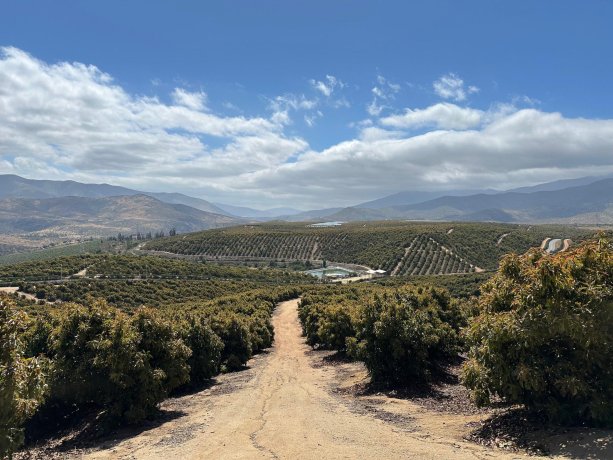
At the 7th Latin American Avocado Congress, Baika presented an agricultural vision focused on soil health, the use of precision technologies, and regenerative practices aimed at ensuring the long-term productivity of its orchards. Their work aligns with the event's motto, "Let's Cultivate the Future," understanding that sustainability begins in the soil.
For Baika, “Cultivating the Future” is not just the theme of the congress, but a guiding principle. The phrase encapsulates the company's commitment to agriculture that balances productivity and conservation. Magdalena Beyer Correa, Head of Agricultural Production, explains that this approach guides the adoption of practices that strengthen soil health, optimize resource use, and ensure the long-term sustainability of orchards.
The starting point was recognizing the challenges their soils faced: compaction, poor aeration, and low biological activity. In avocado cultivation—highly dependent on oxygen availability—these problems translated into stress, lower yields, and greater susceptibility to fungi like Phytophthora cinnamomi. “When oxygen availability decreases, symptoms of stress appear, along with lower productivity and even favorable conditions for wood-decay fungi,” explains Beyer. Therefore, Baika decided to commit to sustainable management practices that would strengthen soil structure, aeration, and biology, understanding that future productivity rests on this foundation.
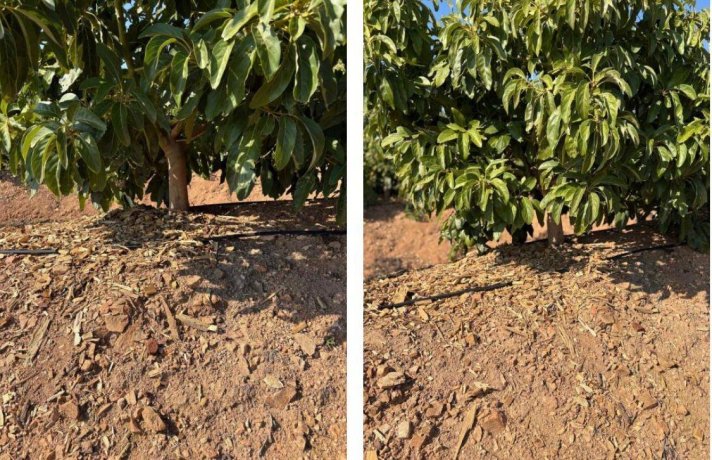
This transition took shape through regenerative practices that are now the company's hallmark. The application of compost, humic acids, and mulch has increased organic matter, improved soil structure, and stimulated microbial life. Simultaneously, planting cover crops in areas with greater compaction or water accumulation has improved aeration and infiltration. These actions are complemented by post-planting subsoiling to increase macroporosity and irrigation adjustments aimed at preventing saturation and promoting suitable conditions for root development.
The use of bio-inputs and microorganisms has been another key tool. According to Beyer, these solutions have helped increase soil biological activity, improve its structure, and stimulate deeper, more functional roots, especially in areas historically affected by compaction. The effects are already visible in the field: more balanced plants with active root systems, greater efficiency in nutrient absorption, and a canopy capable of stably supporting the crop load.
Technology for more accurate and sustainable decisions
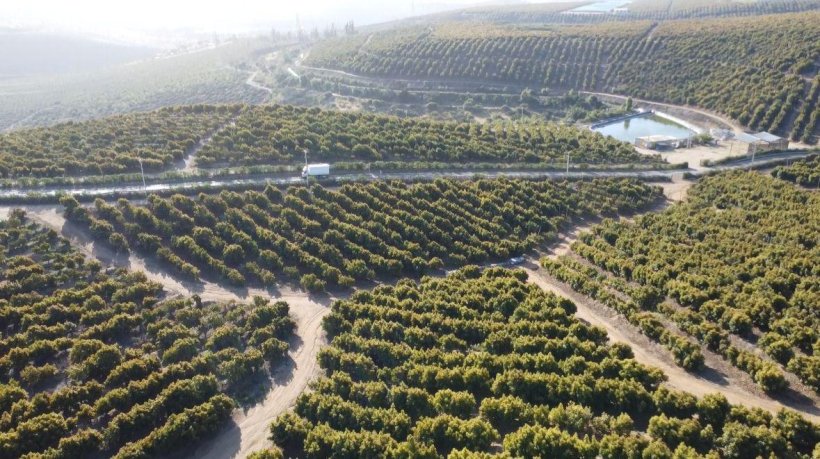
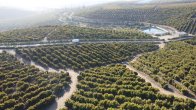
Baika's transformation cannot be understood without incorporating monitoring and data analysis technologies. The company uses soil moisture sensors to precisely and precisely adjust irrigation in specific areas, avoiding both excess water—which affects soil oxygenation—and water deficits. In addition, flights using Ceres Imaging allow them to identify areas with water stress and internal variability, providing an early indication of problems that could affect crop development.
Integrating this data has enabled more informed and efficient decision-making. “All this information allows us to make more based decisions, improve irrigation efficiency, and maintain soil health while safeguarding productivity,” Beyer points out. In a context of increasing pressure on water resources, this data-driven management becomes a cornerstone of sustainability.
The results are not only reflected in soil health, but also in plant physiology. Increased aeration and improved soil profile structure have allowed for more active root development, resulting in plants with better balance, greater physiological resilience, and a more efficient capacity to sustain production and absorb nutrients.
Baika looks to the future with the conviction that sustainability requires constant evolution. The company continues to evaluate emerging technologies to strengthen its agricultural model, from optimizing bio-inputs to improving water management and expanding regenerative practices such as cover crops, mulch, and organic amendments.
“Sustainability is built day by day: each season we learn, adjust, and combine innovation with on-the-ground experience,” says Beyer. His vision confirms that the future of avocado cultivation depends not only on new tools, but also on understanding that the soil is a living resource that requires care and intelligent management. Baika's proposal is based on this conviction: cultivating the future from the ground up, with science, technology, and respect for the environment.
In the rural area of Salamina, Caldas, prevention and human development have become cornerstones of daily work. Baika Colombia's production unit is making steady progress in its HSE (Health, Safety and Environment) prevention plan, a strategy that seeks not only to guarantee the safety and well-being of its employees, but also to raise the professional standard of agricultural work.
One of the most significant actions of this plan has been the implementation of cholinesterase testing for farm workers. This test, administered preventively, allows for monitoring exposure to organophosphate and carbamate pesticides, compounds commonly used in agriculture.
The procedure functions as a biomonitoring tool, as it measures the activity of the cholinesterase enzyme in the blood. When this activity is inhibited, it can be a sign of poisoning or prolonged exposure to chemicals. Therefore, its implementation represents a key advance for the early detection of exposure, the prevention of poisoning, the assessment of risk control, and compliance with occupational health regulations.
“With these tests, we guarantee that each worker can perform their job in safe conditions, minimizing the risks associated with the use of agrochemicals,” said the HSE department of Baika Colombia, highlighting the positive impact of this type of control on the organization's preventative culture.
But Baika's focus isn't limited to health. In parallel, the company has promoted the certification of job skills in the use of agricultural tools, in partnership with the National Learning Service (SENA). This public institution, attached to the Ministry of Labor, has the mission of recognizing the skills and abilities that employees have acquired through their experience in the field.
The process allows for the verification of employees' technical competence in their daily tasks, as well as opening new opportunities both within and outside the company. Key benefits include official skills recognition, validation of prior learning—particularly valuable for those who learned on the job—and increased value in the labor market. The certificate, valid for three years, thus becomes a valuable tool for professional development.
“This recognition from SENA dignifies the work in the fields and motivates our employees to continue learning,” Baika Colombia emphasized.
The case of the Salamina production unit reflects a holistic vision of agricultural development: protecting the health of those who work the land while promoting their technical training and professional future. With these actions, Baika Colombia reaffirms its commitment to a responsible, sustainable production model centered on the people who make each harvest possible.