BAIKA FRUIT: Taking avocados to new production frontiers in Chile
From the volcanic soils of Mesoamerica to the coastal slopes of southern Chile, BAIKA FRUIT leads modern agriculture that honors the origin of the avocado and responsibly adapts to new challenges.
The avocado, also known as palto, originated in the Andisol soils of mountainous regions in Mexico, Guatemala, and Central America. These soils, formed from volcanic ash, are characterized by their high macroporosity (around 46%), excellent drainage, abundant organic matter, and an acidic pH (between 5.0 and 6.0). This combination is ideal for avocado growth, as the tree requires well-aerated soils with good water movement. Lacking root hairs, avocados are extremely sensitive to oxygen deficiency, the primary cause of root asphyxiation, weakening, and reduced yield.
Currently, most avocado projects worldwide are located outside their native range, forcing producers to understand and manage soil and climate differences precisely. A farmer might have two fields, one with well-aerated soil and another with compacted soil, and that difference can translate into more than a 50% yield loss.
Therefore, it's not about copying agricultural recipes, but about adapting technical management to each specific situation. When evaluating new projects, it's common to consider only the availability of land, water, and climate, without paying attention to the soil's physical properties. However, today, fertility is defined primarily by these physical characteristics, and secondarily by chemical and biological ones.
According to the Chilean Avocado Committee, the first Hass avocado trees were planted in 1949 at the foot of the Andes Mountains. Over time, cultivation expanded rapidly throughout the country, establishing the Hass variety as the leading one in the global market. Traditionally, the main producing areas have been the Valparaíso Region (Quillota-La Cruz and La Ligua-Cabildo valleys), followed by the Metropolitan Region and the Coquimbo Region. In these areas, the granitic or basaltic soils, combined with good management practices, have proven suitable for cultivation.
BAIKA FRUIT: Leading in emerging fields
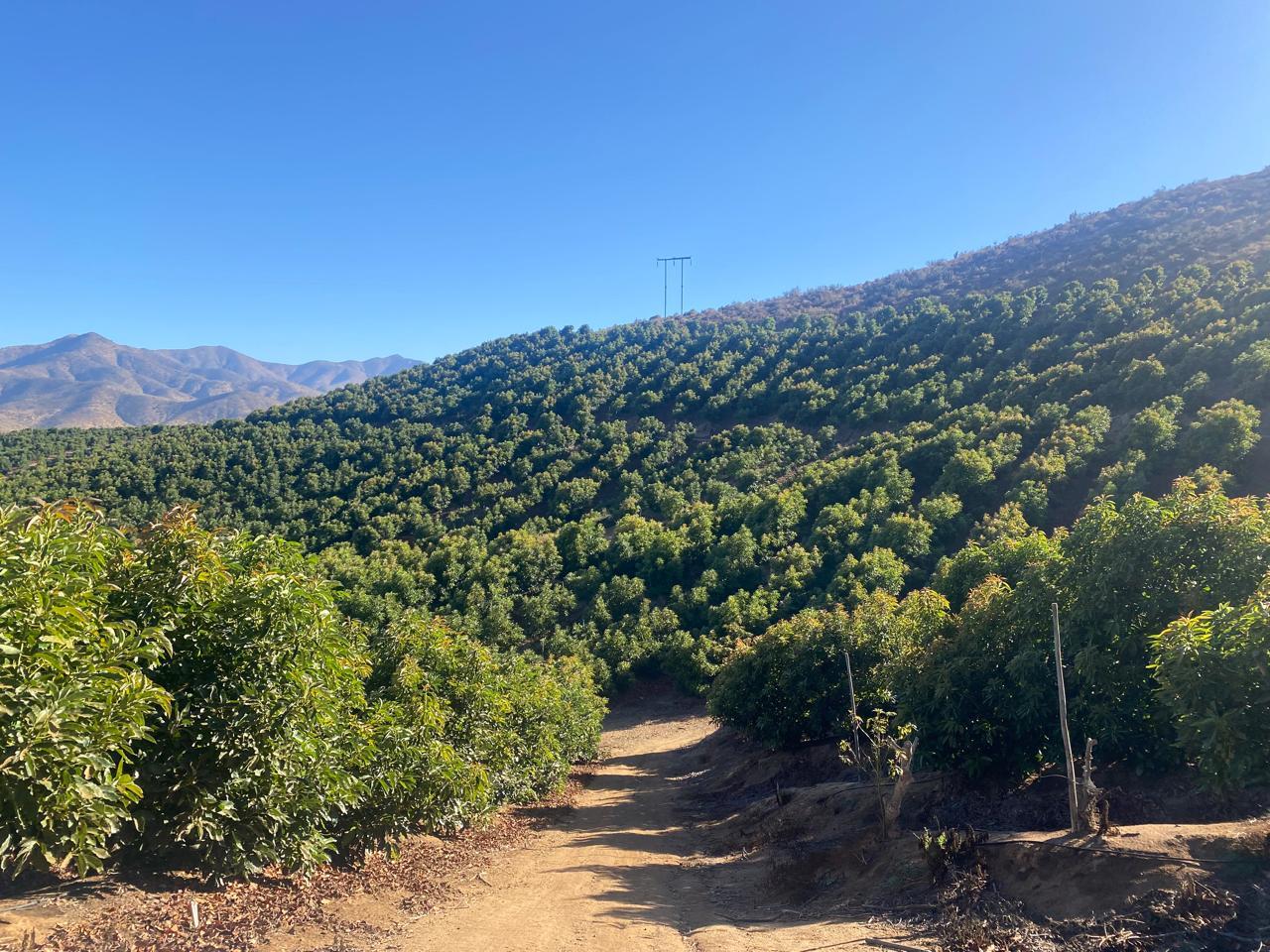
BAIKA FRUIT has established fields in traditional areas such as Cabildo (Region V) and Illapel (Region IV), but has taken a decisive step towards innovation by developing new projects in emerging areas: Valle Leyda in Santo Domingo (Region V), and Alicura and Huertos de Ucuquer (HdU) in Litueche (Region VI).
Currently, only 15% of BAIKA's production area is located in traditional areas, while 85% is already located in emerging territories, with plans to continue expanding.
However, these new territories present significant challenges. In Santo Domingo, metamorphic granitic soils predominate, while in Litueche, young soils are beginning to form horizons and their texture varies from sandy loam to silty clay loam at the surface, and from gravelly loam to clay loam at depth. Furthermore, annual rainfall exceeds 600 mm in Litueche and reaches 400 mm in rainy years in Santo Domingo, necessitating the implementation of rigorous drainage and water management strategies.
Added to this is the use of water from the Maipo River for irrigation in Santo Domingo, with high electrical conductivity and sodium and chloride contents above 7 mEq L⁻¹, well above the tolerable threshold for some avocado rootstocks (2 mEq L⁻¹).
The “perfect storm” in this context occurs when soils with physical limitations, poorly managed irrigation, and low-quality water are combined. In these scenarios, finding the right balance is complex, especially in compacted or fine-textured soils, where the salinity problem can also worsen, consequently leading to health problems in the trees.
In response to these challenges, BAIKA FRUIT remains true to its "Back to Basics" philosophy, committed to agriculture that combines traditional and modern practices. Its approach begins with living, fertile soil, prioritizing its physical properties and balancing its chemical and biological properties through subsoiling, organic amendments, beneficial microorganisms, humic and fulvic acid, mulch, and chemical amendments.
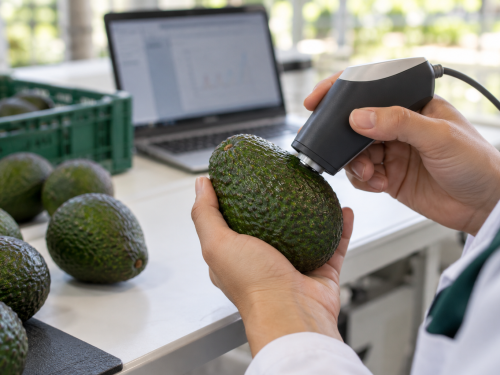
In addition, they use adapted genetics, such as Dusa clonal rootstocks, and conduct trials with West Indian rootstocks, which are more tolerant of heavy and saline soils. In Santo Domingo, they even have a reverse osmosis plant to reduce the salinity of the irrigation water. Furthermore, they integrate technologies such as sensors, probes, and drone flights equipped with thermal and multispectral cameras for precise crop monitoring.
Beyond the challenges, these emerging areas offer unique comparative advantages. The fields in Alicura and Huertos de Ucuquer, in the coastal mountain range just 20 km from the sea, enjoy natural protection against frost, extreme temperatures, and a relative humidity that never drops below 50%. Meanwhile, Valle Leyda allows for late-season fruit production in autumn, enabling access to higher prices in the local market.
Deeply connected to the soil, the roots, and the history of the crop, at BAIKA FRUIT they understand that the key lies in returning to the essentials. With responsible technical management and profound agronomic knowledge, they are transforming the Chilean agricultural landscape and demonstrating that the future of avocados can be built far from their origin, as long as their most basic needs are not forgotten.