Baika implements strategies to reduce the decline in avocado production
The company implements practices to improve soil aeration, structure, and irrigation, achieving advances in the productivity and sustainability of its orchards.
In avocado orchards, declining yields are a recurring phenomenon that typically begins around the seventh year after planting, especially in loam to sandy loam soils, and occurs earlier in heavier soils such as silty loam and clay loam. In this context, Baika has focused on sustainable soil management as a key element for maintaining productivity over time.
According to Juan Antonio Delpero, production manager at Baika, one of the determining factors in this process is the physical condition of the soil, particularly air availability. The concentration of oxygen in the soil is fundamental for the root development of the avocado tree, and a deficiency can lead to physiological alterations, hormonal imbalances, and a significant drop in productivity.
From a technical standpoint, avocado cultivation is highly sensitive to oxygen deficiency due to its origin in soils with high macroporosity. While most fruit trees can thrive with aeration levels above 15%, avocados require conditions close to 30%. Below 17% soil aeration, oxygen diffusion is restricted to critical levels, directly impacting root growth and plant metabolism.
This approach has led the company to work from the early stages of orchard establishment, prioritizing proper soil preparation, the quality of nursery plants, and an irrigation design adapted to the terrain conditions. Factors such as soil compaction—associated with pre-planting errors, machinery traffic, or low organic matter content—are identified as critical elements that can accelerate orchard deterioration, as well as favor the appearance of pathogens such as Phytophthora cinnamomi .
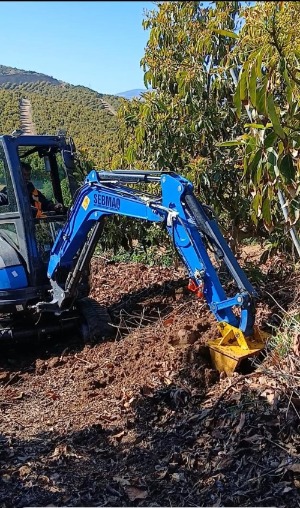
Faced with this situation, Baika has implemented a series of strategies aimed at improving soil structure and functionality. Among these, post-planting subsoiling stands out, both between rows and on the raised bed, at depths exceeding 55 cm—and even 70 cm—with the goal of reducing compaction, increasing macroporosity, and promoting the development of new roots. In addition to these practices, Baika employs "garreo," a technique that allows direct intervention on the raised bed to a depth of nearly one meter, expanding the area of action and stimulating root development within approximately 45 days.
The company has also incorporated the use of organic amendments, compost, and mulching practices with wood chips or green manures, aimed at improving soil surface quality, reducing evaporation, and promoting biological activity, thus favoring the presence of micro- and mesofauna. In more complex soils, they have also developed the "lung" strategy, which consists of incorporating porous substrates at specific points to improve aeration and drainage around the plant.
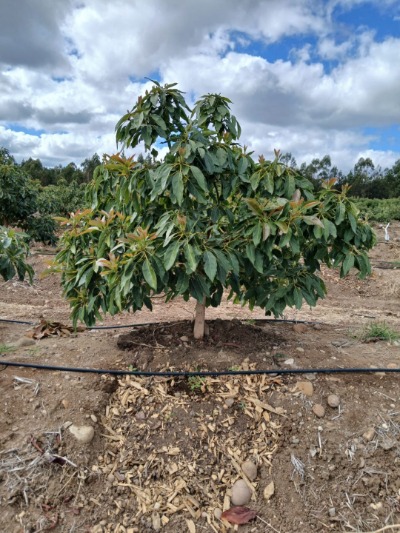
Irrigation management is another key component of this strategy. At Baika, we work with programs that aim to maintain the balance between water and oxygen in the soil, supported by moisture monitoring and control systems, as well as the correct calibration and operation of drip irrigation.
The company has also focused on structural degradation processes such as surface crusting, a phenomenon associated with reduced soil porosity and permeability resulting from wetting and drying cycles, as well as low levels of organic matter or the presence of sodium. This condition directly affects gas exchange and water infiltration, limiting plant growth.
The results of these strategies have been reflected in concrete improvements in the soil's physical properties. These include a decrease in mechanical resistance to values below 0.5 MPa (from levels above 1.8 MPa), an increase in hydraulic conductivity to between 1.7 and 2.8 cm/h, a greater effective root depth—between 0.7 and 1.0 meters—and an increase in total porosity to values close to 45–48%. In addition, there has been a reduction in waterlogging and greater biological activity in the soil.
From the company's perspective, moving towards sustainable soil management means avoiding practices that seek quick results at the expense of the stability of the production system. Along these lines, Juan Antonio emphasizes the importance of not resorting to "shortcuts" and, instead, maintaining harmony among the various resources involved in production.
Under this approach, the soil is positioned as a strategic component within the production system, where its physical quality —capable of supporting the structure, allowing root development and maintaining an adequate balance between water, air and nutrients— becomes crucial to achieving sustainable and efficient production over time.