South Africa is preparing to take over from Peru in the European avocado market
The end of the Peruvian season opens up space for South Africa, which seeks to consolidate its presence in Europe despite logistical and production challenges.
The international avocado calendar is undergoing a key transition in Europe. Starting in week 39, when arrivals from Peru begin to decrease, South Africa takes on the challenge of ensuring a continuous supply. According to data from the Avobook team, the African country projects around 363 shipments during that period, in a scenario where every container is crucial to meeting the growing European demand.
South Africa's geographical location presents a greater challenge than Peru's: maritime transit times to European ports, which range between 15 and 25 days according to the Avocado Value Chain Study of the National Agricultural Marketing Council (NAMC, 2023).
This distance necessitates rigorous management of the cold chain and post-harvest quality. Furthermore, South African ports, such as Durban and Cape Town, suffer from infrastructure limitations that have caused delays in previous seasons. However, the 2025 season has shown progress.
Derek Donkin, executive director of the South African Avocado Growers Association (SAAGA), said that “South African ports have performed well during the 2025 avocado season, with very few delays and regular shipments to Europe.”
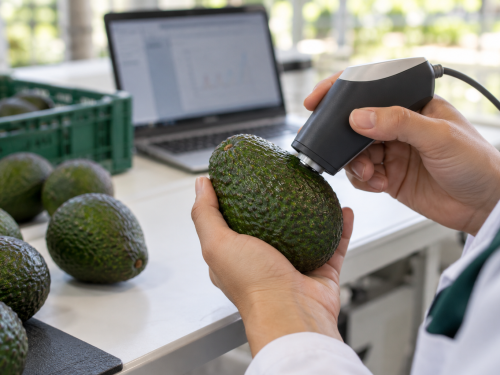
The country is entering this harvest with reduced volumes. “94% of the South African crop has already been shipped, so less than 5,000 tons will reach the market during October and early November,” Donkin stated. Even so, quality control has become a priority. “The fruit's dry matter content is closely monitored, and shipping temperatures are adjusted accordingly. Lower temperatures are used for fruit with higher dry matter content,” the executive explained.
Studies by the South African Avocado Growers' Association confirm that rapid pre-cooling after harvest and monitoring of maturity indices are crucial for the fruit's ability to withstand long journeys. Furthermore, careful handling during packing and transport is essential to prevent diseases such as stem rot.
Technology, expansion and market outlook
South Africa has adopted advanced preservation technologies. “Refrigerated containers with a controlled atmosphere are the standard shipping method, which helps maintain the quality of the fruit,” Donkin stated.
However, he emphasized that the secret lies in the origin: “The quality of the fruit is determined in the orchard and maintained through proper handling, packaging, and shipping conditions. Growers pay special attention to irrigation practices, tree nutrition, and fungal disease control. These practices are fundamental to producing high-quality avocados.”
The country's productive base supports this vision. It currently has 21,240 hectares planted with avocados and an annual growth of 800 hectares, ensuring greater volume in the medium term. Despite this, 2025 has been a challenging year. "Export volumes will be lower than initially estimated due to a number of factors, including hail, frost, and wind damage, in addition to prolonged low prices in the European market," Donkin acknowledged.
Europe and the UK are the main destinations, absorbing more than 90% of South African exports according to NAMC. During this season, market share will be limited during the transition period, but the outlook is more optimistic. “As mentioned, South African volumes will be low during this transition period. However, due to extensive new plantings in recent years in regions whose production coincides with this window, growth is expected in the coming years,” Donkin anticipated.
South Africa's position is further strengthened by the seasonal overlap. According to the Centre for the Promotion of Imports from Developing Countries (CBI, Netherlands), the country can take advantage of the supply window when Peru's harvest ends, provided it can ensure consistent quality and competitive prices compared to other emerging producers like Morocco and Kenya. Regarding sizes, Donkin specified that "there is a range of sizes, but with less small fruit, such as size 22," which better meets European demand for medium and large fruit.
South Africa is thus preparing to consolidate its role in the European avocado market. While this year's takeover from Peru will be marked by modest volumes, the combination of expanded acreage, technological adoption, and improvements in port logistics reinforces the projection of sustained growth over the next decade.