“We want to be the port for Colombian avocados”
This is what the commercial vice president of Puerto Antioquia, Gina Alexandra Castro Mical, tells Avobook, detailing the qualities of the new terminal that will begin operations in November, much closer to the avocado production areas.
“We will be 33 percent closer to all the production and consumption centers of Colombia,” warns Gina Alexandra Castro Mical, commercial vice president of Puerto Antioquia, a multipurpose terminal located on the southeastern side of Bahía Colombia de Urabá, in the Gulf of Urabá.
This facility will begin operations in November 2025, opening a gateway with exciting opportunities for the country's avocado industry, which is currently undergoing a period of growth and restructuring of its destination markets.
“We are the most important port infrastructure development project in Colombia in the last decade. The last container port terminal opened about 10 years ago in Buenaventura. That is to say, after a decade we see new port infrastructure and capacity for the country with some very important conditions,” explains Gina Castro.
This port terminal located in the Colombian Caribbean will have a capacity of 7 million tons, distributed across different business units.
“In the case of containers, our capacity is approximately 650,000 TEUs (Twenty-foot Equivalent Units) per year. The Colombian market is 1,700,000 TEUs per year, which allows us to handle between 20 and 25% of the country's local international trade cargo. For roll-on/roll-off cargo, we have the capacity to move 50,000 units per year. For bulk cargo, we have a very modern infrastructure with a capacity of 2,500,000 tons. This is significant, considering that total bulk cargo imports in Colombia also hover around 11 million tons,” the executive explains.
As he pointed out, the greater proximity to the production areas offers advantages that should impact the cost; “We will be the Caribbean terminal closest to the departments that make up 70% of Colombia's Gross Domestic Product, which are Antioquia, in the coffee region; and Cundinamarca and, of course, we will also be the natural port for Córdoba.”
- On what date does the port operation begin?
“Our start date for operations is November 1st of this year. We're going to start with a full opening. We were hoping to have a soft opening around the middle of this year, but after all the operational review, the decision was made to start with all our dock infrastructure.”
- What will be the main structures of the port?
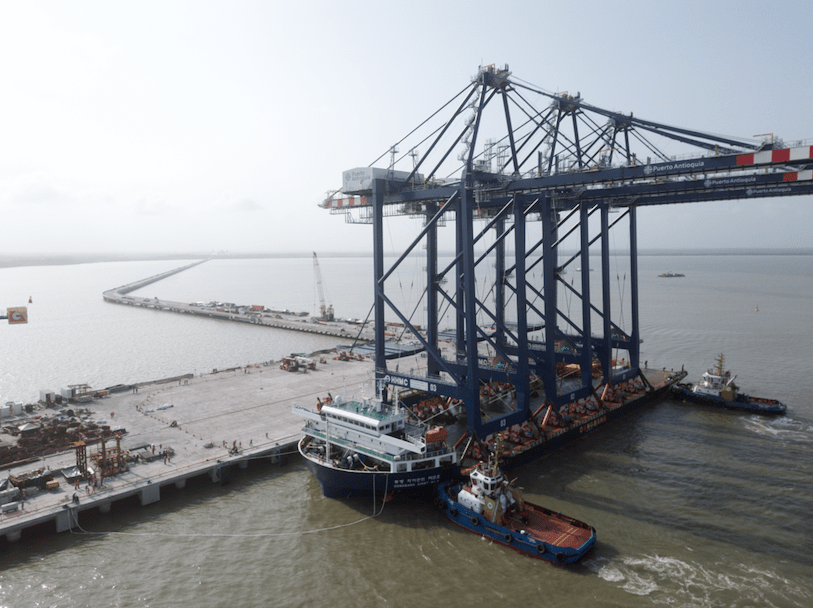
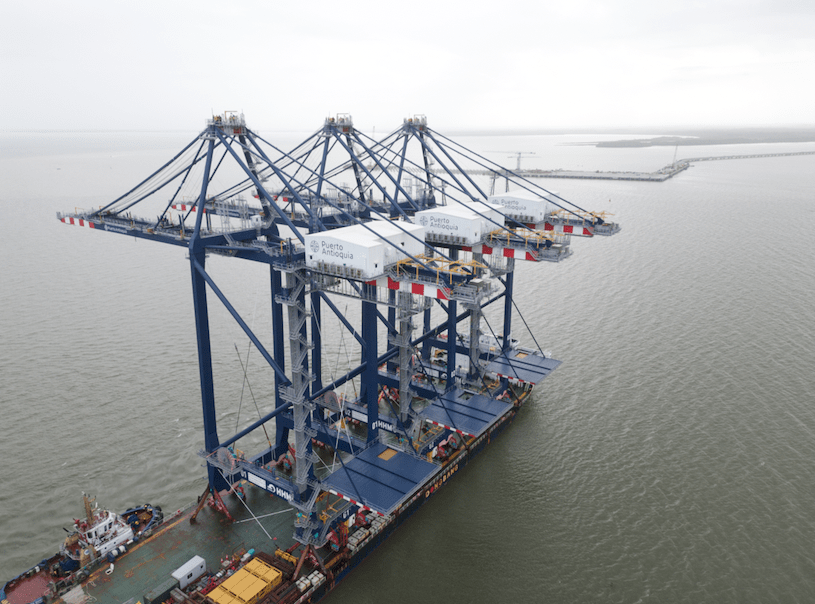
“We have three main facilities: a 38-hectare onshore platform with yards for dry and refrigerated containers, including 1,200 reefers . We have infrastructure for bulk cargo, inspection bays, a coffee warehouse, and a consolidation area. From there, we connect via a 3.2-kilometer viaduct and a bridge over the León River to an offshore platform with a 570-meter pier and five berths at a depth of 16.5 meters. The first pier will accommodate container ships up to 366 meters long with our three Super Post-Panamax cranes, recently arrived from China. The second pier, at 530 meters, will receive multipurpose vessels, including those operating with pallets of bananas in refrigerated holds. And the third pier, at 230 meters, is for roll-on/roll-off cargo.”
- What competitive advantages will it offer for the export of avocados?
“In Colombia, the largest concentration of Hass avocado orchards and production areas is in Antioquia and the coffee-growing region. There is also growing production in the southwest of the country, in the Valle del Cauca. We will be 33% closer to the Hass avocado production areas, with all the benefits and competitive advantages that this implies. In countries like Colombia, a reduction of more than 300 kilometers between production and international maritime transport services is very important, because our geographical conditions mean that distances not only present common challenges, but also the need to cross three mountain ranges. When we talk about 300 kilometers, that might be easy in Chile or Peru. In Colombia, it means crossing those three mountain ranges. So we're talking about at least a day and a half or two days of transit by truck. Therefore, when we say that we will have a terminal that will be 33% closer to the Hass avocado production centers, it will allow access to shipping line services in a day and a half less travel time.”
- We imagine that has significant impacts on cost…
“In Colombia, we have the unenviable first place in the region for logistics costs, which exceed 17%, and we have products where they go over 25%. So, naturally, when we talk about a reduction in distance, that reduction translates proportionally into a reduction in the cost of land freight, which weighs heavily on the logistics chain for all agricultural products. All of this also generates a very significant reduction in the carbon footprint of the avocado logistics chain, which is increasingly relevant in negotiations in international markets.”
 - What infrastructure and equipment will Puerto Antioquia have available for avocado exporters?
“We will have significant capacity for handling Hass avocados, with 1,200 reefer containers in our yard. We will have a cold storage facility with 12 independent bays for avocado handling and filling operations within the terminal. We are working on all the relevant certifications. In Colombia, the ICA (Colombian Agricultural Institute) must certify the cold storage facility for avocado exports to the United States, which is naturally a very important and growing market. Therefore, we are preparing to have the correct and necessary infrastructure and designs in place, ensuring functionality, to provide excellent service to everyone regarding inspections and security protocols. The same applies to the anti-narcotics police within the terminal, so they can handle these inspections continuously, 24/7.”
- Although Colombia's current focus for avocados is on developing the US market, it will not neglect the European market. What is being done to offer optimal shipping alternatives for the industry?
“Although I can’t reveal anything yet because we’re in the middle of negotiations, we can say that we will have the three main shipping lines in Puerto Antioquia. We are currently in negotiations with two of the world’s leading shipping companies. We have already finalized our agreement with one of them. This will allow us to have sufficient coverage to serve the Hass avocado market. We will have services to Northern Europe, Mediterranean Europe, and the United States.”
- How does this port impact fruit arrival times?
“We will have several mainline services. That is, services that go directly from Puerto Antioquia to the aforementioned destinations, and others that will be via connecting routes. Part of our great advantage is also that we are very close to Panama. There are some lines that have designed their hubs for transshipment from some destinations in Panama to the main ports for unloading Hass avocados, therefore the transit time is quite competitive.”
- We imagine that the market analysis you conducted to launch the Antioquia project involved examining multiple industries. But specifically regarding avocados, what appeal did you find in that industry?
“Definitely, the location of their production centers. And the port infrastructure is designed to provide sufficient and modern handling for products like avocados. Furthermore, it's a product that has been growing significantly, by over 20% to 25% in the last 8 or 9 years. I come from the shipping industry and I know all our Hass avocado exporters firsthand. So it's a target product within our operations.”
- Do you have any projections or targets regarding how many tons of avocados could pass through the port?
“Our target market for Hass avocados is quite aggressive. We expect progressive growth in volumes, but our goal is to handle the majority of Hass avocados in Colombia, between 60 and 70 percent. We believe we will have the operational capacity to do so and that customers will naturally discover the benefits of working and exporting through Puerto Antioquia.”
- So, they want to be the port for Colombian avocados?
“That’s right. We want to be the port for Colombian avocados.”