Port of Santa Marta: a terminal that is growing in the shipment of Colombian avocados
Avobook spoke with Christian Castellanos, commercial manager of Smitco, operator of this port terminal, specializing in refrigerated cargo, through which 35% of avocado shipments to the United States and Europe pass.
The rapid growth of Colombia's avocado export industry has led the country's main ports to adapt to the specific needs of transporting this fruit to international markets. While Colombia has a proven track record in the banana and flower industries, avocados present unique logistical challenges that port authorities and shipping companies are working to optimize in order to better serve the industry.
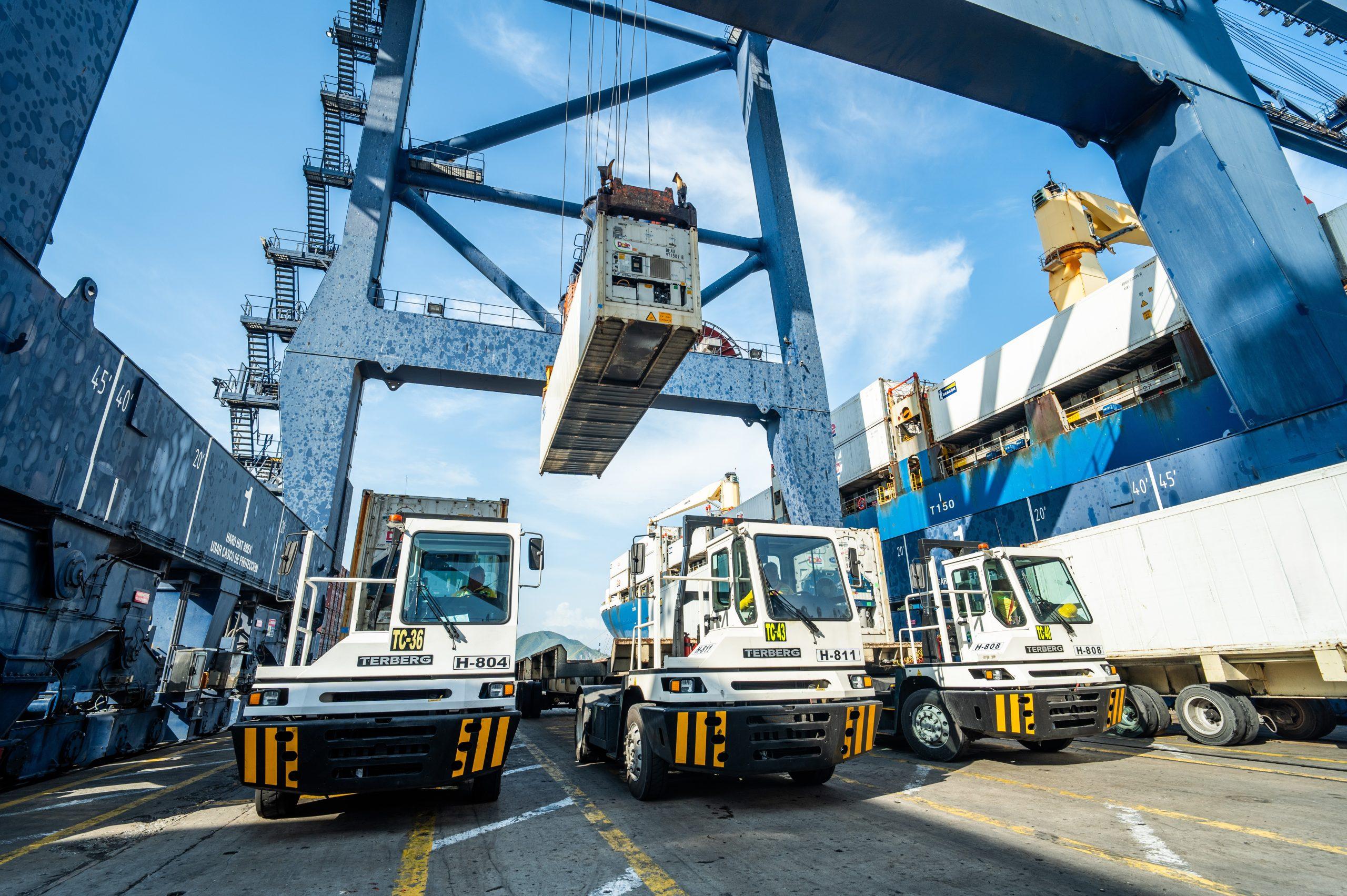
That is the case of the Port of Santa Marta, a multipurpose terminal, which in addition to containers also handles coal, solid and liquid bulk cargo, vehicles, oil equipment and steel.
It has been operated for 15 years by Santa Marta International Terminal Company (Smitco), a company formed by two partner companies: Sociedad Portuaria Santa Marta, which is the concessionaire of the port and is in charge of its administration; and SSA Marine, which has its parent company in Seattle, United States, a recognized international operator of port terminals.
Smitco manages, markets and operates the container terminal of this port located between the Sierra Nevada and the Colombian Caribbean Sea.
“We are a port specializing in refrigerated cargo,” explains Christian Castellanos, commercial manager of Smitco, who spoke with Avobook about how they address the challenges of exporting avocados from Colombia to the markets of Europe and the United States.
Avocados now rank third among exported fruits
According to Castellanos , Santa Marta ranks third in importance within the Colombian port network, behind Cartagena and Buenaventura. It handles approximately 48,000 refrigerated export containers, while only 5,500 are dry cargo containers, demonstrating its specialization in handling refrigerated goods.
According to recent figures, avocados have already reached third place in Colombian agricultural exports from this port, where the first place is held by the unbeatable banana business.
“Last year there was a decrease in cargo volumes for everyone. This year the figures are completely different. For example, bananas account for 40,000 containers, a little more. Flowers, about 2,000 containers, which is equivalent to 70% of the maritime flower market. In avocados, between January and October there have already been more than 1,500 containers,” he explains.
It is in this scenario that, for about five years now, the export of avocados has become more visible, growing significantly throughout the country and, in addition, within this terminal.
“This year it is growing by around 20%. By the end of the year they are announcing even greater growth due to Santa Marta.
The figures are clear: when comparing September-October 2023 with the same period in 2024, there is a 96% increase in the fruit load.
“Last October, 132 containers of avocados were exported through Santa Marta. This October, 257. That's a significant increase, right when the shipping season to Europe begins, which is the most important for us, between November and January,” he explains.
This dispatch center handles approximately 35% of Colombia's avocado exports, but the goal is to grow by improving some gaps they have already identified.
Advantages and challenges in Europe and the United States
Christian Castellanos explains that Santa Marta is ideal for the avocado business because it is the most important port for shipments destined for northern Europe, with four weekly departures to that destination.
“We have Maersk, Hapag Lloyd, CMA CGM, and Seatrade. We are leaders in the refrigerated export market for Europe, due to the number of shipments we have per week,” says the commercial manager.
The goal is to strengthen services for avocado exporters to continue growing. In fact, the year-on-year comparison clearly shows an upward trend: last year, between January and October, avocado shipments abroad totaled just over 1,200 containers, while this year they exceed 1,500.
“We have provided a lot of commercial and operational support to this new market. Colombia has been exporting significant volumes for about five years now, and each year it continues to grow considerably. We are also strengthening our relationship with exporters because the destinations they are requesting for avocados are not the ones that the port of Santa Marta typically handles,” Castellanos explains.
Therefore, alternatives to complement current services are being analyzed: “We are looking for a fifth shipping line to directly serve Rotterdam. Currently, we offer arrivals in Antwerp, Belgium, as an alternative. Many clients have switched from Rotterdam to Antwerp. Santa Marta works perfectly for them, which explains the growth reflected in the figures.”
“We want avocado exporters to be able to choose from a range of options to find the best logistics solution, including port, shipping line with its transit times, and rates, so they have more opportunities to export. But we have a lot of work to do on shipping logistics with the sector to increase the avocado industry's participation, which is our goal,” he notes.
Besides Rotterdam, another key destination for the Colombian avocado business is Philadelphia in the United States. Shipments are also being sent to Miami, which is handling the port of Santa Marta without any issues.
“We are the leaders in Miami, but the volume from Miami is lower compared to Philadelphia, but we are working together to find better logistical solutions,” Castellanos explains.
The challenge here is to get directly to the North American port, without the need for transshipments.
To this end, the terminal has joined tours of avocado exporters to carry out joint efforts to strengthen trade in this fruit from Colombia.
“For example, we went together to Atlanta to approach a refrigerated shipping company that not only transports our fruit, which is the bananas that come from here, but is also exploring new options. It's a very punctual and reliable shipping company; they never deviate from their schedules and specialize in refrigerated cargo. We, as the avocado sector, went together to explain how avocado shipping works: how high the containers are filled, their net and gross weight, and the exact location of the final destination in Philadelphia. We wanted them to have all the necessary information and try to open that route for avocados, which is a new market,” he says.

Avocado travel times from Santa Marta
Currently, avocados shipped from Santa Marta take between 11 and 18 days to reach Europe, depending on the shipping company and the specific destination.
In detail, Santa Marta boasts four weekly sailings to Northern Europe, the primary destination for Colombian avocados, with the fastest transit times. Among the shipping lines, the shortest transit time to the United Kingdom is 11 days, while to the Netherlands, arrival is in 12 days at the port of Flushing (Vlissingen), with Antwerp serving as an alternative to Rotterdam.
Meanwhile, avocados shipped from Santa Marta to the United States are mostly destined for Miami. According to Castellanos, it's a service "that departs on Thursday and arrives on Monday. This gives the customer complete availability of their fruit throughout the week at their destination."
There's another service that travels to Philadelphia, which takes 10 days, but requires a transfer. They're looking to improve this transit time to be competitive with the 5 to 7 days that Global Carriers offer from Cartagena.
Specialization in refrigerated cargo
According to the commercial manager of this port terminal, the services available to the avocado industry are very diverse and focused on technology, not only on the characteristics of the containers, but also on all the complementary logistics, to minimize the problems that traditionally occur in the service chain.
In choosing the type of container, the exporter decides the technology to be used, depending on the destination of their fruit.
“If the trip is longer than 10 days, controlled atmosphere containers are usually used. For shorter trips, they travel in regular atmosphere containers. Shipping companies here in Santa Marta have both types. For example, not all shipments to the United States require controlled atmosphere containers. Those going to Europe are using them 100% of the time,” Castellanos explains.
Another differentiating factor is Santa Marta's specialization in refrigerated cargo, which has materialized in the constant increase of connections and the existence of first-rate infrastructure to take care of the cold chain.
“Here, everyone goes out of their way to ensure the container isn't delayed and that everything runs smoothly. And it's not just the port; all the authorities work to make sure it functions well. Everyone knows perfectly well how a container delay or a failure to connect on time, breaking the cold chain, affects things. So we're all aligned with the same objective, which is to add value to that cargo and guarantee that it arrives at its destination in the best possible condition,” Castellanos told Avobook.
In that pursuit, the facility has a container workshop inside the terminal.
“At the other terminals, the container repair areas operate with third parties in other yards outside the facilities. They have to remove the container, the clients have to return it, and there are additional costs. Here, everything is in the same facility,” explains the commercial manager.
Last year, 50,000 reefers passed through the workshop. There, delivery of the container in optimal condition is guaranteed, starting with a PTI ( pre-trip inspection ), which includes machine inspection, washing, and delivery to exporters of bananas, avocados, flowers, or any other type of cargo.
The terminal also reports to the shipping company any damage the container may have, which can be addressed in the workshop located within the same terminal.
In addition, Smitco has nearly 1,500 container connections within the port, and there are projects underway to increase that capacity. In 2023, refrigerated container connection hours exceeded 3 million.
Given this background, the Santa Marta port terminal seeks to increase business with the Colombian avocado industry, taking advantage of the upward trend it is exhibiting and which shows signs of continuing to rise. To this end, in January 2025 we will double our installed capacity of cold storage rooms, going from 4 to 8, which are essential for filling containers and carrying out inspections by the authorities, guaranteeing the cold chain and efficiency in operations.