Avocado prices in the United States reached their lowest level in 7 years: Will they recover with Mexico's surge?
Avocado prices in the United States reached their lowest level in seven years, in a market marked by high inventories and the growing prominence of Mexico. To understand the causes and outlook for this trend, we gather the opinions of Gary Clevenger of Freska Produce International; Antonio Villaseñor, director of Aztecavo; Sergio Paz Vega, general manager of Coliman Avocados; and the analysis of the Avobook data team, along with projections from the Hass Avocado Board.
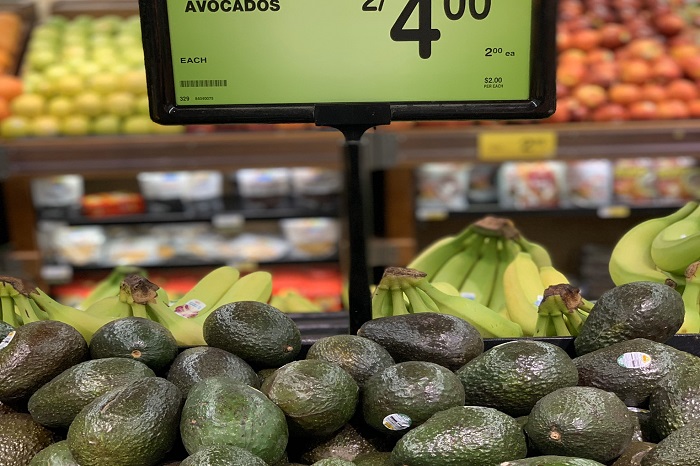
The avocado market is going through a unique period. Prices have fallen to levels not seen in almost a decade, amidst abundant fruit availability and with demand that, while stable, is unable to absorb the entire supply. The paradox is clear: while wholesale prices show sustained weakness, the end consumer doesn't always perceive the same trend at the point of sale.
Gary Clevenger of Freska Produce International describes this disconnect. “Avocado retail prices are currently at the lowest levels we’ve seen in some time, but retail adoption has been slow. Despite the weakness in wholesale prices, many retailers are maintaining relatively high price points, likely wary of lowering prices only to see them rise again,” he explains.
Inventory levels help to understand the situation. As of September 23, the industry held 55 million pounds, with Mexico as the dominant supplier, accounting for 75% of the market, followed by California with 16% and Peru with 9%. Both California and Peru are currently withdrawing from the market, leaving Mexico as the main player heading into autumn.
This prominence is reflected in the volumes. According to Antonio Villaseñor, director of Aztecavo, Mexico harvested 21,745 tons last week, of which 18,370 tons were shipped to the United States, representing an 84% harvest rate. A considerable jump is projected for this week, with around 30,000 tons harvested, in a scenario where prices remain below recent levels. Despite this growth, the supply of available hectares decreased by 2%, settling at 32,400, indicating an effort to adjust production.
Similarly, Sergio Paz Vega, general manager of Coliman Avocados, confirms the strength of the Mexican supply. During week 39, Mexico exported 1,288 shipments to the U.S. market, just over 25,000 tons, representing a 37% increase compared to the previous week and a 19% increase in the season's total compared to last year.
“The volumes exported last week are a clear indicator that Mexico will have enough fruit at competitive prices this season,” he points out. According to the executive, this third quarter of 2025 closed with the highest volume since Mexican exports to the United States began, with more than 246,000 tons shipped between July and September.
Paz Vega warns, however, that the challenge lies not only in volume, but also in maintaining order in the market. “The last few weeks have seen a violent adjustment with falling prices, and quotations with very marked differences depending on who is supplying the fruit or between those who have orders with supermarket chains,” she explains.
Added to this is the usual overlap between the early-season fruit and the early-season fruit of the new season, historically an unfavorable period for maintaining stable prices. Furthermore, changes in fruit size are also affecting prices, with weeks in which smaller sizes—60s, 70s, and 84s—have even been priced higher than the traditional 48s.
Historical data provides another perspective. Avobook's data team analyzed the price of .48 caliber firearms over the past five years and found that the first quarter of 2025 saw the highest prices of the period, but since then a downward trend has been observed, which became more pronounced in the second and third quarters.
In previous years, prices have tended to fall rather than recover during the last quarter, when Peru and California are no longer actively participating. “It cannot be determined whether prices will behave similarly to previous years during this last quarter,” the team clarifies, although they do point out that historically the largest increases occur at the beginning of the Mexican season, around mid-year.
In this scenario, another player emerges: Colombia. According to projections from the Hass Avocado Board, the South American country will increase its market share in the United States in the last quarter of 2025, with a greater presence than in previous years. Although its volumes do not compete with Mexico, they do represent an additional supply that could limit the speed of price recovery.
But the key is no longer just who supplies the avocados, but what sizes reach the consumer. Here, the Hass Avocado Board detects a structural shift in consumption trends. Emiliano Escobedo, the organization's executive director, explains that for years the U.S. market was built on PLU 4225, corresponding to sizes 48 and 40, which became the standard in supermarkets and restaurants. Today, however, PLU 4046, associated with smaller sizes like 60s and smaller, is gaining ground.
“For several years the most popular PLU in supermarkets was 4225, equivalent to sizes 48 and 40. However, with the change in the size curve and the greater availability of sizes 60 and smaller, an opportunity has arisen to offer the market what is currently being produced,” Escobedo points out.
This shift is due both to the availability of smaller fruit and to new consumption habits, which view avocados as an ideal fruit for snacks and daily portions. The change is clearly reflected in the growth of bagged avocado sales, which are now a significant driver for the category. According to HAB data, bags of 4 and 5 small pieces account for more than 54% of bagged avocado unit sales, while the 7-piece format grew by 1,214% in one year. “This format is ideal for those looking for a personal portion for each day of the week,” adds Escobedo.
The executive also clarifies that large sizes aren't disappearing. Jumbo (PLU 4770) varieties continue to occupy a strategic space in family gatherings, restaurants, and mass-produced dishes like guacamole, especially during peak consumption periods. However, the rise of smaller bagged sizes is redefining the market and creating a new competitive landscape, where simply ensuring volume is no longer enough; the right size for each distribution channel is also crucial.
In conclusion, the U.S. avocado market is at a turning point. Mexico is leading with unprecedented strength, backed by record volumes and an overwhelming share of supply. However, inventory pressure, increasing competition from Colombia, and new trends toward smaller sizes are creating a scenario where price recovery could be slower than expected.
The question is whether Mexican hegemony and adaptation to new consumer preferences will be enough to restore dynamism to the market, or whether, on the contrary, the industry must prepare to coexist with moderate values for longer.