“Despite new players in Europe, the growth potential of Peruvian Hass avocados remains enormous.”
The president of the ProHass Association of Peru and director of Pampa Baja, Juan Carlos Paredes Rosales, analyzes the current situation of Hass avocado cultivation in Peru, highlighting the distribution of hectares between the coast and the highlands, the potential of new varieties for export, and the strategies to maintain competitiveness in international markets.
Juan Carlos Paredes Rosales is a prominent figure in Peru's agricultural sector. He has served for four years as president of the ProHass Association, an organization with 75 members that impacts the production of approximately 26,000 Hass avocado growers, roughly 22,000 of whom are small farmers with farms ranging from 0 to 2 hectares.
In addition to his role at ProHass, Juan Carlos Paredes is a director of the company Pampa Baja, which has its headquarters in Arequipa, where he works under the presidency of his father, Octavio Paredes Del Carpio.
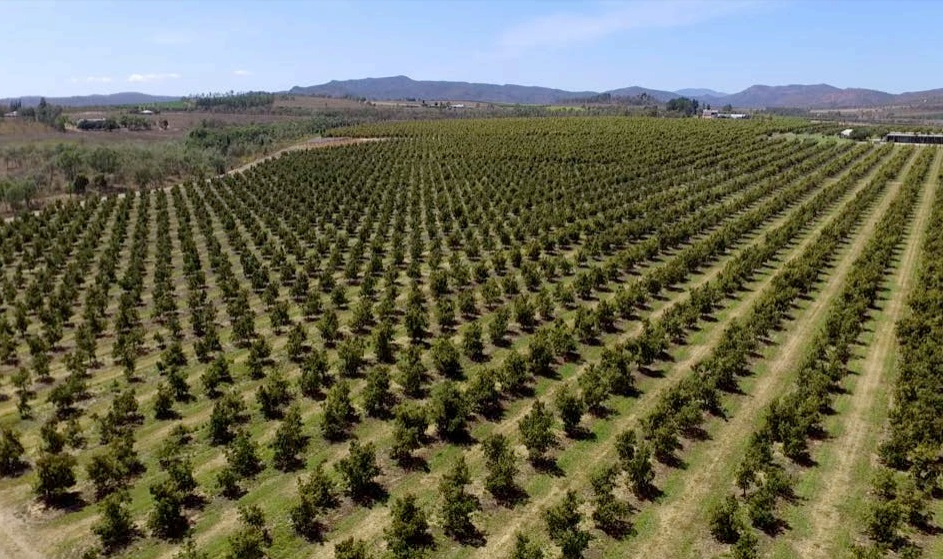
Pampa Baja has established itself as a leader in fruit production, with 2,000 hectares dedicated to the cultivation of table grapes, Hass avocados, pomegranates, and fresh milk. With 25 years of experience cultivating crops in desert terrain, it stands out not only for the quality of its products but also for its innovation and resilience in challenging agricultural conditions.
During his conversation with Avobook, he addressed crucial topics such as the current distribution of Hass avocado acreage between the coast and the highlands, new varieties with export potential, and the quality of fruit produced in different regions of the country. We will also explore trends and prospects for the immediate future within a context of global competition, with new players entering Europe, the main market for Peruvian avocados.
- How many hectares are currently planted with Hass avocados in Peru, both on the coast and in the highlands?
“There are 67,000 hectares of Hass avocados in Peru, according to data up to December of last year. Lately, it hasn't grown much, because the growth was 15% to 20% each year, which was equivalent to 1,000 hectares per year. That has stopped. There is an increase in the highlands, not readily apparent, which is more underground, with small farmers whose crops you only find out about when the wholesalers come to buy.”
How is production distributed between the highlands and the coast?
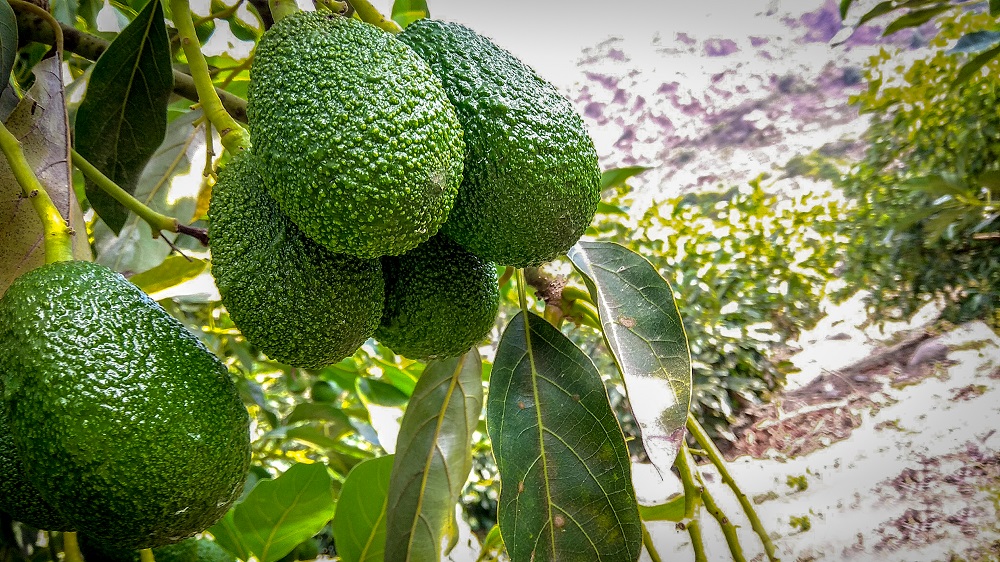
“Until last year, the coast accounted for 75% and the highlands for 25%. But this year everything will change. That data will be available at the end of the season. We should know by September or October. Those who contribute during peak periods , from May to August, supplying our main customers in Europe and Asia, should see an increase.”
- Are there other varieties that have export potential?
“The Maluma variety is gaining significant traction. We are working to qualify it for export. There are approximately 2,000 hectares planted. It is a Hass-type avocado that ripens to a large size and is very productive. Its post-harvest handling, until it reaches maturity, is slightly more delicate than that of the Hass variety. This is why its cultivation hasn't spread much. The Hass variety has post-harvest ranges that allow for a certain margin of error. In contrast, the Maluma requires precise handling.”
- Although coastal fruit takes center stage, how is mountain fruit evaluated?
“In terms of quality, it tends to have a better finish. It has a smoother skin. It's similar to Chilean avocados because of the cold climate, a condition lacking on the coast. It has distinct seasonal characteristics, usually ripening early. Sometimes the cold also affects it, which doesn't happen on the Peruvian coast, where the fruit sets perfectly. Three or four years ago, there was a lot of momentum because prices were spectacular; avocados were all the rage. Even the central and regional governments stepped in to provide non-reimbursable funds for irrigation projects and plantations. But that's no longer noticeable due to the chaos in the political institutions. The subsidies that have been implemented will continue until 2025, but their impact will diminish in 2026.”
- On the coast, are agricultural projects for avocados still being developed or has growth stopped?
“We haven’t heard of any large-scale projects on the coast. Before, we heard about 500 or 600 new hectares, but that’s not the case now. It must be because of the political turmoil in the country. In the last two years, farms have been trying to convert their operations to save costs, establish indicators, and get more kilos from the same hectares. That has slowed down large investments somewhat.”
- How will shipments of avocados from Peru continue to be distributed to international markets?
“Europe will continue to be the main destination. In a bad year, it takes 60% of the production. In a good year, it takes 80%. Then comes Asia, with Korea, China, and Japan, which take between 15% and 20%. In third place is the United States, depending on what Mexico produces. This factor allows Peru to reduce its exports to that market from 20% to 8%. There is a willingness to receive shipments between May and July. To avoid receiving less dry matter, the Americans prefer to continue with Mexican fruit. But there are years when Mexico doesn't have that production.”
- How has 2024 been for me?
“We expected this year to be a good one. But May wasn't as positive as we anticipated. We'll see what the June figures show. The market is focused on medium sizes, but in 2024 we had smaller sizes. Peru hasn't reached its planned production. It's 16% less.”
- What other markets is Peru targeting?
We have Chile, which is practically a local market, because consumption in Peru is very small. Furthermore, we're just a day away by truck, via the Chacalluta border crossing. This means that between 15% and 20% of Peruvian production is being destined for Chile.”
- What do you think about the entry of new players into the most important market for Peruvian avocados, such as Colombia and Kenya?
“It’s a risk that exists, a latent one. Especially with the growth in Africa. Producers are planting a lot in Kenya, Tanzania, and Zimbabwe. They have land, water, and labor, but they face problems just like everyone else at the beginning. But they will have better fruit. What gives us peace of mind is that the consumption and benefits are becoming increasingly well-established. The Hass avocado’s growth potential, being a superfood, allows for significant expansion. Even within the same countries where markets are already open. For example, China could see a huge leap forward when the ripening chambers currently being installed become operational. And there’s another factor: the consumption pattern, which in that country is currently through smoothies . When people experience the taste of fresh fruit, the growth could be enormous.”